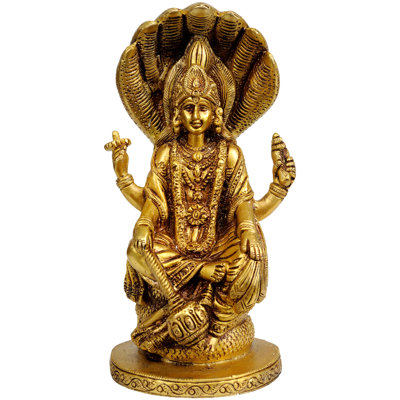
Une formation unique de LordVishnu avec trois têtes, la principale étant en forme humaine, tandis que celle de droite, Narsimha: mi-homme et mi-animal, et la troisième à gauche, Sangar: animal, dans la tradition iconographique, cette forme est connue sous le nom de Vishnu Vaikuntha, la forme cohésive et absolue de Vishnu, car elle combine en lui les trois classes d'êtres vivants: homme, animal et semi-homme évocateurs d'êtres super-naturels, mythiques ou divins pour inclure les dieux et tous les êtres spirituels. Littéralement, les deux termes Vishnu et Vaikuntha signifient Cohn Vishnu ou Vishnu Samagen absolu. De toute évidence, cette forme n'illustre pas un mythe ou une légende, et la documentation sur le Vishnu n'en inclut aucun. Elle se rapporte au principe de la largeur cosmique de Vishnus, sa capacité à se développer et à être inclusif. La présence de l'imagerie Vishnu Vaikuntha dans Guptasculptes suggère que la source de son origine doit avoir précède les Puranas, mais maintenant sa plus ancienne source connue est le Vishnu Purana.