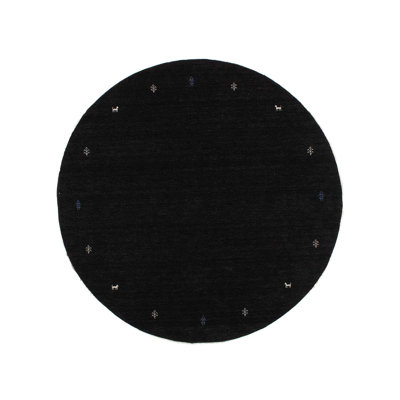
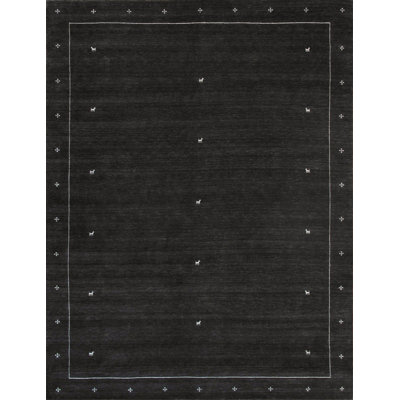
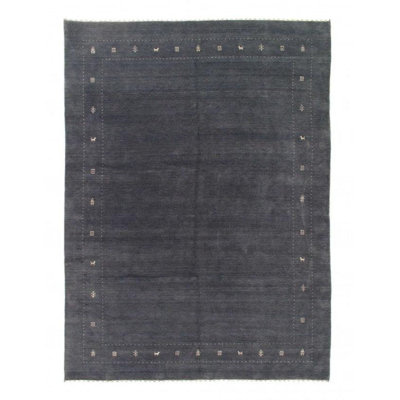
Bold colour and playful charm define this hand-knotted Gabbeh-style rug, where a deep forest green centre meets a vibrant coral-red border in an unexpected round format. Scattered across both areas are tiny stylized animals and geometric symbols, the kind of whimsical pictorial details that give Gabbeh-inspired rugs their distinctive personality and collectible appeal. These motifs are rendered in navy, teal, gold, rust, and ivory, adding lively visual interest to the otherwise minimalist composition. The thick wool pile offers a plush, comfortable feel underfoot, while the hand-knotted construction on a cotton foundation provides reliable structure for everyday use. Its circular shape makes this piece especially versatile, working beautifully as a statement accent, reading nook anchor, bedside layer, or unexpected focal point in spaces where rectangular rugs may feel too predictable. With its saturated palette, folk-art-inspired details, and handcrafted texture, this rug brings warmth, creativity, and inviting character to the home.
Storey Behind the Art: Gabbeh rugs are associated with traditional weaving communities from southwestern Persia and the Zagros Mountain region, where they were historically created for practical use as well as personal artistic expression. The word “Gabbeh” is often connected with a thick, textured pile, which helps explain the soft, woolly character these rugs are known for. Their designs are admired for rustic simplicity, bold colour, and an intentionally free-spirited approach to pattern. Common motifs include animals, trees, people, geometric forms, and abstract symbols inspired by daily life and the natural world. Unlike more formal rug styles, Gabbeh designs often feature irregular spacing, asymmetry, and spontaneous-looking details, giving each piece an approachable, individual quality. Tree forms and pictorial accents appear frequently, though they are rarely standardized, adding to the charm of the style. Today, Gabbeh-style rugs are also woven in established rug-making regions beyond Iran, including India and Pakistan, where artisans continue to reinterpret this beloved tribal-inspired tradition for contemporary interiors.