What Are the Benefits of an Air Purifier?
Breathe easy.
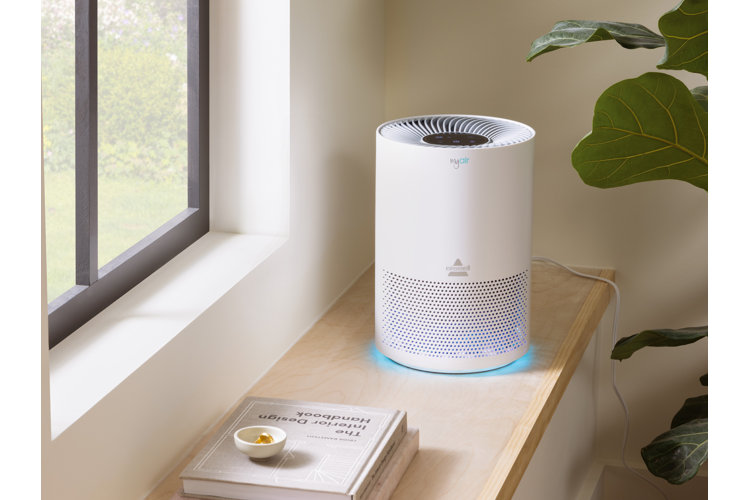
An air purifier provides endless benefits for your health at home. They are used to revitalize the air quality in a space and filter out bacteria and viruses to improve the symptoms of asthma and allergies. Read on to learn about the benefits of an air purifier and how to choose the right one for your home.
What Is an Air Purifier & How Does It Work?
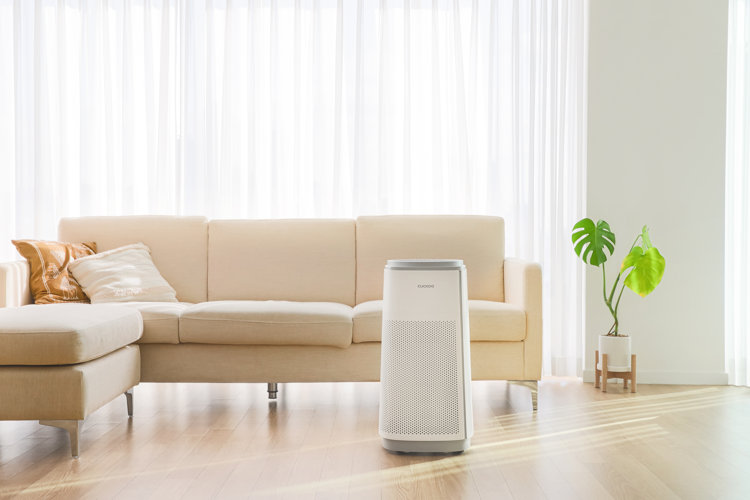
Air purifiers are small home appliances used to cleanse the air in indoor spaces by removing impurities such as odors, smoke, dust, and pet dander. Certain models can remove some bacteria and viruses from the air as well to improve the overall air quality in your home.
Air purifiers work by using a fan to suck air into the purifier and push it out through multiple filters made of paper, fiber, or mesh. Small particles and pollutants are caught in the filters, and clean air is reintroduced to your space. Most filters require regular cleaning or replacement to ensure your air purifier continues to function effectively.
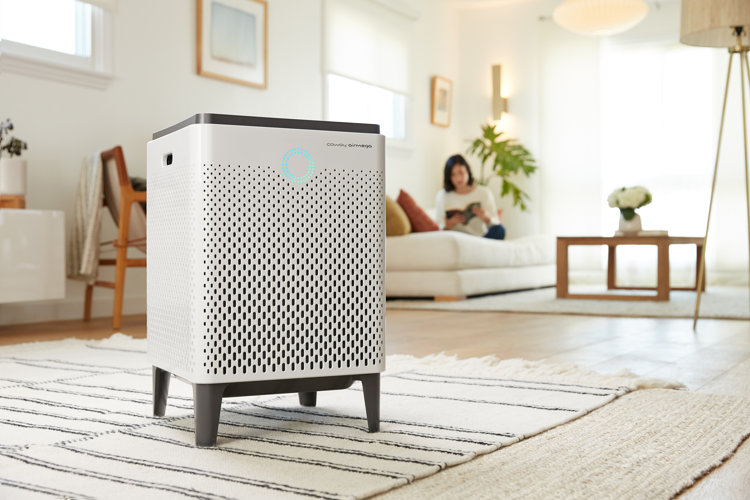
Indoor air is stagnant and holds onto high levels of pollutants such as radon, carbon monoxide, mold, and bacteria that can cause negative health effects in the long term. Using an air purifier helps eliminate these sometimes harmful or allergy-triggering pollutants from your home.
Air purifiers are a great addition to your home if you have immunocompromised or allergy-prone family members who may benefit from a cleaner environment. Some starter families prefer to keep an air purifier in the nursery to protect babies when their immune systems are still developing. If you have pets, air purifiers are also helpful near dog crates, litter boxes, or scratching posts to help filter out pet dander and everyday odors.
Tip!
To optimize the performance of your air purifier, position it in an area where it can effectively filter and recirculate the air. Avoid putting the purifier in a corner where it may not receive adequate airflow.
How to Choose the Right Air Purifier
1. Decide On a Design Style
Personal: Personal air purifiers are designed to fit in small spaces and provide targeted air filtration for one person. They are an effective choice for your desk, bedside table, or car and are easily portable.
Tabletop: Tabletop air purifiers are space-savvy and designed to be placed on top of a table. Despite their small size, they operate the same way as the larger models to offer more air purification capacity than personal purifiers.
Console: Console air purifiers are designed to fit seamlessly into tight spaces – making this a great style choice for smaller homes that want maximum air purification. They often come with wheels and can easily be moved from room to room.
Tower: These upright, column-shaped purifiers are best used as freestanding floor units. They are typically taller and less portable than console units but offer great purification with up to five filters.
Commercial: Commercial air purifiers are large units that are made for schools, offices, hotels, retail spaces, or other spacious indoor locations. These sizable units can be effective in spaces as big as 300 sq. ft.
2. Determine Your Size Requirements
Depending on their size and capacity, air purifiers only work effectively in the right size room. If you put a small purifier in a large room, for example, you may not get all of the benefits of the air purifier. Be sure to measure the square footage of the room in which you plan to place your air purifier to ensure you choose the correct size appliance.
Small: 100–300 sq. ft.
Medium: 300–600 sq. ft.
Large: 600–1,000 sq. ft.
Extra-Large: Larger than 1,000 sq. ft.
Tip!
Look at the CADR rating in the product description of your air purifier. This indicates how much air is being filtered and at what rate. A CADR should be at least two-thirds of the room size, so a 120 sq. ft. room would require at least an 80 CADR. (Most CADR-rated products will also provide the recommended room size.)
3. Consider Filter Types
HEPA: HEPA stands for high-efficiency particulate air, an air purifying technology extremely effective at catching small particles and some bacteria and viruses. While they do not filter odors, chemicals, or gases, some HEPA purifiers also include activated carbon filters for this purpose. There are two types of HEPA filters to choose from – True HEPA filters have the full 99.97% micron-catching efficiency, while HEPA-Type filters have about 99% efficiency.
Antimicrobial: Air purifiers with antimicrobial filters are specifically designed to filter out small microbes like bacteria, viruses, and fungal spores. They also include antimicrobial agents that are designed to inhibit further growth of these microbes.
Electrostatic: Electrostatic filters are made for catching airborne particles like dust, pollen, and other allergens by charging and trapping the particles. These filters don’t often require replacing, though they do need to be cleaned frequently.
Carbon: Activated carbon filters are the most effective for filtering vapors, odors, and gases from the air. While these air purifiers can filter out some larger particles, they are mainly used to capture gaseous pollutants.
Antibacterial: These types of air purifiers can purify the air of bacteria and microorganisms that can cause respiratory infections. They work similarly to antimicrobial filters, but are focused more on bacteria.
4. Factor In Additional Features & Certifications
ENERGY STAR–Certified: These air purifiers have been determined by the EPA (Environmental Protection Agency) to be about 40% more energy-efficient than standard air purifiers – making them a more environmentally conscious choice while also saving you money on utility bills.
AHAM-Certified: AHAM-certified air purifiers have been tested and approved by the Association of Home Appliance Manufacturers for their proficiency in removing dust, pollen, and tobacco smoke from a space. They are then given a CADR rating you can use to compare models.
Electro-Purification Technology: Ionizer air purifiers release negatively charged ions which clump together with positively charged ions floating in the air so they become too heavy to float – effectively removing harmful pollutants from the air and forcing them to settle on surfaces instead. Negative ion technology can release a small amount of ozone as a byproduct, which can irritate the lungs and trigger asthma.
Humidifier-Included: Dual-purpose air purifiers and humidifiers both purify the air and circulate clean, humidified air. Instead of traditional filter pads, the air is purified through rotating discs in water. This is especially beneficial in dry climates and during dry winter months.
