Hardwood Flooring Buying Guide
Find everything you need to know about selecting hardwood flooring.
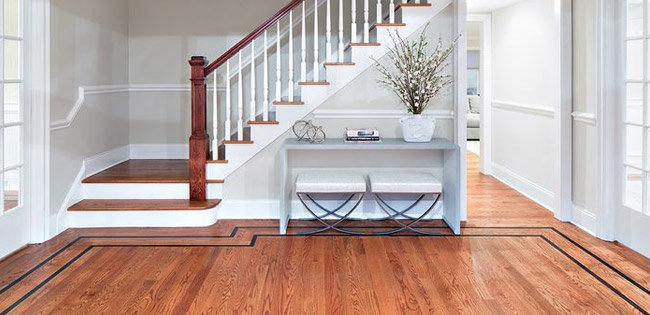
Design: Clean Design Partners
Hardwood flooring can completely transform the look of your home. From classic oak hardwoods to composite parquet floors, we've compiled the information on installation and features for each type of hardwood flooring. See the chart below for a quick breakdown on hardwood flooring types and keep reading for more information to help you decide on the right flooring for your space.
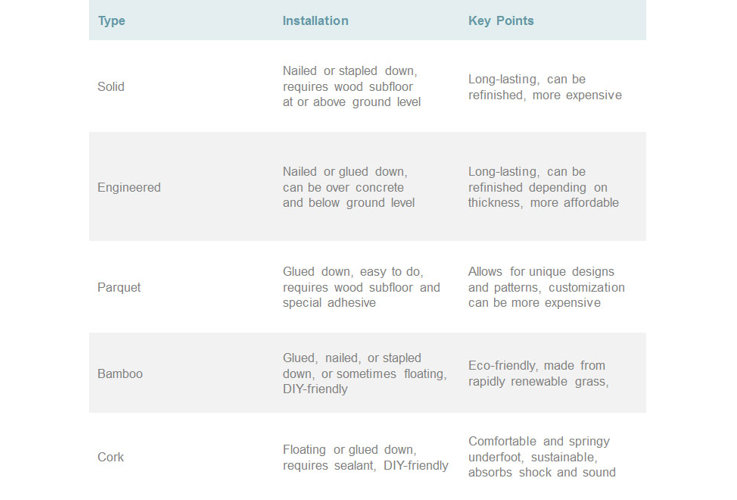
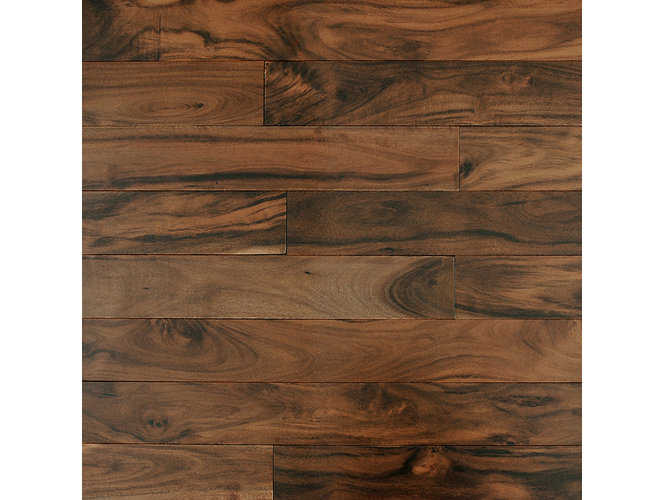
Solid hardwood flooring offers a classic, warm look that can last for years: It can be sanded and refinished multiple times. However, it can be more vulnerable to moisture, scratches, and hard impacts. Keep in mind that natural woods can be sensitive to light and will darken over time. It's also good to know that harder woods will carry sound more, while softer woods will absorb sound. Softer woods will also obtain scratches and dents easier.
For installation, hardwood requires a wood subfloor at or above ground level to avoid moisture damage. It is also more expensive upfront, but its longevity can make up for the initial costs.
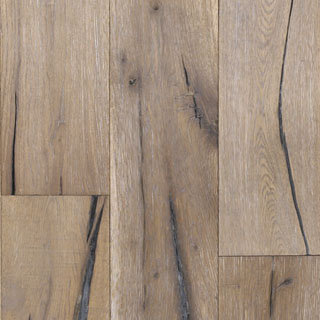
With a similar aesthetic to natural hardwood, engineered wood offers a timeless look at a more affordable price—and more installation options. The material is made up of multiple thin layers of wood that are fused together with heat, glue, and pressure. Depending on the thickness of the top layer, engineered wood can be sanded and refinished more than once.
Available in both planks and stripes, engineered wood can be installed below ground level and on a variety of surfaces, like wood and concrete. For extra durability, look for an option that has been treated with ultraviolet ligh
Available in both solid and engineered woods, parquet flooring comes in large, pre-assembled sections. This can make installation easy, and provides options for unique patterns and customization.
Installation requires a special type of adhesive, so it is important to ensure you have the best wood choice before installing. Parquet is generally only installed over a wood subfloor, because the adhesive does not adhere to other materials.
Actually a dense grass rather than wood, bamboo is an eco-conscious alternative that offers the equivalent feel and durability of softer hardwoods. With a look that leans contemporary and exotic, it can be finished in either its natural blonde state or carbonized for rich, deep hues.
This rapidly renewable resource is available in both solid and engineered varieties. Check for FSC Certification to ensure no formaldehyde was added. Installation is flexible: It can be floated or nailed or glued directly onto a subfloor.
Harvested from tree bark, cork is a highly sustainable option that echos hardwood's warmth and practicality. Lauded for its comfort underfoot, the springiness of cork naturally absorbs both shock and sound. It's also kinder on dropped objects, making it an ideal choice in the kitchen.
Normally a floating install, cork requires a sealant to prevent the seams from swelling. It's sensitive to water and light, and may fade slightly over time.
Tip! Hardwood floors are an ideal option for those with indoor allergies. Unlike carpet, dust and allergens don't become embedded in the fibres and can be easily swept or mopped-up.
Wood Plank Sizes
Solid wood thicknesses typically range from 7/16 of an inch to ¾ of an inch, while the wood widths are around 1 ½ to 3 inches wide. However, some planks are now being manufactured into wider planks as great as 8 inches wide.
Engineered wood thickness typically features a thin layer of higher quality material on the top, with a more affordable material underneath. Look for engineered wood with a higher thickness if you want the option of sanding and refinishing down the road, similar to solid wood.
Lightness and Gloss Levels
When selecting a wood type, make sure to obtain samples so you know you are getting the right colour. Wood styles are categorized by three general types: light, medium, and dark. There are also natural and stained options available for creating a custom look.
Gloss levels indicate how much shine is visible on hardwood floors; it is simply a matter of preference rather than durability. The three types of gloss levels are high gloss , semi-gloss , and low gloss (satin, matte, or low-lustre). Keep in mind that high gloss levels will show dust more than low gloss—high gloss is typically used in gyms and commercial settings.
Quality & Hardness
NOFMA Rating
This is a rating system for wood that evaluates the quality level of a section of wood. The National Oak Floor Manufacturers Association (NOFMA) gives wood one of the following ratings: Clear, Select, Better, #1 Common, and #2 Common. The highest rating is Clear, which is the most expensive and means the wood has no blemishes or knots.
Hardness / Janka Scale
Wood hardness varies greatly depending on the variety of wood. Cherry floors tend to be softer and more vulnerable to scratches and dents, while Brazilian Teak or Walnut are extremely durable. Look for the Janka rating in the product specifications to determine the hardness of a piece of wood, which is measured by the wood's resistance to denting and wear.
Tip! When it comes to hardwood floors, consistent care and maintenance can make your investment last for decades. See more information on Caring for Hardwood.
Features
Square: A clean-lined, uniform look with a crisp finish.
Beveled: Deeper indent that can hide irregularities in the subfloor.
Eased: Gradual, tapered edges that can also hide subfloor irregularities.
Kissed: Pre-finished boards that have a slightly notched edge to ensure a level floor once installed.
Solid Wood Varieties
Solid hardwood flooring comes in a wide range of finishes and varieties. Standard wood varieties include oak, maple, and pine. However, there are plenty of more exotic options, like Brazilian Cherry or Tigerwood. Enginereed hardwoods also come in various styles to replicate the classic look of many natural hardwoods.
Protective Finishes
Check the specifications of each product to find out about any protective finishes .
Polyurethane: Resistant to moisture, durable, multiple gloss level options.
Urethane: Available in either a Swedish (acid-cured) or water-based finish. For DIY installation, you should use water-based to avoid contact with chemicals. Keep in mind that it will dry quickly.
Aluminum Oxide: Pre-finished floors have multiple coats of this for ultimate durability.
Epoxy: This is another strong and durable finish that should be applied by a skilled professional.
Economic Alternatives
Wood-look laminate and vinyl are ideal budget-friendly alternatives to traditional hardwood flooring.
These materials come in a wide variety of faux finishes, so nearly every style of wood is represented. Both laminate and vinyl are available in plank-sized pieces that give it a more authentic aesthetic. It also makes for an easy, DIY-friendly installation.
When it comes to durability, both can stand up to the elements. Vinyl is water-resistant, making it a go-to for bathrooms, since laminate has the potential to swell with moisture.
