Attic Conversion Ideas: How to Create a Hangout Space for Kids
Take advantage of wasted space!
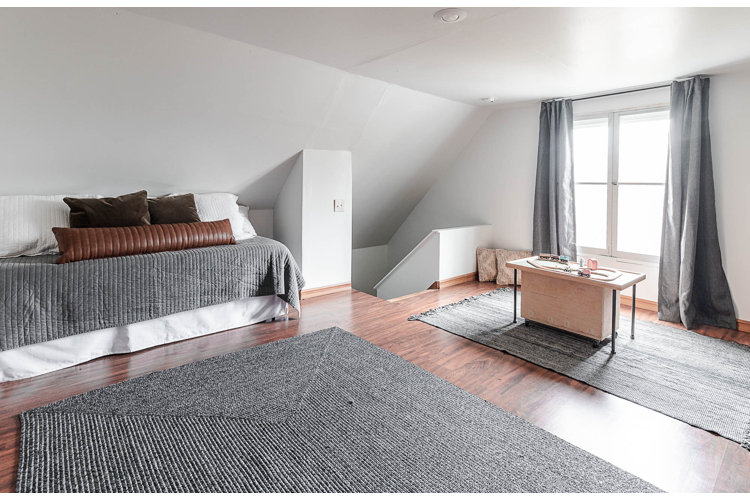
Creating a fun place for kids to hang out can feel a little overwhelming, especially if you have kids of different ages. However, with these simple tips you can create an organized, functional hangout space that will transcend ages. Let’s take a look at our homeowner’s sample attic space that is converting an attic to a living space for fun and storage. Read on to see how it was transformed into a fun hangout for the kids’ favorite hobbies.
Create Functional Areas
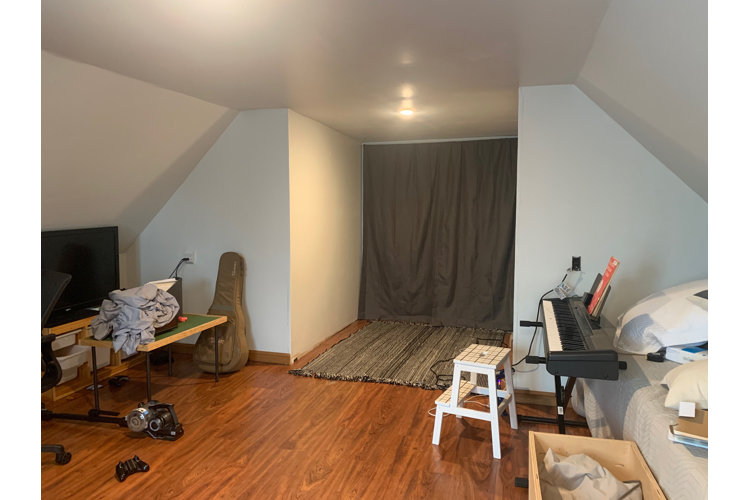
When creating a “hangout” living space in your attic for kids of all ages, it’s important to hit three main areas: play, friends, and creativity. Whether it’s a train table, a desk for crafts, or a space to indulge in video games, kids will enjoy the new and improved attic for playing in some way.
Play Area
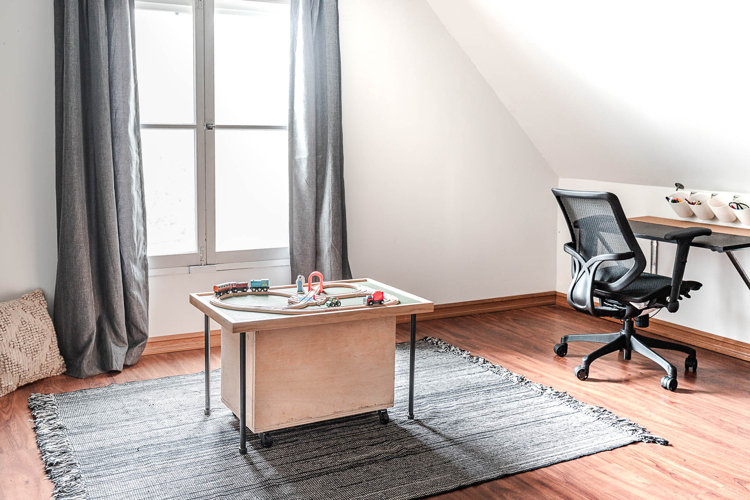
When designing your attic conversion into a play area, It’s important to consider what kids play with the most when designing their hangout space. Keep the items they use more often out and easily accessible, like on a shelf or bookcase. Anything that gets used less often can be stored in tubs, drawers, or cabinets to keep the attic organized.
One of the most exciting parts of a hangout area is when kids get to bring friends into this fun new attic space. Make sure to create a comfy area for kids with easy, versatile seating options. Having floor pillows, poufs, bean bags, and modular furniture around is the perfect way to allow kids of different ages and interests to enjoy the same space with friends. A cozy rug on the floor is a great way to create a comfortable environment for spreading out on the floor.
Creative spaces can sometimes be the messiest, because creativity should be messy. Embrace that, and provide ways for the kids to keep their favorite tools accessible yet organized, keeping messes to a minimum. Utilizing containers and creative storage options for everyday supplies is the perfect way to encourage creativity without the giant mess. Anything not used as often can be stored away and pulled out as necessary.
Consider converting your empty attic into an extra attic bedroom for overnight guests and friends. A twin-size day bed can double as both a sofa and a bed for overnight guests or giving your kids a place to hang out and watch their favorite show or read. Add big, cozy pillows for comfy lounging on the bed while they can also double as optional floor pillows for more floor space seating options. If your attic ceiling height allows, opt for a Murphy bed so you can pull-down when a guest bedroom is needed. Put the bed back up to leave play space in your attic for your children and their friends.
If you find yourself working from your kitchen table often, consider converting your attic into a home office or homework space. If you attic has little headroom or a low ceiling height, opt for desks that can be folded down. Folding down the desks creates more space in your attic and the desks can be stored behind the staircase or in a closet to create more space for fort building or playing games. Opt for simplistic style desks and office storage to create a home office that can double as a fun play space in your attic.
When creating a space for kids to hang out, it’s important to utilize all livable space in the attic. This will help you maximize your play and storage space. If you have kids with different interests, you tend to have a lot of toys and activities. Consider utilizing all corners, walls, and staircases in your attic to make the most of your attic. Attic walls are a great place to add shelving for storage space. From wall shelves to wall-to-wall bookcases, there are plenty of shelving options available. It gets your items off the floor, allowing for more play space. Display their favorite board games or gaming systems on wall shelves or hooks for easy access while adding interest to the attic walls. Getting things off the floor provides more floor space for activities and gives the attic room a more open-plan feel. Use hidden storage under beds, ottomans, or behind a staircase to store any items that aren’t used often. Kids thrive in organized spaces and are much more likely to use items when they are easy to find.
Tip!
Don’t be afraid to get kids involved in the organization process. If it makes sense to them, they are much more likely to continue keeping the room clean!
Ashley is the voice behind the Design & DIY Blog Cherished Bliss. She has been blogging for over 10 years where she loves to inspire people to turn their house into a home with realistic DIY Projects and affordable design ideas. She has been recognized by multiple media outlets including Better Homes and Gardens, Country Woman, and Good Housekeeping. Follow along with her designs on Instagram, Pinterest, and Facebook.
