Types of Gas Fireplaces: Picking the Perfect One for Your Home
A fireplace without the fuss.
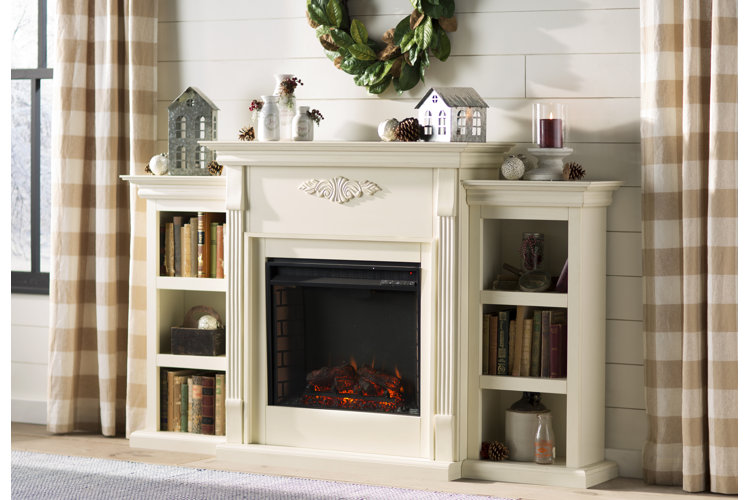
Forget about stacking logs! Gas fireplaces give off the same ambience as a wood-burning fireplace but require little to no work. Read on to discover the best types of gas fireplaces for your home, so you can cozy up next to your hearth this winter.
Best Types of Gas Fireplaces
Different Fuel Types
Gas Fireplace Vent Types
How Much Heat Do Gas Fireplaces Create?
Gas Fireplace Features
Best Types of Gas Fireplaces
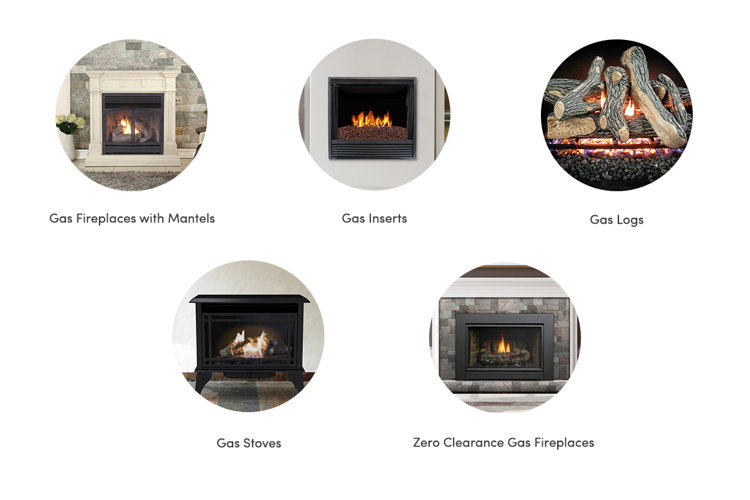
Gas fireplaces come in a variety of configurations to accommodate your existing fireplace and provide an aesthetically-pleasing look. Check out these gas fireplace types to determine how to choose a gas fireplace that fulfills your needs:
Gas Fireplaces With Mantels: A gas fireplace looks like a traditional wood-burning fireplace that is built right into the wall but requires little to no fire maintenance. The fireplace includes a mantel, perfect for adding seasonal decorations that create an eye-catching focal point. If you are looking to add a stone fireplace to your living space but don’t want to deal with tending a fire, this is the option for you!
Gas Fireplace Inserts: If you have an existing wood-burning fireplace but want to switch to gas, try a fireplace insert! Fireplace inserts are small metal boxes that consist of a log and burner set that sit inside the opening of your fireplace. Fireplace inserts connect to gas and electrical lines through holes in the insert. Read more about gas fireplace inserts in our gas fireplace reviews, where you'll find this is a favorite type of fireplace among our customers.
Gas Logs: Gas log sets are a popular choice for their affordability. It is a ceramic log set that sits inside your existing fireplace. The gas log set looks just like a pile of wooden logs with a gas burner inside the middle of the pile. They do require holes to connect to gas and electric lines. This is an easy addition to an existing fireplace for someone who doesn’t want to deal with the hassle of wooden logs.
Gas Stoves: A gas stove is a freestanding fireplace that is not built into the wall. It radiates heat from all sides of the stove, making it a great option for heating a large area. Gas stoves are perfect for adding a rustic, cabin-like hearth feel to your space.
Zero-Clearance Gas Fireplaces: A zero-clearance fireplace has a firebox that can be installed almost anywhere in your home. These gas fireplaces are self-contained and insulated, meaning they do not need tile, stone, or Sheetrock to be flush against the edge of the firebox – in other words, they do not need to be installed in an existing fireplace. Because of this, they can be safely installed in different rooms of your home and are designed to be recessed in the walls.
With a better understanding of the types of gas fireplaces you can choose from, it's time to talk about fuel options. You can choose between natural gas for a never-ending fuel supply or opt for propane tanks that need replacing on occasion. It's important to note that every gas fireplace configuration can potentially accommodate natural gas or propane fuel, so you’re sure to be able to find the right gas fireplace to match your fuel preferences.
Natural Gas: Natural-gas fireplaces are a popular choice because many homes already use natural gas. Natural gas burns clean, making it a safer option due to the fact it emits fewer toxins when burning. Natural gas is lighter than air and quickly dissipates if a leak occurs.
Propane: Propane comes in liquid form and can be delivered to your home in large quantities or in portable canisters and tanks. Propane fireplaces require less gas when burning due to their efficiency. Propane fireplaces require an electric system to ignite the fire, meaning that you need power to start a fire in your gas fireplace.
Gas fireplace ventilation systems help warm up the room while expelling recycled air and potentially harmful fumes via an outside vent, chimney, or flue. You can typically pair any type of gas fireplace with any vent system, as long as you have the right space to accommodate it – the product manual specifies the best vent pairings for a model. Review these ventilation options to determine the best kind for your home and fireplace type:
Direct Vent: A direct vent consists of two pipes, one for exhaust and one for air intake. The air intake pipe brings fresh outside air into the sealed metal box for combustion. The exhaust pipe takes away the fumes that are created during combustion. The pipes can either go up a chimney flue or through an opening in an exterior wall.
Natural Vent: A natural-vent gas fireplace (also known as a B-Vent) uses air from the room for combustion and a pre-existing fireplace/chimney flue. There is one pipe that attaches to the fireplace to help draw fumes up the existing chimney flue and out of the house.
Tip!
Be sure to check your state and local laws before purchasing a gas fireplace.
How Much Heat Do Gas Fireplaces Create?
Gas fireplaces heat rooms super efficiently because they don't rely on electricity or wood logs. Their heat output can range anywhere from 4,000 to 40,000 BTUs to accommodate a variety of room sizes. If you're looking for something more decorative that provides occasional warmth, choose a ventless gas fireplace. If you're looking to heat up an entire room, opt for direct or natural vent types.
Gas fireplaces have different heat-outputs depending on how many BTUs they're designed to put out, so it’s important to match your room's size with the right BTU output. BTU stands for British Thermal Units. It determines how much heat energy you need to increase the temperature of 1 lb. of water by 1℉. For heating units like fireplaces, you can measure the BTU output you need for your room size by multiplying your room's total square footage by 20 BTUs. 20 BTUs is the standard heat output for 1 sq. ft. of space. This ensures that you choose a fireplace with a BTU range that satisfies the heating needs for your space.
Filter by BTU output on product pages or browse by heating area (sq. ft.):
Tip!
Want help measuring for a fireplace insert? Check out our fireplace measurement guide to get started.
Gas Fireplace Features
This gas fireplace guide wouldn't be complete without talking about all the cool feature options you can choose from. Check out these features to determine which ones you can't live without:
Adjustable Flame: Choose a roaring fire or a small romantic flame with an adjustable-flame fireplace. It lets you change the intensity with a quick adjustment.
Adjustable Thermostat: Control the temperature and heat output of your fire with an adjustable thermostat. Grab a cozy blanket and turn up the thermostat when you start to feel a chill in the air.
Included Blower: Blowers help heat large rooms by blowing the warm air into the room. They increase the efficiency of your fireplace by making use of heat that could be potentially lost by blowing it into the room.
Included Remote Control: Adjust your fire from the comfort of your sofa with just a few clicks of a remote. The remote allows you to adjust the flame size and temperature and turn it on and off.
Included Safety Screen: Safety screens create a barrier between the hot glass and little hands. The screen helps reduce the risk of any burns.
