How to Choose a Living Room Rug
Add comfort and style to your floor.
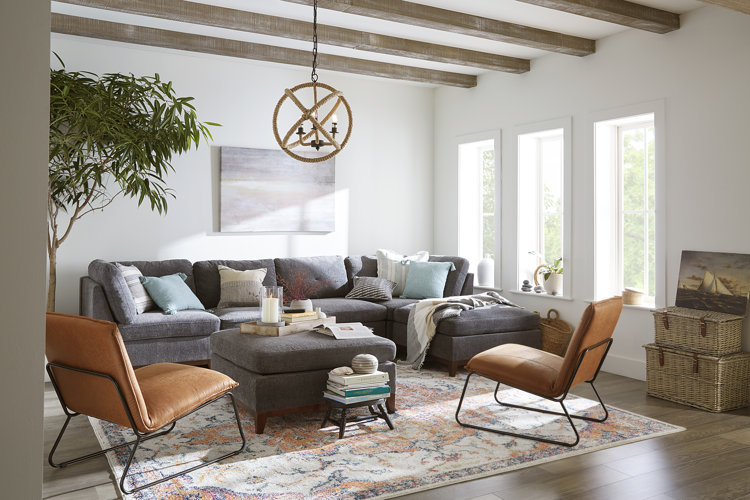
No living room is complete without the addition of an area rug. It can help separate spaces, define a seating area, protect your flooring, and add a decorative accent. Keep reading to learn how to choose a living room rug for your space.
1. Measure Your Living Room
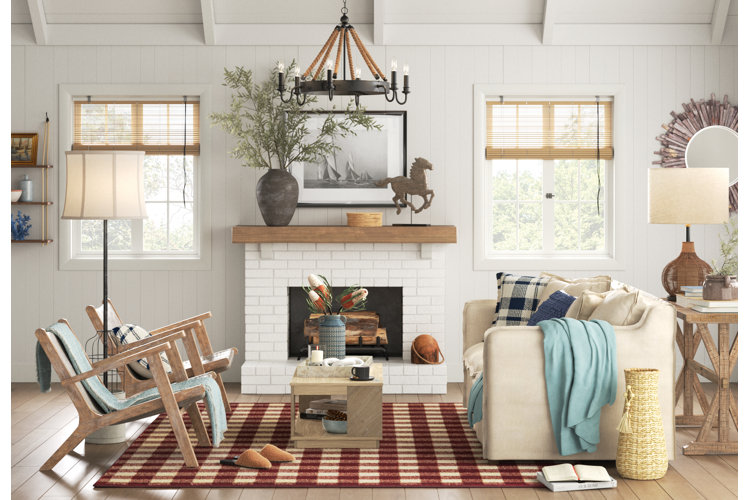
(Shop this image: plaid area rugs, cream-colored sofas, wagon wheel chandeliers, framed wall art, and wood accent chairs)
The size of your living room will determine the size of your living room area rug. There is a range of sizes, but the most common rectangular rugs are 4' x 6, 6' x 9', 8' x 10', and 9' x 12'. For round or square rugs, the most popular sizes are 6', 8', and 10' across.
Tip!
To help visualize your perfect rug, use painter’s tape to mock the rug size and placement. For more helpful tips, read How to Choose the Right Rug Sizes.
2. Choose a Rug Shape

(Shop this image: slipcovered sofas, Moroccan-inspired area rugs, trestle-style coffee tables, and patterned throw pillows)
The sitting area in your living room will help you determine the right shape for your area rug. The most popular shapes are rectangular and oval, but there are a variety to choose from.
Rectangular: Rectangular area rugs are the most common and work well in any size living room. They give off a traditional feel and can be used to define a small seating area or to fill a larger area of your living room. They help accentuate rectangular seating areas, often situating a sofa or sectional along one of the longer sides of the rug.
Round: Round area rugs help add a fun and decorative feel to your living room while softening harsh lines throughout the room. If you have square seating or a square-shaped living room, try adding a round rug to help create a softened focal point in your seating area.
Square: Square area rugs are the best living room rugs to square off your seating area. Similar to round rugs, square rugs are perfect for square seating areas. They help accentuate the lines of the space.
Oval: Oval area rugs help elongate your seating area while adding a sophisticated feel to the space. Varying in color and patterns, oval rugs offer a unique take on a traditional look. Use an oval rug to help soften and balance out harsh angles and lines within your living room.
Octagonal: While octagonal rugs may not be as common as other shapes, they are great for large living rooms with open layouts. The uncommon shape adds an interesting focal point and can be placed as a large rug in the seating area or pair under small end tables.
Novelty: If you are looking for a unique rug, a novelty shape is the best living room rug for you. Novelty rugs consist of different shapes, like hearts, and are great for defining a play area for little ones in your living room.
(Shop this image: empire chandeliers, flatweave area rugs, wood coffee tables, white sofas, and leather accent chairs)
The material of your area rug affects its durability, texture, and aesthetic. Choosing the right material is an important step in establishing the role of an area rug in your living room. Here are some common material categories to consider:
Natural Fibers: Natural fiber living room area rugs (like wool, cotton, or jute) offer natural and often raised textures and neutral tones to the space. Ranging in patterns and colors, natural fiber area rugs can work well in a relaxed and casual living room, while the high-pile and different textures and patterns can help add visual interest to a more elegant and modern living room. They are often known for being durable and easy to clean, making them a great option for high-traffic areas.
Synthetics: Woven synthetic living room area rugs (like polypropylene or viscose) are known for being relatively inexpensive, making them the best living room rug if you find yourself redecorating often. Their tight weave offers a sophisticated look that resists stains, making them a great option if you have toddlers around or have high-traffic areas.
Hides: Hide area rugs (like sheepskin or cowhide) offer a stylish and luxurious feel to your living room but aren’t quite as good at resisting wear and tear or spills. While they are on the pricier side, if you are looking for a unique rug to make a statement, this is the material for you! Hides are typically low pile rugs, making these good choices if the rug is going underneath a doorway.
Tip!
For a more in-depth overview of rug materials, read our guide How to Choose the Best Rug Material..
4. Select Your Color & Style
(Shop this image: white sectionals, Moroccan-inspired area rugs, wood-and-metal coffee tables, and wicker storage baskets)
When choosing the best rug for your space, it’s important to consider your current decor and how you want your rug to fit within your aesthetic.
- In a neutral room, use your area rug as a way to incorporate a pop of color into your living room. Whether it is with a solid rug or a pattern, it helps add interest to your room.
- Patterned rugs are a great way to hide spills or small amounts of dirt.
- Keep in mind, darker colors tend to show fading or dirt and small particles faster and may need to be cleaned more often to keep your rug looking like new.
- If your living room is full of color, opt for a woven neutral rug to help accentuate and complement the colors in your furniture, wall art, and decor.
- For a more colorful look, opt for an area rug that incorporates the shades in your living room decor. It is an easy way to pull all the colors together to create a cohesive look.
- To define your space or create a more decorative focal point, try layering different size area rugs on top of each other.
Tip!
Check out our guide on How to Choose the Perfect Rug Color for Your Space for additional guidance.
