Carbon Steel vs. Cast Iron: Which One Is a Better Cookware Material for Your Kitchen?
Learn the difference between cast iron and carbon steel.
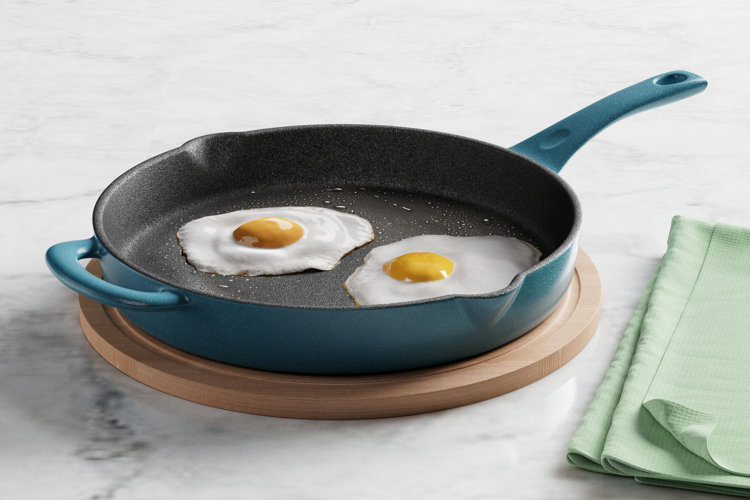
Whether you're searing steaks, sauteing vegetables, or frying eggs, it makes sense that you'd be looking for a hardworking, versatile pan to handle it all. Durable, high heat-withstanding materials like carbon steel and cast iron are excellent options. With slight – but distinct – differences that set them apart, each material comes with its own benefits. Our guide walks you through the difference between cast iron and carbon steel, including a breakdown about each one and what purpose it serves, so you can choose the right fit for your kitchen.
In this guide:
Why Choose Carbon Steel?
Why Choose Cast Iron?
Carbon Steel vs. Cast Iron: Which One Should You Choose?
Why Choose Carbon Steel?
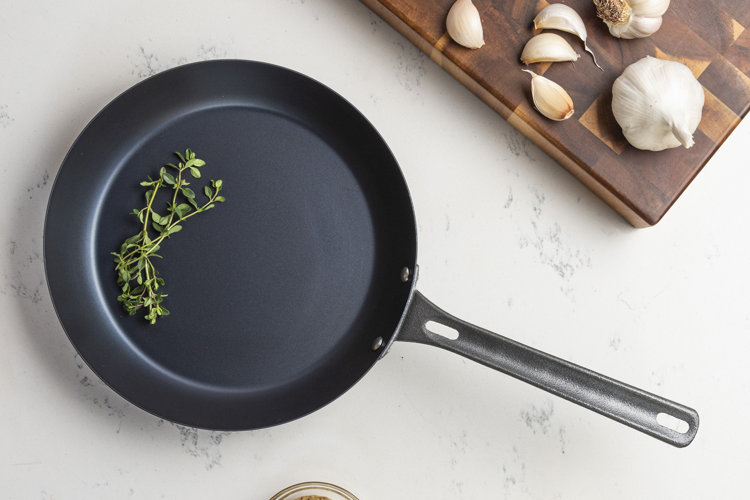
Carbon steel is made from an alloy of iron and carbon. It has a higher carbon content than stainless steel and slightly lower carbon content than cast iron pans, giving it a lightweight and durable construction. Carbon-steel cookware is spun and stamped, whereas cast-iron pans are created in a sand mold. This gives carbon steel a thinner, lighter build. Its naturally nonstick surface, versatility, and long-lasting durability make carbon steel a top choice for home cooks and chefs alike.
Carbon Steel Pros & Cons
Pros
- Carbon-steel pans heat quickly and evenly, while stainless steel pans are more prone to creating hot spots.
- These pots and pans are highly durable. When cared for properly, they can last for several years.
- Carbon steel is lightweight, making it much easier to wield in the kitchen than cast iron.
Cons
- Carbon-steel pans have lower heat retention than cast iron.
- Like cast iron, carbon steel requires seasoning to keep the cooking surface nonstick and rust-free.
- The slightly higher iron content makes carbon steel more prone to rust than cast iron.
Cooking With Carbon Steel
Its nonstick surface and endless versatility make carbon-steel cookware a staple in many kitchens. Carbon steel heats quickly and evenly, and it can handle high heat, allowing you to achieve the perfect crust on a steak. It's compatible with each type of stovetop and can transfer seamlessly from the stove to the oven – or even the grill.
The smoother surface makes carbon steel a great option for frying eggs, cooking crepes, or searing fish (which can be known for sticking to the pan). Plus, this material’s lightweight quality makes it easy to saute veggies, flip pancakes, or reverse-sear a ribeye.
Caring for Carbon Steel
Carbon-steel cookware can last for a very long time when maintained properly. Luckily, if you're choosing between carbon steel vs. cast iron, the two types have fairly similar processes for seasoning and cleaning.
It's important to season a new carbon-steel pan before you use it for the first time. Seasoning is less about improving the flavor of dishes you'll prepare in the pan and more about creating thin layers of oil that fill in microscopic pores and maintain the nonstick surface. Plus, seasoning helps prevent carbon-steel cookware from rusting.
To season carbon-steel cookware, place the pan on the stove and heat the pan. You can also do this in the oven if your carbon-steel pan has an oven-safe handle – make sure to check the manual to see if your pan has one. Add a small amount of neutral oil (like vegetable, peanut, or sunflower oil) to a kitchen towel that you don't mind getting oily. Wipe the inside and outside of the pan with the kitchen towel, making sure to buff away any excess oil. Too much oil will create uneven, sticky layers of coating rather than a smooth, polymer-like finish. Then, turn on the burner (or place the pan in the oven) and heat until the oil has set into a faint brown color. Note: This final step generates a heavy amount of smoke, so open the windows, turn on a fan, and be prepared to silence your fire alarm.
When cleaning a carbon-steel pan, it's best to use a clean kitchen towel or paper towel to wipe away as much as you can from the inside of a cooled pan. This often does the trick for easy meals, but for more stubborn residue, pour two tablespoons of coarse salt and a small amount of neutral oil into the pan. Use a paper towel to wipe the inside of the pan, the salt acting as a gentle abrasive to remove any residue or burnt-on food. Take a clean paper towel and wipe away all of the salt, oil, and residue from the pan.
Why Choose Cast Iron?
Cast iron is made from another alloy of carbon and iron, but it has a slightly higher carbon percentage than carbon steel. It's a highly durable material that retains heat well and comes at a very affordable price point. Cast iron is compatible with any type of cooktop and works well in the oven, making it a top choice for dishes that start on the stove and finish in the oven. Like carbon-steel cookware, cast iron has a naturally nonstick finish and long-lasting durability.
Cast Iron Pros & Cons
Pros
- Cast-iron cookware retains heat well, which means that once the pan is heated, it'll stay heated evenly and for a long time. This is particularly great for searing meat or preheating a pan for a crispy pizza crust.
- It's incredibly durable and long-lasting, so cookware made from cast iron can last for decades. Plus, with the right seasoning, cast-iron pans can improve with age.
- Cast iron is also very affordable, so it doesn't take much of an investment to level up your culinary prowess with a cast-iron pan.
Cons
- These pans can be quite heavy, so it's best to choose the right size for your household. You'll want to pick one that can suit your needs but still feels manageable to carry, wash, and cook with.
- Cast-iron cookware requires seasoning to maintain the nonstick surface.
- Cast iron isn't a good heat conductor, so it can take longer for the pan to heat up. However, once the pan is heated, its excellent heat retention will ensure the pan stays at the right temperature.
Cooking With Cast Iron
With their durability and budget-friendly price, it's easy to see why cast-iron skillets are popular among home cooks. The thick bottom and high heat-retention makes cast iron a top choice for searing, shallow frying, baking, and braising. Like carbon-steel pans, cast-iron cookware works with any type of cooktop, oven, and grill, allowing you to try new techniques and perfect your favorite dishes.
Cast-iron pans are great for searing meat. You can preheat the pan and create the perfect sear for steaks, pork chops, or roasts. Best of all, you can add a nice sear and finish the dish in the oven for a tender braise. They're also excellent for frying chicken, cooking vegetable stir-fries, and baking cornbread.
Caring for Cast Iron
Cast-iron cookware might not be dishwasher-safe, but it is still surprisingly easy to care for. Regular seasoning will make your cast-iron cookware nonstick, but eggs can still stick with infrequent or uneven seasoning. The more often you season your pan, the less food will get stuck or burnt to the bottom. Plus, you can always salt-scrub and re-season your pan if the coating needs a refresh.
Similar to carbon-steel pans, one of the best ways to clean a cast-iron pan is to add coarse salt to gently remove any stubborn residue or food. Then wipe out the salt and then add a small amount of oil before wiping that away too. For more tips on cleaning and seasoning your cast-iron cookware, read our guide Cleaning 101: How to Clean a Cast-Iron Pan.
Carbon Steel vs. Cast Iron: Which One Should You Choose?
When debating carbon steel vs. cast iron for your culinary arsenal, it's important to understand the unique characteristics of each material and compare them to your culinary preferences.
- Though cast iron is more affordable, both materials are durable and long-lasting.
- Both types need to be maintained similarly to keep their nonstick coating intact.
- Carbon-steel pans heat and cool more quickly.
- Cast iron and carbon steel can be used on any type of cooktop and can handle high heat.
- Carbon-steel cookware has a smoother surface.
- Cast iron has better heat-retention.
Tip!
Learn more about the most popular cookware materials with our guide The Best Cookware Materials to Choose From.
