Cat Enrichment Ideas for a Happy Feline
The cat’s out of the bag.
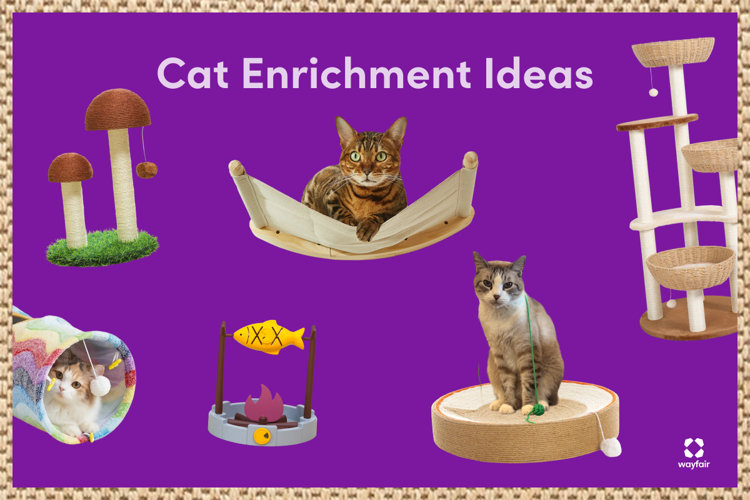
While living indoors keeps your cat safe, it can lead to a bit of cabin fever. Providing proper enrichment for cats is key to keeping them healthy, sharp, and out of trouble. From vertical climbing territories to brain-teasing food puzzles, establishing an engaging environment satisfies their natural instincts. Read on for our favorite indoor cat enrichment ideas and activities to turn your home into a kitty playground.
Why Cat Enrichment Matters
Without adequate stimulation, cats often find less-than-ideal ways to entertain themselves – like scratching your favorite sofa, knocking glasses off the counter, or even trying to bolt whenever you open the front door. In addition to mental stimulation, indoor cats are more likely to become overweight and require daily exercise to stay healthy. Creating a stimulating environment for your cat helps them channel their natural instincts into positive outlets that keep both felines and their human family members happy!
Tip!
New to cat parenting? Here is our New Kitten Checklist for First-Time Cat Parents to get you started!
Cat Enrichment Ideas
Here are five cat enrichment ideas you can use to enhance your home environment for your cat and provide healthy ways to keep them happy and fit.
1. Build a Vertical Kingdom
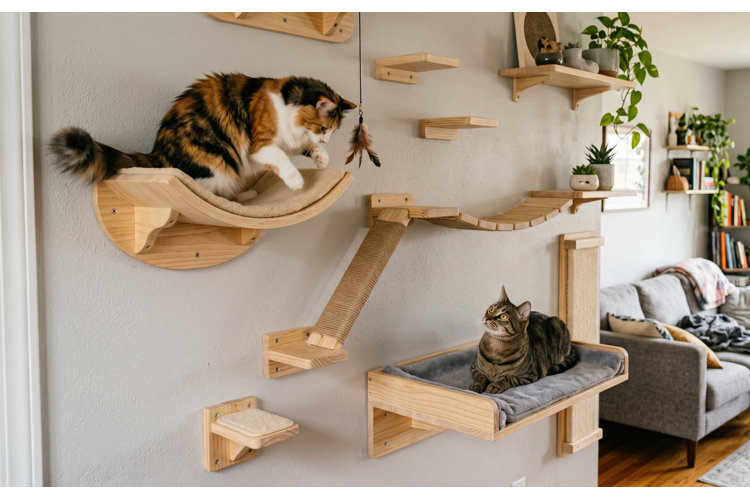
Cats are natural climbers and feel most secure when they have a natural vantage point from which to survey their kingdom (your home). Expand their vertical territory with cat trees and wall mounted cat perches to give them plenty of space to climb. Sturdy cat trees give even the biggest cats a safe way to climb, lounge, and check out their surroundings. Furniture-style cat trees will blend right into your living room, while features like tip-resistence will keep your fluffy friend safe.
Tip!
Get expert help choosing the best kitty condo setup with our Cat Condo & Cat Tree Buying Guide.
2. Upgrade Your Scratching Stations
Scratching is an essential biological need for cats. It stretches their muscles, trims their claws, and satisfies their instinct to leave scent markers around their territory. Save your rugs and furniture by positioning cat scratchers in your cat’s favorite rooms.
Incorporate a mix of textures and styles of scratchers to keep things interesting. Provide tall sisal rope scratching posts for vertical stretches alongside flat or sloped cardboard scratchers for horizontal stretching and scratching.
In the wild, cats spend a large part of their day hunting for their meals. Serving kibble in a standard bowl skips the chase entirely, which can leave a big part of their natural instincts feeling unfulfilled.
Food puzzles and slow feeders mimic the thrill of the hunt by forcing your cat to work for their food. These puzzle boards require your kitty to solve simple mazes, spin compartments, or nudge treats out of hidden slots using their paws and nose. Slow feeder bowls and lick mats prepared with frozen pureed cat food can keep them busy for up to an hour and are a fantastic mental workout.
Give your cat the gift of "cat TV." Your own backyard is filled with moving targets like birds, squirrels, and rustling leaves that provide hours of passive entertainment. Install a suction-cup window perch or place a cozy free-standing cat perch beneath a sunny window pane. To level up this indoor strategy, position a bird feeder right outside your cat’s favorite window to ensure a constant stream of wild visitors for your feline friend to watch.
Let your cat get their fill of fresh air without the risks of free-roaming, by providing them with an outdoor cat enclosure – often called a catio. These mesh- or wire-enclosed structures feature multiple tiers, climbing steps, and resting platforms for your kitty to climb and enjoy the scenery. Many catios can be attached directly to a porch, deck, or window tunnel so your cat can come and go as they please.
Tip!
Ready to invest in a catio for your best friend? Check out our 13 Catio Ideas to Get Your Feline Friend Outdoors.
Frequently Asked Questions
How do I know if my cat is bored?
Common signs of a bored cat include over-grooming, excessive meowing, lethargy, overeating, or destructive behaviors like chewing houseplants and scratching furniture fixtures. Introducing structured activities can quickly reverse these habits.
How often should I rotate my cat's toys?
To keep things fresh, swap your cat's small toys out every one to two weeks. Leaving the exact same toys on the floor permanently makes them lose their novelty. Keeping a rotation system ensures your cat stays curious.
What is the best type of enrichment for an indoor cat?
The best approach combines environmental enrichment (cat trees, scratching zones) with cognitive enrichment (food puzzles) and sensory stimulation (window views, cat grass). Variety ensures your pet stays balanced.
