Your Guide to Buying Ceiling Fans
Learn just how to choose a ceiling fan.
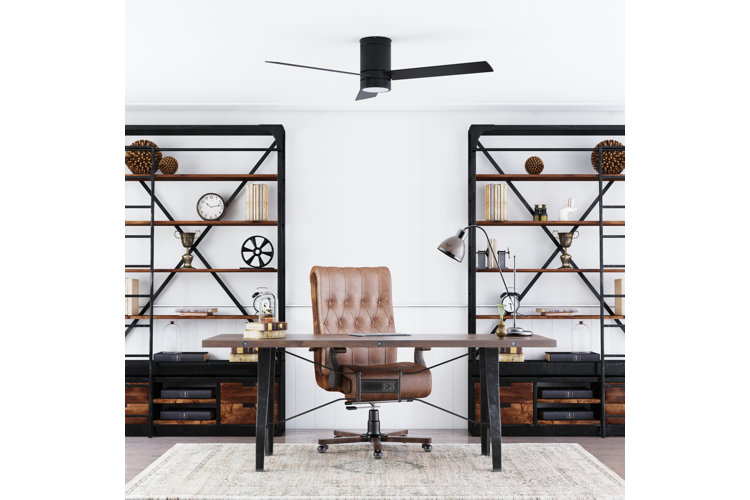
When it comes to buying ceiling fans, the number of choices can be overwhelming. Plus, it can be tough to know what features will best serve your cooling needs. Whether you are a first-time buyer or you're looking to update your current model, read this guide to learn exactly how to choose a ceiling fan.
In This Guide:
What Is a Ceiling Fan?
Types of Ceiling Fans
Ceiling Fan Mounting
Ceiling Fan Lighting
Ceiling Fan Features
Ceiling Fan Controls
Ceiling Fan Hardware & Accessories
What Is a Ceiling Fan?
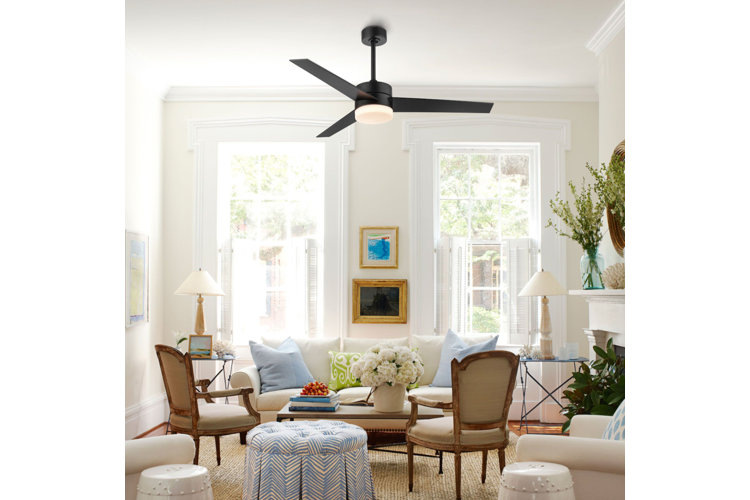
A ceiling fan is a ceiling-mounted fixture that uses electricity to power its rotating blades. The primary purpose of a ceiling fan is to circulate the air in a room to create a cooling effect. Unlike an air conditioner, a ceiling fan doesn't reduce the air temperature or humidity. A ceiling fan keeps you cool in hot weather by increasing your body's heat loss through the evaporation of sweat on your skin.
Here are just a few reasons to consider buying a ceiling fan:
- They are energy-efficient and use less electricity than air conditioners, which makes them a more environmentally friendly, cost-efficient choice.
- There are many types of ceiling fans to choose from, so you can find a fan that will blend seamlessly into your home.
- Ceiling fans effectively circulate air around a room, thereby preventing it from getting stale and continuously refreshing a space without chilling it to an uncomfortable degree.
- Running your ceiling fan in reverse during the winter pushes hot air downward, filling the room with warmth. This also allows you to run your home's heating system for shorter periods of time.
- Some ceiling fans are designed with integrated lights; others are produced to be retrofitted with universal light kits.
- Many fans are designed with easy-to-use remotes or pull chains that can be adapted for light dimmers. This gives you the option to adjust the lighting to your preference.
Tip!
When buying ceiling fans, remember a fan that is too small for a room will have to work really hard, which may lead to the motor burning out quicker. A fan that's too big will create too much airflow, which can be uncomfortable. To determine the exact sizing and measurements of your perfect ceiling fan, read our buying guide What Size Ceiling Fan Should You Get?
Types of Ceiling Fans
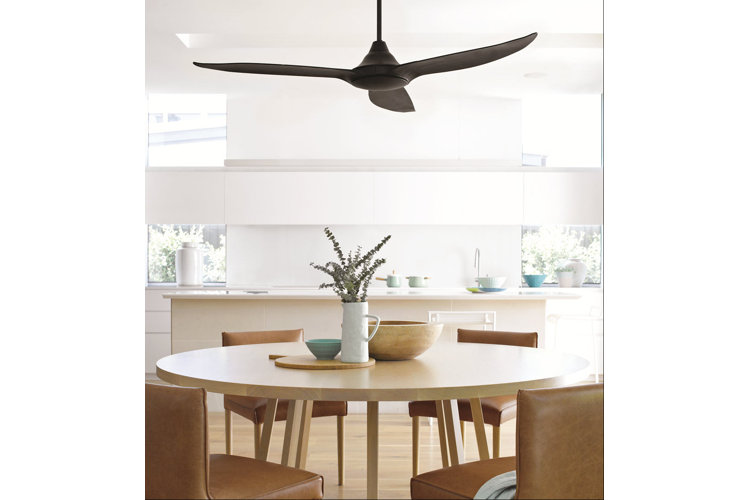
Are you wondering just how to choose a ceiling fan? There are three options to choose from, each made to withstand specific environments: indoor, outdoor, and indoor/outdoor. It is important to determine exactly where you plan to install the fan so that you can choose the right type of ceiling fan for the location.
Indoor Ceiling Fans: Indoor ceiling fans are also known as "dry-rated" fans, because they are not exposed to any outdoor elements. Indoor ceiling fans come in a variety of styles and colors to help you maintain a consistent style throughout your home while keeping your interior space the perfect temperature year-round. They are most commonly installed in the bedroom, living room, kitchen, and dining room. These fans cannot be placed outdoors, as they are not manufactured to withstand outdoor weather conditions.
Outdoor Ceiling Fans: Outdoor ceiling fans are great for areas such as exposed decks, verandas, and other covered outdoor locations (as long as they contain the correct electrical wiring for installation). Also known as "wet-rated" fans, outdoor fans are usually constructed out of metal or other study materials in order to withstand exposure to the elements as well as to prevent warping and moisture damage. The motor casing and blades are resistant to temperature changes, humidity, rain, snow, and water, while the finish prevents corrosion and rust.You can even clean an outdoor ceiling fan with a hose without worry.
Indoor/Outdoor Ceiling Fans: An indoor/outdoor fan, also known as a "damp-rated" fan, is great for covered outdoor areas that encounter moisture but are never in direct contact with water. They are suitable for covered outdoor areas like screened porches, covered patios, and garages, and they can handle the moisture that these areas encounter. An indoor/outdoor ceiling fan is created with materials that prevent rust and corrosion but cannot have direct contact with rain, snow, or other liquids.
Tip!
It's worthwhile to know that though all types of ceiling fans can be used indoors, not all ceiling fans can be used outdoors. It's a good idea to check the manufacturer's instructions to ensure exactly where your fan can be mounted.
Ceiling Fan Mounting
Different mounting options allow ceiling fans to work in almost any home. The type of ceiling fan mounting you select will depend on the size and height of a room as well as the angle of the ceiling. Once you've purchased your fan, you will need to place it as close to the center of the room as possible, with the blades at least 18" from the nearest walls. A ceiling fan should never be hung lower than 7 feet from the ground, including the downrod measurement.
Flush Mount: If your room's ceiling is lower than 8 feet high, a flush-mount (sometimes known as a "hugger" or "low-profile") ceiling fan will be best. A flush-mount ceiling fan sits close against the ceiling, ensuring that its blades are 7 feet or more above the ground. These fans only need 6" – 10" of space between the ceiling and the blades, making them the safest choice of all fans, especially for low ceilings. It is not ideal to use a flush-mount ceiling fan on a high ceiling, as you won't experience the cooling effect fully.
Downrod Mount: A ceiling fan downrod is a metal pipe that extends from the ceiling mount to the top of the fan. A downrod allows you to install the fan at an optimal height, typically leaving 12" – 14" of space between the ceiling and the fan's blades. Most rooms with a height of 8' – 10' should use a downrod mount, particularly rooms with high ceilings.
Angled: If your ceiling is angled at 34° – 56°, you will need an angle-mount ceiling fan. The "ball-joint" mechanism in an angle-mount ceiling fan's downrod allows you to match the mount to your ceiling's angle so that the fan doesn't sit askew.
Ceiling Fan Mount Features
Once you have chosen the mounting you need, there are additional downrod options that can help to make installation easier.
Sloped-Ceiling Adapter: A sloped-ceiling adapter is similar to an angled downrod in that it allows you to hang a ceiling fan perpendicular to the ground. The adapter is designed to be used with some of the ceiling fan's original hanging hardware (typically installed between the canopy and the downrod) to help you mount the fan on an angled ceiling. A sloped-ceiling adapter works with a longer downrod, which is usually sold separately. These types of ceiling fans are especially helpful if you have a high ceiling or if the angle of installation would result in the fan blades sitting too close to the ceiling.
Adjustable Height: If your ceiling fan is placed too high/close to the ceiling, you will not feel the effects of the blades; too low, and the blades will become a safety hazard.
An adjustable-height downrod will help you install the ceiling fan at the optimal height for your room. They are also great if you are unsure of the exact height of your ceiling, allowing you to adjust the downrod as needed.
Don't overlook installing a ceiling fan as a potential light source. When buying ceiling fans with lighting, consider the location. Determine how much light is already in the room you plan to install it in. Does your room have large windows and ample natural light, or is it dark and in need of additional illumination? These answers will help you make your selection.
Ceiling Fan Light-Kit Compatibility
A ceiling fan light kit allows you to install lighting into your new or existing fan, turning it into two appliances in one.
Light Kit Included: A ceiling fan with a light kit included is a hassle-free way to illuminate your room. A light-kit-included ceiling fan has a light integrated into it. As they are integrated into the fan, these light kits are not removable and cannot be replaced yourself. These fans come in a wide range of styles.
Light-Kit Compatible: Light-kit-compatible ceiling fans allow you to install your choice of lighting. Light-kit-compatible ceiling fans include a light kit at the time of purchase, but those light kits are often interchangeable with other light kits within the same brand. Be sure to read the information regarding light-kit/ceiling fan compatibility on the product packaging.
Tip!
Choose an outdoor ceiling fan with a light to brighten an otherwise dark area.
Light Kit Types
There are various light kits for different types of ceiling fans which can be chosen according to the type of lighting you need. A high-traffic or task area should have brighter light, while a bedroom or playroom may benefit from dimmer lighting.
Bowl Light: A bowl light is essentially an upside-down dome that is placed directly below the place where the blades meet the middle of the fan. This type of ceiling fan light kit provides a broad ambient illumination across the entire span of a room.
Branched Light: A branched light kit looks like two or more small spotlights which are attached to the bottom middle of the fan. These offer more directional light, making them great for illuminating larger rooms with dark corners.
Integrated Light: A ceiling fan with an integrated light has a light built directly into the bottom of the fan itself. It hangs similarly to a bowl light (between the bottom middle of the fan blades) and offers broad lighting across the room.
Lighting Features
If you've decided that you want a fan with lights, there are additional features that add convenience and aesthetics to your ceiling fan.
Bulb Included: A bulb-included ceiling fan comes with a lightbulb (or lightbulbs) already installed, which is beneficial, as you won't have to fit a lightbulb yourself or make sure you have one on hand. Bulb-included ceiling fans are typically available in more modern designs, so they usually come with an LED lightbulb.
Dimmable: If you want to provide a little ambience to a room, a ceiling fan with dimmable light is a great choice. This type of ceiling fan allows you to adjust the brightness of its lights with a wall dimmer or a remote control. A dimmable ceiling fan light works well in any area where you want the ability to brighten or lower the lights.
Downlight: As with a bowl or integrated lights, a ceiling fan with a downlight includes a light that shines downward. Downlight ceiling fans are great fixtures for lighting up a larger space.
LED Lights
LED lights have become increasingly popular because of their energy efficiency. You can opt for one of two options when it comes to LEDs.
LED-Integrated: An LED array refers to the LED components placed on a printed circuit board in particular patterns in order to output light. LED-integrated ceiling fans have LED arrays built into the fixture. They typically last for more years than traditional bulbs. Their energy-saving LEDs are designed to emit a specific color and lumen output. Unfortunately, the LED lights themselves cannot be replaced. Instead, when they eventually burn out, you will need to purchase a new LED array or module.
LED-Compatible: An LED-compatible ceiling fan allows you to replace its individual LED bulb rather than the entire LED array or model. The benefit of these fixtures is that you can choose the perfect bulb for your needs as long as it is the right size, shape, and wattage. LED-compatible ceiling fans are usually sold without the bulbs.
Most types of ceiling fans come with additional features to make them more multifunctional. These are added settings that provide convenience and ease of use.
Three or More Speeds: Most ceiling fans come with more than one speed setting. Ceiling fans with three or more speeds offer multiple "forward" speeds, allowing you to choose how quickly you would like the blades to spin and thus how much air you would like circulated.
Reversible Motor: In summer, your ceiling fan blades should spin counterclockwise to create downward motion and a cooling effect. During winter, you can reverse the ceiling fan motor to allow the blades to spin clockwise, which will gently pull cool air up while pushing warm air down from the ceiling. Doing this will help decrease the workload of your heating unit as well. Shop for ceiling fans with reversible motors to be sure you can take advantage of this beneficial feature
DC Motor: If you are replacing an old, noisy ceiling fan or are simply looking to buy a quiet model, opt for a reduced-noise motor. DC (or direct-current) motors are more advanced and designed to be up to 70% quieter and more efficient than standard ceiling fan motors.
Reversible Blades: A ceiling fan can also function as stylish and attractive decor. Purchase a ceiling fan with reversible blades and flip them around at any point for a simple and effortless design update. Reversible blades also achieve the summer-winter mode switch.
Kids: Fans can also be suited to match your child's bedroom. Our array of cute designs and colors can brighten any little one's room while keeping them cool.
When choosing a ceiling fan, you can also decide how you'll control the speed.
Pull Chain: The most conventional ceiling fan control is a pull chain. A pull chain is a cable that hangs off the fan that offers control of the fan speeds (and lighting) when pulled. It is easy to operate and can often be upgraded to a wall or remote control in the future. Ceiling fan pull chains may not work well on lower ceilings, as the chain may get in the way, making them better suited to low-traffic areas such as the guest bedroom.
Wall Control: Control the speed, direction, and light on the fan with a wall control.
These stationary controls require electrical integration when installed on the wall to control the ceiling fan. They have a range of up to 40 feet and are great for families with kids who may not be able to reach a pull chain. These work well in the kitchen, dining room, living room, and multipurpose rooms. They are convenient to use when you enter or leave a room. The best part of wall-control ceiling fans is that there is no remote to misplace.
Remote Control: A remote-control ceiling fan allows you to control the fan settings from the comfort of your couch. Change your ceiling fan's speeds and lighting without standing up to pull a chain or flip a switch. Handheld ceiling fan remotes are the most convenient option, as they are lightweight, portable, and able to be used from any location within the device's range. A ceiling fan remote control allows you to push a button to instantly select the setting you need.
Remote & Wall: Sometimes you want the best of both worlds. A ceiling fan with remote and wall controls will offer the benefits of both. Enjoy the convenience of a remote control and the dependability of a wall control – in the case that you misplace the remote or prefer to use the wall control, you'll have both options available.
Accessories allow you to modify, update, or enhance your ceiling fan according to what you need.
Ceiling Fan Medallions: A ceiling fan medallion is a decorative fixture used as a transition between the fan and the ceiling. It is usually round and serves to cover the ceiling fan mount. Many ceiling fan medallions come in ornate designs to give a touch of grandeur to your ceiling, while others can be painted to match your decor. Ceiling fan medallions are typically made of coated polyurethane foam for easy application and altering.
Pull Chains: If your ceiling fan's pull chain is outdated or damaged by general wear and tear, you may want to change it for a new one. Replace or even extend your current pull chain with one of our many available options. Ranging from simple beads to intricate embellished designs, a new pull chain can dress up your fan in no time.
Remote & Wall Controls: If you are looking to replace your ceiling fan pull chain with a more modern option, consider a remote or wall control. You'll no longer find yourself tugging a chain to cycle through the ceiling fan speeds; a ceiling fan remote or wall control will allow you the same control at the push of a button. Check the manufacturing instructions to see which ceiling fans can be modified to use these features.
Downrods: Ceiling fans usually come with a standard downrod, which may not be to your taste. If you are looking for a different color or style to better match your ceiling fan or add some flair, we've got just what you need.
Shade: You don't have to stick with the light shade(s) that your fan comes with. Choose from our ample range of ceiling fan shades to add your own style to your new fixture. Whether you are updating an old fan or installing a ceiling fan for the first time, you can easily select a shade that suits your decor.
Blades: If you feel that your ceiling fan blades are outdated or looking a little worse for wear, consider replacing them entirely. Whether you want a simple style update or to extend the life of your ceiling fan, a new set of ceiling fan blades will do just the trick.
Now that you know what you look for, buying the right type of ceiling fan has never been easier.
