Conventional vs. Convection Ovens: Which Is Right for You?
Understanding the differences to help you choose the right oven.
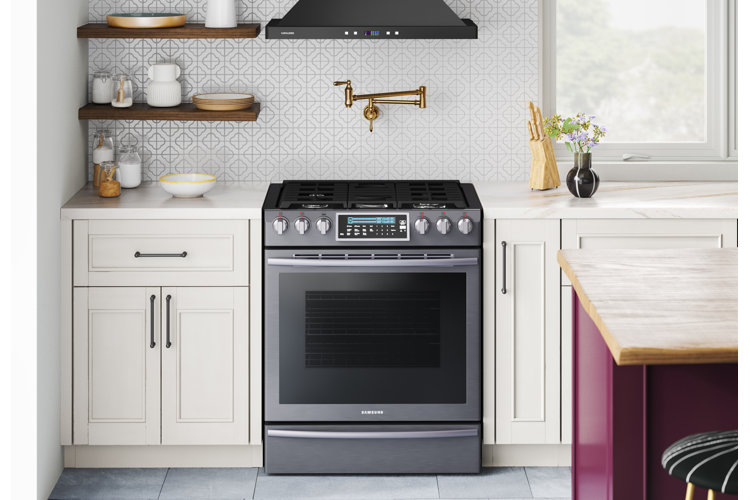
Selecting the right oven type is an important decision that affects how your food cooks, browns, and bakes. Read on to learn about the key differences between conventional and convection ovens so you can choose the best fit for your cooking style and kitchen needs.
Conventional vs. Convection Ovens
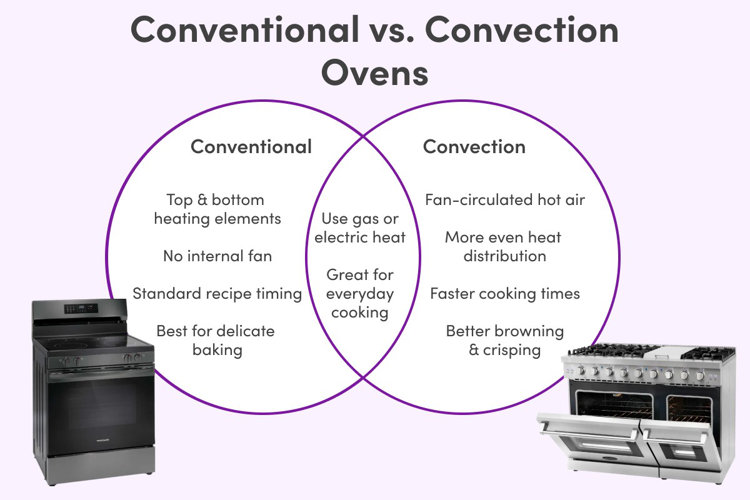
While they may look nearly identical from the outside, the way conventional and convection ovens circulate heat can noticeably impact cooking times, texture, and overall results. Understanding the pros and cons of each type will help you choose the option that aligns with your favorite recipes and daily cooking preferences.
Conventional Ovens: Pros & Cons
How They Work: Conventional ovens use heating elements (or a gas burner) at the top and bottom of the oven to heat the air. Heat naturally rises and settles, which can create slight temperature variations from top to bottom.
Conventional ovens are the most traditional and widely available oven type. Because they don’t use a fan to circulate air, heat distribution can vary slightly throughout the cavity. This makes them especially well-suited for recipes developed with conventional baking in mind, where gentler, stationary heat helps batters rise evenly.
Conventional Oven Pros:
- Great for delicate baked goods like cakes, custards, and souffles
- No fan means less risk of over-browning
- Typically more affordable
- Simple, straightforward cooking settings
Conventional Oven Cons:
- Can have uneven heat distribution
- Longer cooking times
- May require rotating pans for even results
Best For: Conventional ovens are best for traditional baking, casseroles, and recipes that don’t require crisping.
Convection Ovens: Pros & Cons
How They Work: Convection ovens include an internal fan and exhaust system that actively circulates hot air throughout the oven cavity. Instead of heat simply rising and settling, the fan continuously moves warm air around the food for more consistent coverage.
Because the heated air is constantly moving, convection ovens maintain a more consistent temperature from rack to rack and reduce hot and cool spots. The circulating air also helps remove surface moisture more quickly, which promotes browning and crisping.
Convection Oven Pros:
- Faster cooking times
- More even heat distribution
- Better browning and crisping
- Great for roasting meats and vegetables
Convection Oven Cons:
- Can dry out delicate baked goods
- May require reducing temperature by 25°F
- Often more expensive
Best For: Convection ovens are best for roasting, sheet pan meals, cookies, and foods that benefit from crisp edges.
Tip!
Many modern ovens include both settings. If you see “Convection Bake” or “Convection Roast” on the control panel, your oven likely offers convection functionality in addition to conventional heating.
Cooking Results: Side-by-Side Comparison
If you’re choosing an oven based on performance, here’s how conventional and convection ovens typically compare in common cooking scenarios:
Baking Cakes & Quick Breads
- Conventional: Promotes a more controlled rise and softer tops, making it ideal for delicate batters that need steady, gentle heat.
- Convection: May brown too quickly or create uneven lift due to circulating air, which can affect texture in delicate baked goods.
Roasting Vegetables
- Conventional: Produces tender interiors with light browning, though vegetables may not crisp as deeply without flipping.
- Convection: Creates crispy edges and deeper caramelization by continuously circulating hot air around the food.
Cooking Multiple Trays at Once
- Conventional: Best to bake one rack at a time to avoid uneven cooking between upper and lower racks.
- Convection: Circulating air helps cook multiple trays more evenly, reducing the need to rotate pans.
Cooking Time
- Conventional: Follows standard recipe timing with minimal adjustments needed.
- Convection: Typically cooks 10% to 25% faster, so recipes may require reduced time or temperature adjustments.
Recipe Preference
- Conventional: If you frequently roast, batch cook, or prefer crisp textures, convection ovens may offer noticeable advantages.
- Convection: If you love baking from traditional recipes and want predictable results, conventional ovens may be the better fit.
Which Oven Type Fits Your Cooking Style?
Still weighing your options? Consider how you most frequently cook and which results matter most in your kitchen:
Choose a Conventional Oven If:
- You regularly bake cakes, quick breads, or delicate desserts
- You prefer not to adjust cooking times or temperatures
- You’re furnishing a budget-conscious kitchen
- You mainly cook one dish at a time
- You value a classic, no-learning-curve experience
Choose a Convention Oven If:
- You roast meats or vegetables regularly
- You enjoy crisp, golden finishes
- You cook multiple dishes at once
- You want to shorten cooking times
- You prioritize even browning across trays
Tip!
Looking for more information before choosing the perfect oven for your home? Check out these related articles to help you find the right fit:
- What Is a Convection Oven? Your Must-Know Guide
- Air Fryer vs. Convection Oven: What's the Difference?
- How to Choose Which Type of Oven Is Best for You
