Do I Need a Humidifier? How to Choose the Right Type of Humidifier for Your Needs
Learn about the different types of humidifiers and the benefits of each.
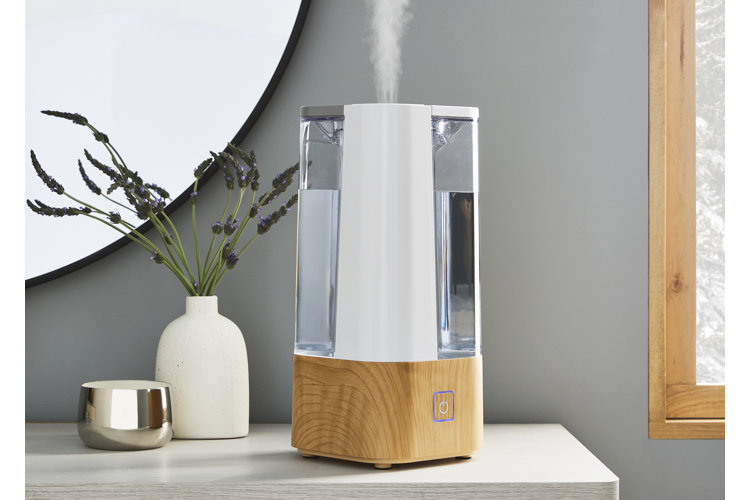
With plenty of health benefits, humidifiers help keep your home at a comfortable humidity level and come in a variety of designs to match your preferences. Our guide covers all you need to know about humidifiers, including tips on choosing the right type of humidifier, humidification method, and size.
What Is a Humidifier & Do I Need One?
What Are the Benefits of a Humidifier?
How to Choose a Humidifier
Tips for Using a Humidifier
What Is a Humidifier & Do I Need One?
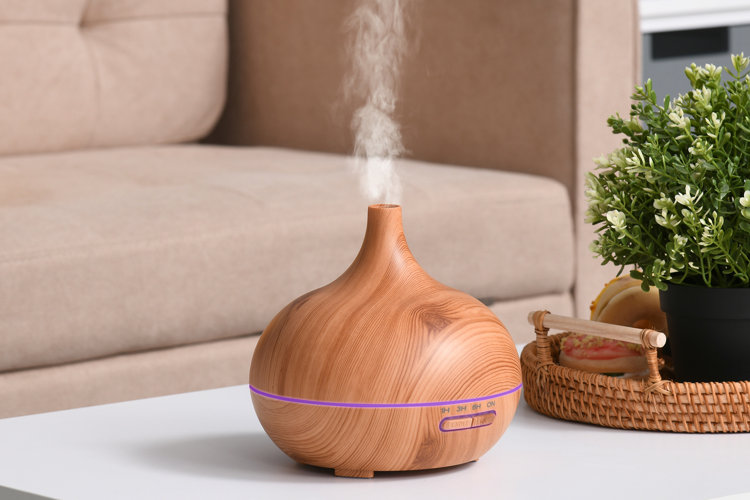
(Shop this image: tabletop humidifiers, rattan decorative trays, small faux plants, and beige sofas)
A humidifier is a device that adds cool or warm moisture into the air via the release of water vapor or steam in order to increase the level of humidity. They can help prevent dryness in your home and can be effective for treating breathing and skin issues as well as improving your home's air quality.
Signs you might need a humidifier include:
- Dry skin and chapped lips
- Allergies
- Asthma
- Nosebleeds
- Sore throat
- Irritated sinuses
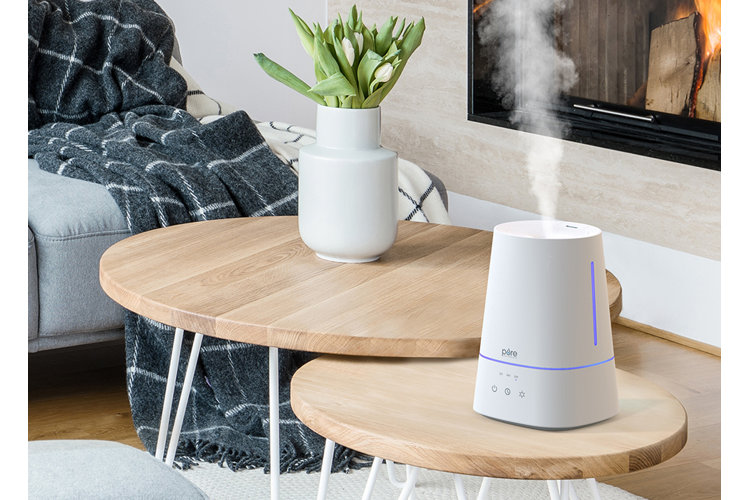
(Shop this image: tabletop humidifiers, nesting coffee tables, white pot planters, and gray throw blankets)
There are plenty of health benefits associated with using a humidifier.
Moisturization: Humidifiers are mainly used when the air is dry in your home. They are commonly used during cold winter months when the air is dry and during hot summer months when you find yourself running the air conditioner often.
Relief of Cold Symptoms: Dry air can cause your nasal passages to clog. When humidifiers add moisture into the air, they can help clear up any blockage in your throat and nose, letting you breathe easier.
Tip!
To ensure your respiratory problems don't worsen, be sure to check your manufacturer's instructions as well as your doctor's recommendations to confirm you are using your humidifier correctly.
Better Sleep: Humidifiers help the air in your room feel less dry, cutting down the amount of times you get up for water throughout the night and letting you sleep more soundly. If you find yourself snoring due to congestion or allergies, a humidifier can help clear up your congestion, resulting in better sleep.
Healthier Skin: Dry air can make your skin and scalp dry out, causing cracking, wrinkling, or flaking more easily. Having a humidifier will allow your skin to stay moisturized for longer.
How to Choose a Humidifier
The type of humidifier that you choose will depend on your preference, budget, and desired features.
1. Choose the Right Humidifier Design
Tabletop: Tabletop humidifiers are great for single rooms and can easily sit on a table of any size. They have refillable tanks and require frequent refilling. Additionally, their small size means they are portable, making them a great option for travel or to store away easily when not in use.
Tower: Tower humidifiers sit on the floor, have a tower-like shape, and are ideal for small to medium rooms. They have larger tanks than tabletop humidifiers and do not have to be filled up as often.
Console: A console humidifier is large enough to add moisture to your entire home. They have a larger water reservoir and can be transferred from room to room, ensuring that each area can be impacted by the humidifier. Humid air is heavier than dry air – if you put your console on the second floor in your home, it should cover the first floor as well.
Tip!
These types of humidifiers listed above do not require any assembly or installation. Most humidifiers require access to an electrical outlet while other models can be charged or powered by batteries.
2. Select a Humidification Method
Evaporative: An evaporative humidifier pulls air in and creates mist by blowing the air over a wet filter. Fans power the humidifier, helping it push the humid air into the room.
Steam: Steam humidifiers are electrically powered and heat water by turning it into steam. They then cool the steam before emitting it into the air. Steam humidifiers can cause burns, so be sure to keep them away from children.
Ultrasonic: An ultrasonic humidifier produces mist by using high-frequency vibrations to transform the water into a fine mist. A fan then blows the fine mist into the air. Ultrasonic humidifiers tend to be quiet, making them a good option for light sleepers.
Tip!
Try using filtered, bottled, or distilled water to stop your humidifier from producing dust.
3. Pick a Mist Type
Cool:A cool-mist humidifier uses a filter to trap minerals and any impurities in the area before allowing a cool mist to evaporate into the room. Due to the filters being used constantly, cool-mist humidifiers do require the filter to be changed and cleaned more often. If you live in a warmer climate, this type of humidifier is a good option for you.
Warm: A warm-mist humidifier creates a warm and soothing mist – great for anyone with cold or flu symptoms. The added bit of warmth makes them perfect for cold winter months.
Dual: Some types of humidifiers are capable of producing both cool and warm mist, giving you the flexibility of using one unit if you live in an area that experiences both cold winters and hot summers.
4. Consider Helpful Features
There are a few added features that can make using your humidifier a little more convenient.
Adjustable Humidistat: A humidistat helps monitor the amount of humidity in the air. If you opt for a humidifier with a built-in adjustable humidistat, you are able to set it to your desired humidity level.
Automatic Shutoff: Some humidifiers offer an automatic shutoff, allowing the humidifier to shut off automatically when the desired humidity is reached or when the water tank is empty.
Empty Tank Indicator: Units with an empty tank indicator will alert you when the tank is empty and needs to be refilled.
Variable Speed: A humidifier with variable speed lets you choose from two or three speed settings. This helps you change the moisture output, lower power usage, and adjust the noise level.
Remote-Operated: Control the humidifier from across the room with the help of a remote. Use the remote to turn the humidifier on and off, adjust the fan speed, or set a timer.
Timer: This feature allows you to set a timer for a specific amount of time.
5. Choose the Correct Size
The size of your room will play a role in the type of humidifier you get. To find the correct humidifier make sure to measure the size of the room in square feet. If your home isn't well insulated or has tall ceilings, we recommend choosing a larger humidifier.
Moisture Output
Moisture output is another element to consider when choosing a humidifier. Measured in GPD, or gallons per day, moisture output refers to the amount of moisture that is added to the air within a 24-hour period. The GPD can be calculated by the amount of water that is evaporated or measured by the moisture that passes through the humidifier.
The moisture output should correspond with the size of your room, which means that a larger room requires a higher GPD.
- For spaces smaller than 500 sq. ft., we recommend choosing a humidifier with a moisture output of 1.5–2 gallons per day.
- Rooms that are 700–800 sq. ft. should have a moisture output of 3–3.5 gallons per day
- 1000–2000 sq. ft. rooms are best suited with a moisture output of 7–9 gallons per day.
- Rooms larger than 2,000 sq. ft. need a humidifier with a moisture output over 10 gallons per day to fill the space with the proper humidity.
For more info on choosing the right humidifier size, read our guide Humidifier Sizes: Choosing the Right Size for Your Space.
Tips for Using a Humidifier
When using a humidifier, there are a few things to consider:
- Proper usage and cleaning will help make a humidifier more effective.
- The humidity in your home should stay between 30% and 50%. Too much moisture could lead to mildew or mold in your home.
- Many humidifier designs need to be cleaned every two or three days. Make sure to clean the unit thoroughly and let it dry before using the humidifier again.
- Because the humidifier produces condensation, it's important to place the humidifier away from walls or fabrics (like curtains or upholstery) to prevent mold.
- Before you store a humidifier, check to see if all of the components are dry so that mold doesn't grow.
