How to Choose the Right Size Bed for Your Dog
Find the perfect fit for your four-legged friend.
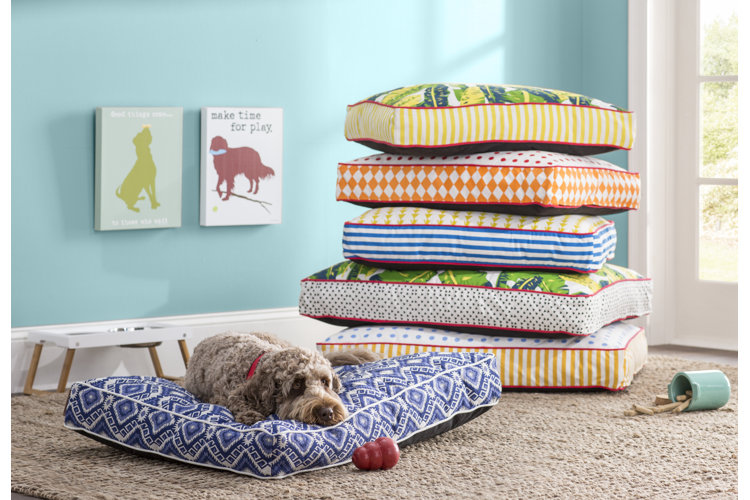
Just like you, your dog feels better in day-to-day life when they sleep well. Choosing the correct dog bed will ensure they are getting enough support and have plenty of room to stretch out while they sleep. If you’ve been wondering what size dog bed is right for your pup, keep reading for tips on choosing the perfect one.
1. Measure Your Dog
2. Know Their Weight
3. Consider Age & Health
4. Recognize Their Sleeping Style
5. Choose the Best Size
1. Measure Your Dog
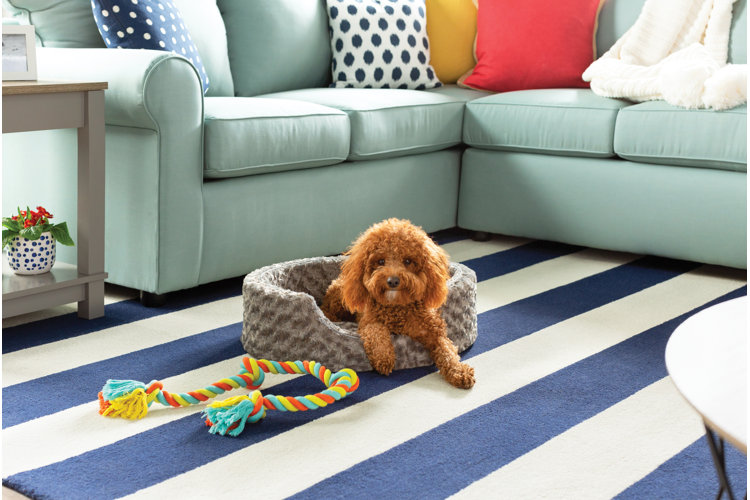
*(Shop this image: blue striped area rugs, small bolster dog beds, polka dot throw pillows, and white blankets
The first step in choosing the right bed for your dog is to measure their length. Measure from the tip of their nose to the base of their tail while they are standing up on all four feet. Add roughly 6" – 12" to make sure they have plenty of space. This should be the length of your dog bed.
Then measure your dog from shoulder to shoulder at their widest point. Add 6" – 12" to both sides to ensure they have enough space to move around. This will help you find the ideal width of your dog bed.
2. Know Their Weight
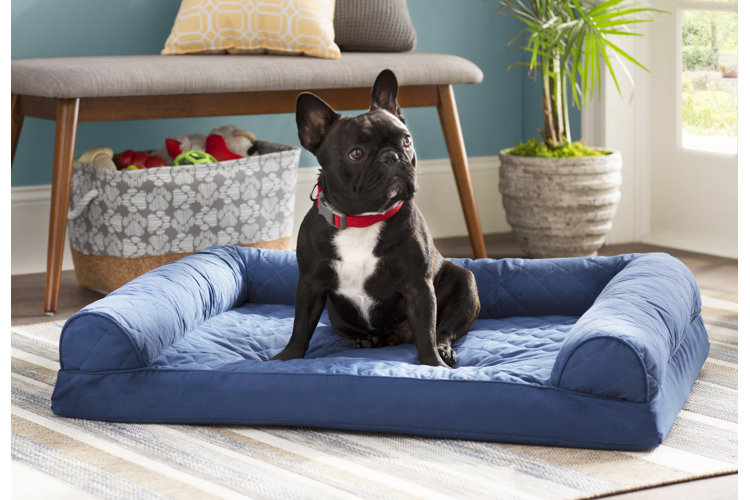
(Shop this image: entryway benches, blue dog beds, striped area rugs, and fabric storage baskets)
Now that you have determined the length and width of your dog bed, it’s important to know how much your dog weighs. Many dog bed sizes are categorized by the dog's weight. However, be sure to check the measurements on the bed to ensure that your dog will be able to sleep comfortably. You can find this information in the Weights & Dimensions section on the product page.
3. Consider Age & Health
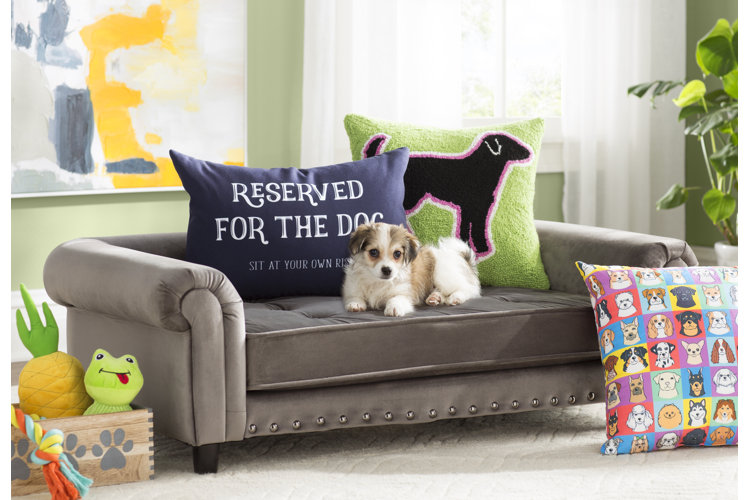
(Shop this image: sofa dog beds, wood storage bins, animal throw pillows, and white area rugs)
Your dog’s age and health will impact the size and style of bed you purchase. If they are older and have joint issues, you may want to get a bed that is a bit larger so they have plenty of space to stretch out. Consider choosing an elevated or cot bed so it’s easier for your old pup to stand up and lay down. If you’re buying a bed for a puppy, consider how large the dog will be when full-grown so you can extend the use of your dog bed.
(Shop this image: yellow dog beds, white bedding sets, woven area rugs, blue throw pillows)
Another factor to consider is your dog’s sleeping style. If you have a smaller dog that loves to sprawl out when sleeping, you may want to consider a bigger bed. If you have a larger dog that loves to curl up in a tiny ball, you may want to get a smaller bed. It all depends on your dog's sleeping needs.
Sprawlers: Dogs who love to stretch in all directions are considered sprawlers. They like to use the entire surface of the bed and take up lots of room. Some dogs like to sleep sprawled out on their side, especially in warmer climates, because exposing their belly can help them cool off. The best beds for them are a rectangular pillow bed or a roomy pad.
Curlers: Curling up in a ball is a common sleeping style for most dogs, harkening back to their roots when they were wild and had pack mentality. They would curl up in a ball to conserve their body heat and protect themselves from any predators, hiding away their vulnerable organs. Dogs who love to fall asleep curled up may prefer a doughnut bed or a round bolster bed.
Burrowers: Burrowers love to dig in and go under the covers. They like to make a cozy nest, creating that cave feel. You may notice that burrowers love to sleep with you in your bed, burrowing under your blankets. The best beds for them are hooded or domed dog beds.
Leaners: Leaners love to rest their heads against something and love the feeling of support, making bolster beds the perfect option for leaners. You can also opt for a dog sofa.
(Shop this image: elevated dog beds, wicker storage baskets, elevated dog feeders, wooden wall hooks)
Extra Small: Extra-small dog beds are recommended for dogs under 10 lbs. This includes breeds like Yorkies, Chihuahuas, Pomeranians, and Maltese.
Small: Small beds are best suited for dogs between 11–25 lbs. such as pugs, French bulldogs, and Boston terriers.
Medium: Medium beds encompass dogs that are between 26–40 lbs. For example, beagles, schnauzers, and corgis would fall into this category.
Large: Dogs between 41–70 lbs. would fit well in a large dog bed. Some common breeds in this category are boxers, bulldogs, cocker spaniels, and Goldendoodles.
Extra Large: For dogs between 71–90 lbs., choose an extra-large bed. This is for breeds like golden retrievers, German shepherds, and rottweilers.
XXL: XXL size dog beds are for the largest dog breeds like Great Danes, Bernese mountain dogs, and Newfoundlands that weigh upwards of 91 lbs.
Tip!
Want to learn more about dog bed types and features? Check out our guide Best Dog Beds: Types & Features.
