Everything You Need to Know About Types of Water Filters & Water Filtration Benefits
Improve your health and well-being with clean water right at your fingertips.
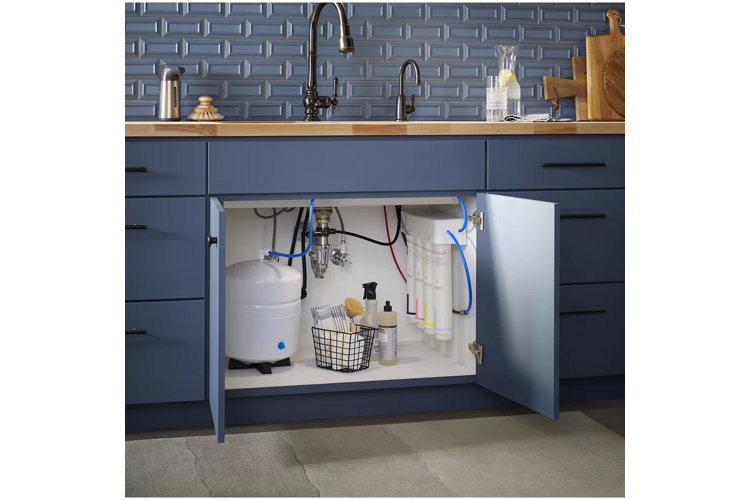
Whether your home uses city water or well water, a water filtration system is essential to preventing unwanted chemicals and bacteria from ending up in your body, corroding your appliances, and affecting the taste of your drinking water. Read further to learn more about water filtration and the types of water filters that you can install in your home.
What Is Water Filtration
Benefits of Water Filtration In Your Home
Before You Buy
Types of Water Filtration Systems
Beneficial Features to Consider
What Is Water Filtration
Water filtration is the process by which water filters remove sediment, chemicals, potentially harmful pathogens, and particles that contribute to unpleasant taste or odors from water supplies for clean use in dishwashing, showering, clothes-washing, and of course, drinking. Water filtration systems usually have built-in filter cartridges composed of activated carbon, alkaline, or another natural filter material paired with a tight synthetic mesh meant for trapping particles that make it through the initial layer. Depending on the type of water filtration system you choose, there may be multiple filtration stages for water to filter through – more on that below.
Benefits of Water Filtration In Your Home
There are so many benefits of water filters in your home. Water filtration systems can benefit your health, prolong the life of your pipes and home appliances, and even promote your skin and hair vibrancy. Review the list of benefits below to learn about all the ways a water filtration system is totally worth it for your home:
- Clean Drinking Water: The most important benefit of water filtration is that it ensures clean drinking water. Drinking filtered water eliminates any unwanted chemicals or particles like pesticides, waste, and toxic heavy metals like lead, which can cause health conditions overtime. Whether you drink tap water regularly, or use water for coffee, tea, and cooking, drinking water filters for home use are of the utmost importance to your health and well-being.
- Odorless Water for Cooking & Washing: We've all been there. You go to take a sip of water, unload your dishwasher or boil water for dinner and there it is — the odd lake water smell, with hints of algae and other unsavory odors. With a water filtration system hooked up to your sink or dishwasher, you won't have to worry about odor! Water filters trap odor particles, chemicals, and metals that produce the odd metallic taste or fish-like smell that makes you second-guess your hydration needs.
- Clean Shower Water: Just as water filtration systems ensure you ingest clean, safe drinking water, they can also influence the chemicals in your shower water, which interacts directly with your skin and hair. One culprit that water filters block out is calcium. This mineral can cause skin breakouts and clogged pores, which counteracts your efforts to get squeaky clean. Similarly, calcium, magnesium, and other minerals in unfiltered shower water can dull dyed hair, cause hair loss, and cause hair breakage.
- Better Quality Clothes & Long-Lasting Wear: When washing machines have a water filtration system, they prevent hard water (water laden with chemicals and minerals) from interacting with your beloved statement pieces and everyday basics. A good water filter blocks calcium and magnesium from mixing with your clothes. These two minerals can dull the vibrancy of fabric colors and even reduce the soft feel of your favorite clothes, so a water filtration system is a necessity for a better lifespan for your clothing.
- More Eco-Friendly: Water filters block chemicals and sediment build-up that would otherwise infiltrate your pipes and water appliances, causing them to work harder to produce the same results, using up more energy. Therefore, water filters can actually help promote lower energy consumption.
- More Inexpensive Overall: Closely tied to being eco-friendly, a water filtration system can save you a lot of money in the long run, as appliances like washing machines, dishwashers, showers, and kitchen sinks won't have the same amount of corrosion damage or build-up as those without water filtration systems. This will keep your water and energy bills lower and keep your appliances running longer so you don't have to replace them as often. Because drinking water filtration systems hook to a water line, they also save you more money than buying bottled water as you only need to replace cartridges every few months.
Before You Buy
Before you start deciding between water filtration systems, make sure you take a look at these considerations to help in your decision:
1. Which areas of your home already have water filtration systems?
Asking yourself this question will help you focus on the specific area of your home where you need to add a water filtration system, such as a drinking faucet, general tap faucet, or shower head. However, the best way to ensure the quality of all the water that enters your home is by investing in a whole house water filtration system. You will need professional help to install it, but once completed, you can ensure clean water for drinking, washing, cooking, or bathing with just occasional filter changes.
2. How much water do you need to filter at a time?
Water filters vary in size and capacity, so it's important to think about how much water you use on an average day. If you live in a small household with a few people or by yourself, you may benefit from a countertop or faucet-mount water filtration system. These methods of water filtration require minimal installation on your part and easily filter water for a glass or two at a time. If you use a lot more water from the kitchen sink, you may benefit from an under–sink water filtration tank to filter large quantities of water for drinking, cooking, and cleaning.
3. Which chemicals do you want removed?
Although water filtration systems aim to eliminate all harmful chemicals and particles from getting into your water supply, there are some systems that focus on eliminating specific contaminants. This is an especially important consideration for individuals with health conditions who are more sensitive to certain chemicals or minerals. Water filtration systems for showers usually target minerals like calcium and toxic heavy metals that can irritate the skin and hair, while water filtration systems meant for drinking water may seek to eliminate or reduce a wider variety of contaminants, from calcium and toxic metals to pesticides, asbestos, mercury, and chlorine.
Most water filtration systems seek to remove chlorine, toxic metals, pesticides, and bacteria. Always review the product description on a water filtration system to determine which contaminants it targets and prevents from entering your water.
4. How often do you want to have to change the filter?
The size and type of your water filtration system may influence how often you need to change the filter. In general, water filters should get replaced every two to six months. Smaller water filters with sediment-blocking properties may require changes every two months, while other water filtration systems may only need replacement filters after a year. When the time comes to change the filter, you may need to order one if you don't have some stocked up.
When browsing for a water filtration system, you can determine how often you need to change the filter by reviewing the specifications tab on product pages.
Types of Water Filtration Systems
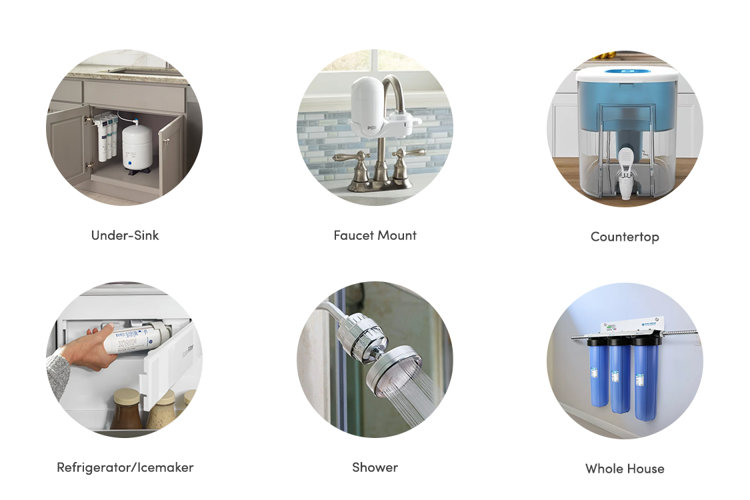
There are so many types of water filters to choose from to upgrade the quality of your home's water supply. Check out these water filtration systems to help narrow your search:
Under-Sink: Want a water filtration system that creates clean water to drink, cook with, and wash dishes with? Transform your tap water with an under-sink water filtration system. Not only does this type of water filtration make your tap water clean of sediment, lead, toxic metals, and unwanted odors, but it also keeps your countertop clear and aesthetically-pleasing. Under-sink systems connect to your sink's water line. Water goes from the water line into the filter system and from there collects in a tank for a clean water reservoir.
This tank connects to the faucet by a pipe designed to pump water upwards and out of the spigot for clean, refreshing water. As the reservoir goes down, more water enters into the filters from the water line and refills the reservoir as needed. Filter cartridges can last anywhere from three to six months or more, depending on the product specifications. You may need a professional plumbing specialist to help you install an under-sink system to ensure quality installation.
Faucet-Mount: If you want a quick solution to water filtration that's both budget-friendly and doesn't require a professional to install, a faucet-mount water filter is the way to go. Faucet-mount water filtration systems are super easy to install – they usually attach to the end of a sink faucet. All you need to do is secure the filter to the end of the faucet with a turning motion and click the filter cartridge into place. The result? Odor-free clean water that runs from your water line up through your sink's faucet, through the filtration cartridge, and then into your cup. These types of water filters usually aim to reduce odor, as well as remove lead, parasites, and other minerals, depending on the filter's capabilities. Due to their size, you may need to replace the filter cartridges on faucet-mount systems about every two months.
Countertop: Countertop systems can range from countertop water reservoirs to more portable options like filtered water pitchers with a hole to filter water into, which you can easily chill in the fridge for all-day hydration. Like faucet-mount designs, countertop filtration systems can also connect to the faucet for a more permanent water filtration approach. The filtration cartridge has its own faucet protruding from one end and a water pipe on the other, which hooks up to the sink faucet. When you turn on the faucet, the water filters through the countertop filtration cartridges and out of the container's built-in faucet and into your cup.
These systems also don't require professional installation, making them a quick and easy water purification solution for your home. Note that filter replacement times may vary depending on the size of the cartridges.
Refrigerator/Icemaker: Refrigerators with water dispensers and ice makers usually already have a built-in water purification system, but you can change out the filters with other cartridges specified for use by the appliance manufacturer to ensure the removal of harmful bacteria, certain toxic metals, pesticides, and other contaminants you want to keep out of your water supply so that you know you're getting the cleanest drinking water possible. The process is as easy as switching out the old cartridge with a new one compatible with your fridge. You can also look for filter cartridges with long lifespans of up to six months or more so you don't have to worry about frequent filter changes. Installation is easy once you determine which filter brands work for your refrigerator – no professional installation is required. Review the refrigerator's instruction manual to determine where to locate the filter compartment and how to correctly attach it.
Shower: Install a shower filtration system to keep out minerals like calcium and magnesium and chemicals like chlorine that cause acne and dry, brittle hair. The process is relatively user-friendly so you don't need to call on a professional service – you don't even need to turn off any water lines. Install a shower system by first unscrewing your showerhead from your shower pipe. Then screw on the water filter portion. If a shower water filter states it works with all showerheads, you can simply reattach your old showerhead to the water filter and you're good to go! However, some shower filtration systems come with their own showerheads or handheld showerhead varieties, in case you want to toss out your old showerhead all together.
This is how the filter works: When you turn on the shower, water gets pumped from the water line to the shower pipe. Then, instead of going right through the showerhead, the water has to go through an activated carbon block or other filter material and a semi-porous mesh to trap unwanted minerals and chemicals before leaving the showerhead as clean water. When it comes to filter lifespan, there are a variety of options that only need replacing at the six-month or one-year mark for hands-off maintenance.
Whole-House: Why isolate one area of your home when you can ensure your entire home's water supply goes through a filtration process? Whole-house water filtration systems are typically larger than other systems and have multiple filtration stages to purify large quantities of water at a time. They usually go in garages, basements, water-closets, or other areas of the home located close to the water shut-off valve.
These filtration systems filter the water that comes from exterior water pipes into your home's water lines, trapping and filtering out any harmful chemicals, toxic metals, sediment, or bacteria so only purified water gets transported to sinks, showers, and appliances. Make sure to review a whole-house filtration system's filter capabilities, as some target a wider range of chemicals, minerals, and other harmful contaminants.
These systems likely need filter replacements every six months to a year. We recommend having a plumbing professional install your whole-house water system to guarantee adequate performance and successful installation.
Beneficial Features to Consider
Be on the lookout for water filtration systems with one or more of these features to elevate the quality of your water supply and your overall quality of life:
Filtration Stages: Water filtration systems can have one filtration stage or multiple filtration stages, so you should determine which one meets your clean-water needs. Water filtration systems with one filtration stage typically come in more compact varieties like those for faucet-mount, countertop, or refrigerator water sources and have a simplified filter cartridge meant for preventing sediment build-up. It works by trapping particles that affect the taste and smell of the water, as well as trapping harmful chemicals like lead. While one filtration stage may not eliminate every contaminant in your water, there are plenty of options that focus on a few specific contaminants so you can choose the one that targets those specific to your area's water supply.
Systems with multiple filtration stages aim to eliminate a wider range of contaminants and sediment build-up, which is why you typically see them in under-sink or whole-house filtration systems. Multiple filtration stages allow you to filter large quantities of water at a time and usually include multiple filter cartridges that the water must run through, guaranteeing the rid of sediment, bacteria, pesticides, and metals.
Reverse Osmosis: Reverse osmosis is a water filtration feature that provides optimal water filtration for pure drinking water. In this method of water filtration, water gets pushed or pressurized into a semi-porous membrane with an almost solid-looking appearance. The pressure on the water forces it through the membrane and traps bacteria, parasites, toxic metals, and a range of different-sized particles, resulting in some of the best, cleanest water to drink. Reverse osmosis water filtration systems come as one filtration stage or multiple, so you can achieve the level of water purification you want without having to install an elaborate system.
Filter Change Indicator: Water filtration systems with a filter change indicator tell you exactly when it's time to change the filter, so you don't have to guess. This usually looks like a filter change light on the outside of the water filter that signals that it's time to change out the cartridge(s).
UV Filter Light: If you really want to ensure bacteria, parasites, and other microorganisms don't get into your water supply, look for types of water filters with a UV filter light in addition to filtration stages. UV lights remove bacteria and other microorganisms not captured at the initial filtration stages and prevent them from spreading to ensure your drinking water doesn't contain harmful viruses or bacterial contaminants.
NSF Safety Listing: The best way to determine the quality of a water filtration system is by looking out for NSF safety listings. The NSF, also known as the National Sanitation Foundation, has strict criteria for products like water filtration systems to ensure they align with public health needs and standards for drinking water. Products with this listing have been approved by the NSF, so you can rest-assured of its water filtration quality.
Start reaping the benefits of water filters in your home:
