Find the Best Pet Carrier for Your Travel
Keep your pet comfortable and safe the whole journey.
If you find yourself needing to travel with your pet, you will need a pet carrier to keep everyone safe and comfortable. These items provide a safe space for your dog or cat to sit for the duration of your travel, whether you’re traveling by land, water, or even in the air! Here’s your guide for finding the right option for your pet.
Types of Pet Carriers
Traditional Carriers: Carriers offer a lot of versatility in design to best suit your pet’s needs – they can be hard- or soft-sided, wearable, include wheels, or come with a handle for easy toting. Some wearable carriers can be worn as a backpack or a sling, which makes them the perfect solution for outings such as hiking or times when you need to keep your pet close. Hard carriers are made from tough, chew-resistant materials like plastic for extra durability and to keep your dog or cat securely inside. If you are still potty-training, a hard crate is also easier to clean. Soft carriers are often more lightweight and comfortable for longer travels, but less durable because of their softer materials.
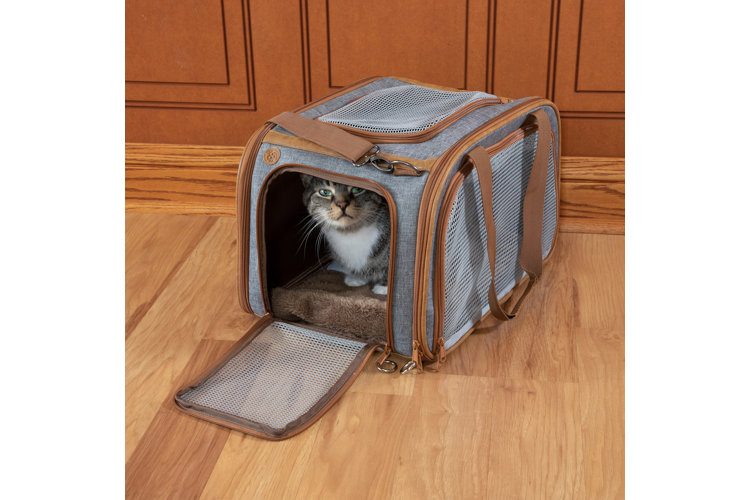
Soft-Sided Crate: Soft-sided crates can be used as a pet carrier for cats and dogs. Their soft bottom and sides provide a comfortable space for your pet to lay down. Since many soft-sided crates have a handle or strap, you can cart the carrier anywhere you go. These crates include doors with zippers to keep the crate securely closed.
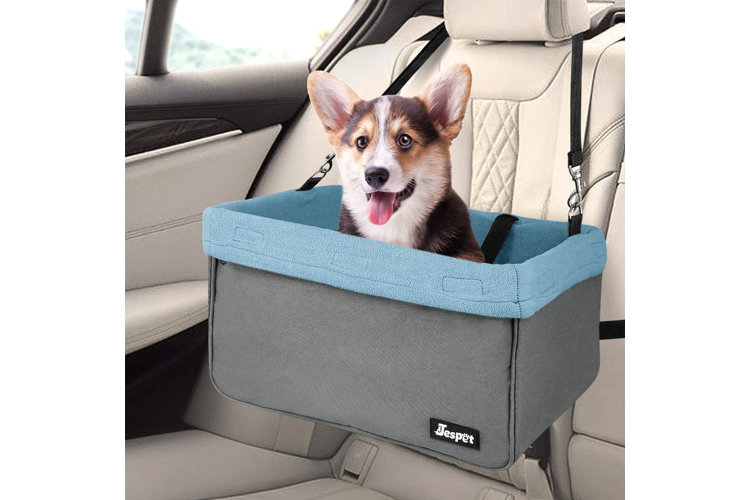
Vehicle Travel Carrier: If you’re going on a road trip and bringing your furry friend along, keep them secure with a vehicle travel carrier. These pet carriers work by fitting in the seats of your car and attaching to your seat belts to stay in place. The carriers are made from soft materials to keep your dog or cat comfortable during the journey. Vehicle carriers can zip up if you need to keep your pet in place during the drive, or you can choose a box-shaped carrier for pets that are more trained.
Airline-Approved Carriers: There are a lot of regulations to consider when selecting the best pet carrier for airline travel, so selecting one that is already regulation-approved can save you a lot of time. These pet carriers come with a waterproof bottom and proper ventilation, as well as a zipper to keep your pet securely in the carrier the entire time.
Polyester: Polyester, which is typically what soft pet carriers are made of, is the most comfortable carrier material for your pet. These soft carriers feature a cushioned bottom and mesh siding for plenty of air ventilation and to allow your pet to remain visible the entire time they are in the carrier. Hard plastic carriers typically have opaque sides that conceal your pet more. Polyester pet carriers are typically airline-approved and water-resistant, which makes them versatile for all types of travel.
Plastic: Plastic carriers are a lot stronger than polyester, since plastic is a harder material. If you have a larger or heavier pet, this construction is able to withstand its weight while also providing material that is chew-resistant to keep your pet confined in the carrier. They have metal doors on the end that are chew-resistant as well, guaranteeing that your pet can’t break out. A plastic pet carrier is also easier to clean in case of an accident, and they offer more privacy. These pet carriers have ventilation holes on the side for air-flow.
In order to find the best pet carrier for airline or car travel, sizing is important. Not only does size matter for fitting the carrier into your vehicle or on a plane, but it also matters for the comfort of your pet. Your pet carrier should have enough room for your dog to turn around comfortably, while cats should be in a cage that is one and half times their size.
You will need to measure the size of your dog or cat before searching for the best pet carrier.
- Using the measuring tape, measure the back of your dog or cat’s neck from where the collar is to the base of the tail. Write down this measurement.
- Next, use the measuring tape to measure the height from the top of your dog’s shoulder to the bottom of their paw. Write down this measurement. You will only need to measure one leg. For cats, measure from the top of one ear to the bottom of one paw.
- To find a pet carrier for dogs or cats, you will have to add a few inches to the recorded measurements – how much is dependent on the type of carrier. Add two to three inches onto the shoulder measurement for soft carriers and three to five inches for hard carriers.
- Selecting the best pet carrier for cats requires one more step: Multiply your cat’s recorded length by 1.5 to find the appropriate size carrier so your cat can move around.
- The total measurement you come up with is roughly the pet carrier dimensions you should be shopping for.
- You should also record your pet’s weight when looking for your carrier since all types of carriers have a weight limit. If you’re opting for a backpack carrier or sling, read each product description for weight limits to choose the right carrier. These pet carriers are meant to be more snug since you’re carrying your dog, so extra room is not necessary.
- Use the approximate dimensions and your pet’s weight to select the right carrier for them. Each pet carrier has a specifications section that will indicate the total amount of weight it can hold and the overall length, height, and depth dimensions.
The day of traveling is not the proper time to introduce your dog or cat to their pet carrier. This will only cause anxiety and frustration for your pet that can lead to them whining or chewing on the carrier since they are not accustomed to the space.
If possible, make plans to introduce your pet to the carrier well in advance. The best timeline if you are working on a crunch is a few days to at least a week before you leave. Follow the below steps to help your pet to familiarize themselves with their pet carrier.
- Keep the pet carrier warm and soft with a blanket.
- Place the carrier in your pet’s room or “happy place” for it to frequent on their own.
- Let your pet get accustomed to the carrier by going in and out of it on their own before testing out shutting the door. This helps them to develop a comfort with the carrier before they’re enclosed in the space.
- Practice picking the carrier up several times with your pet inside and introducing them to people while in the carrier.
