Fish Tank Sizes: Aquarium Dimensions & Weight
Learn how to give your fish a happy, healthy home.
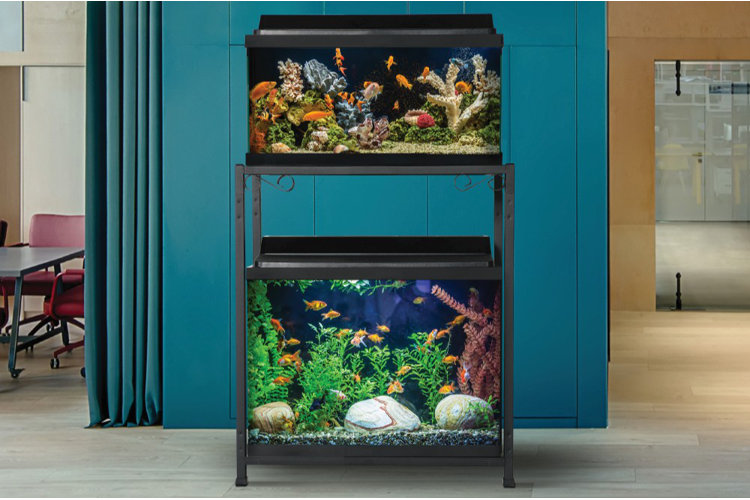
Before choosing an aquarium for you home, it's crucial to understand how its dimensions can impact your fish's health and quality of life. Keep reading for a comprehensive breakdown on fish tank sizes, so you can make the perfect selection.
Aquarium Dimensions & Weight by Gallon Size
| Tank size | Typical dimensions | Est. full weight | Best for |
|---|---|---|---|
| 10 gallon | 20" x 10" x 12" | ~111 lb | Small starter setups |
| 20 gallon | 30" x 12" x 12" | ~225 lb | Beginner community tanks |
| 40 gallon | 36" x 18" x 16" | ~455 lb | Active fish species |
| 75 gallon | 48" x 18" x 21" | ~850 lb | Larger mixed species |
Before choosing an aquarium, compare dimensions and full-tank weight. Gallon size alone does not tell you whether the tank fits your room, stand, or floor load tolerance. Use the chart above to match your fish goals with a realistic setup footprint.
10-Gallon Tanks
10-gallon tanks are best suited for small starter setups housing a single fish or tiny nano species. Reaching the minimum recommended threshold for a stable environment, this size ensures adequate gas exchange, helps prevent rapid pH fluctuations and waste buildup, and offers just enough space for fish to swim without overwhelming a small room.
20-Gallon Tanks
20-gallon tanks are ideal for beginner community aquariums housing about a half-dozen small fish under 3" each. These affordable, compact aquariums make excellent decorative accents for living spaces, though they still require diligent maintenance to balance filtration and chemical levels in a manageable footprint.
40-Gallon Tanks
40-gallon tanks are perfect for active fish species and schools of 6 to 12 small fish. The extra water volume creates a buffer that stabilizes water quality and reduces maintenance frequency, making it an eye-catching conversation piece for entryways or living rooms.
75+ Gallon Tanks
Aquariums that are 75 gallons or more are the standard choice for housing a large, diverse community or larger fish species. These substantial setups serve as striking focal points in a home – often requiring dedicated stands and verified floor support – while offering maximum environmental stability and swimming room.
Which Fish Tank Size Is Right for Your Fish?
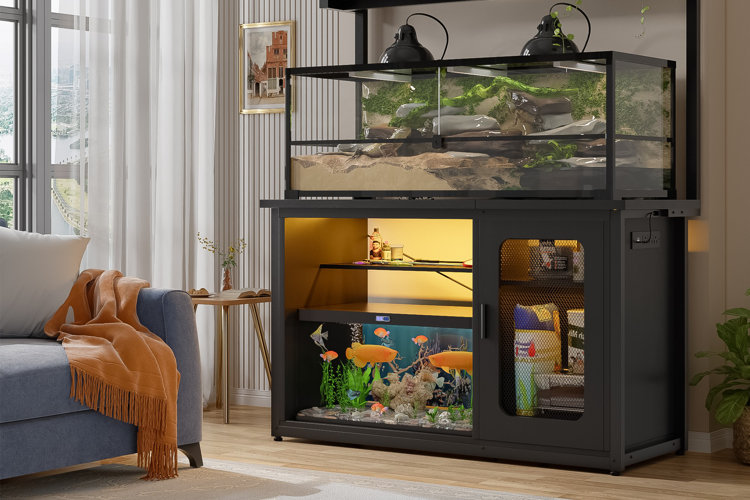
Generally, it’s recommended to choose an aquarium size that can hold one gallon of water per inch of fish – though this rule only applies to small, low-bioload fish up to 3" long. It’s important to research your specific types of fish to make sure you are providing the proper environment for them.
If you're starting your first aquarium, prioritize water stability over minimum footprint. In many cases, a 20-gallon setup offers a more forgiving environment than a 10-gallon tank and gives fish more swimming room as they mature.
Beginner Fish
A 20-gallon tank is an ideal size for beginners. While nano setups under 10 gallons may seem easier, the larger 20-gallon volume dilutes waste products and prevents dangerous fluctuations in water chemistry and temperature. It offers a forgiving environment for first-time keepers while providing enough room to comfortably support a small group of hardy fish.
Community Tanks
A 30- to 40-gallon tank is best for a mixed community setup containing half a dozen to a dozen small, peaceful fish. A 40-gallon aquarium is particularly popular because its wider depth gives schooling species like tetras, rasboras, and bottom-dwelling corydoras distinct swimming zones without crowding each other.
Large Species
A 75-gallon or larger tank is necessary for big fish species such as fancy goldfish, angelfish, oscars, or adult plecos. Large fish generate a significant amount of waste and need substantial room to swim and mature to their natural size. Tanks in this range ensure stable water quality and offer the heavy-duty filtration capacity needed to support high-waste species.
Territorial Species
A 40- to 75+ gallon tank is essential for territorial fish like many cichlid species. These fish establish personal spaces to guard, so ample floor area allows you to divide the aquarium using rockwork and plants, creating distinct line-of-sight barriers that minimize aggression and keep multiple territorial fish safe.
Types of Aquariums & Materials
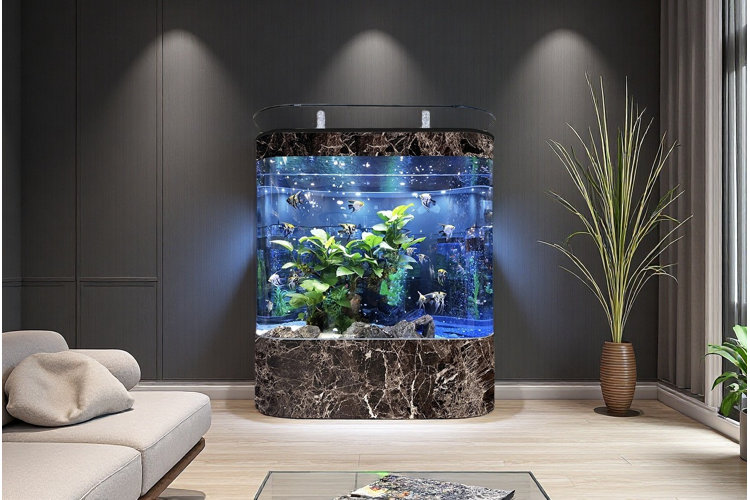
Saltwater vs. Freshwater Aquariums
- Saltwater: Saltwater tanks require special filtration, so it's important to make sure your selection is large enough to accommodate a filter and properly fits within your space. Common species of saltwater fish are clownfish, gobies, green chromis, or cardinalfish.
- Freshwater: Freshwater tanks are easy to clean and cost less upfront, making them a great selection for first-time fish owners. Popular types of freshwater fish include bettas, goldfish, tetras, and cichlids.
Tank Materials
- Glass: Glass aquariums are affordable and easy to clean. They may be more fragile and come in fewer designs than acrylic aquariums, but are often more durable and scratch-resistant. If you choose a glass aquarium, place it on a flat surface large enough to accommodate the entire base – this prevents any uneven weight distribution that may cause cracking.
- Acrylic: Acrylic aquariums are lighter than glass options and available in plenty of designs. Though they are more prone to scratching, this is a shatterproof option about 17 times more durable than glass. The increased sturdiness and lightweight design often make acrylic tanks more expensive yet a worthwhile investment.
Base & Stand Materials
- Metal: Metal aquarium bases are strong, reliable, and long-lasting – making them the best choice for extra-large fish tanks. These durable stands are often made from steel or aluminum, and can be more expensive than wood bases.
- Wood: Wood aquarium bases are typically painted or sealed to avoid warping or water damage. Wood bases are the best option if you want your tank stand to blend in seamlessly with your furniture.
Neighborly Tip!
Now that you’ve compared different types of fish tanks to find the right aquarium for your home, read What Fish Tank Accessories Do You Need? and How to Set Up a Fish Tank: Step-By-Step Instructions for the next steps.
Frequently Asked Questions
How big is a 55-gallon fish tank?
A 55-gallon fish tank is about 48" x 13" x 20".
What size tank for a betta fish?
Betta fish require at least 5 gallons.
What size tank for a goldfish?
One goldfish requires 20 gallons of water, plus 10 gallons per additional goldfish.
What is a good beginner fish tank size?
A 20-gallon tank is a strong beginner baseline because it provides better water stability and fish room than very small tanks.
How much does a full 40-gallon fish tank weigh?
A full 40-gallon setup can weigh roughly 450 pounds or more depending on substrate, rock, and decor, so stand and floor support matter.
