Gas vs. Electric Stove: Which One is Right for You?
Let’s get cooking!
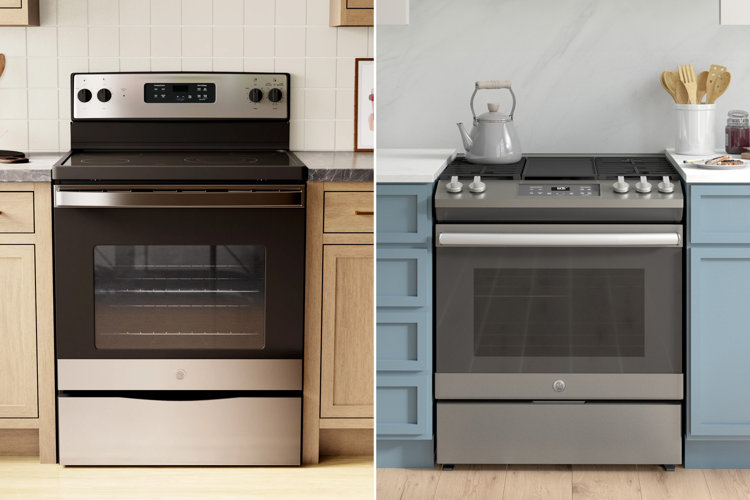
Whether you prioritize aesthetics, temperature control, or easy maintenance, there’s a range out there that’s right for you. In this article, we’ll break down the different types of gas and electric stoves and provide simple steps to help you choose the right one.
Gas vs. Electric Stoves: Which Type of Range Is Best?
Oftentimes, stoves and ranges are used interchangeably to describe an appliance with both oven and cooktop capabilities. To learn more about the difference between a range and a cooktop, check out our guide Cooktop vs. Range: Which One is Right for Your Kitchen?. Now, here are the types of ranges based on fuel source:
Gas Ranges
Gas stoves use an open flame from burners to heat cookware, with sturdy grates providing support. They require connection to a gas line for fueling.
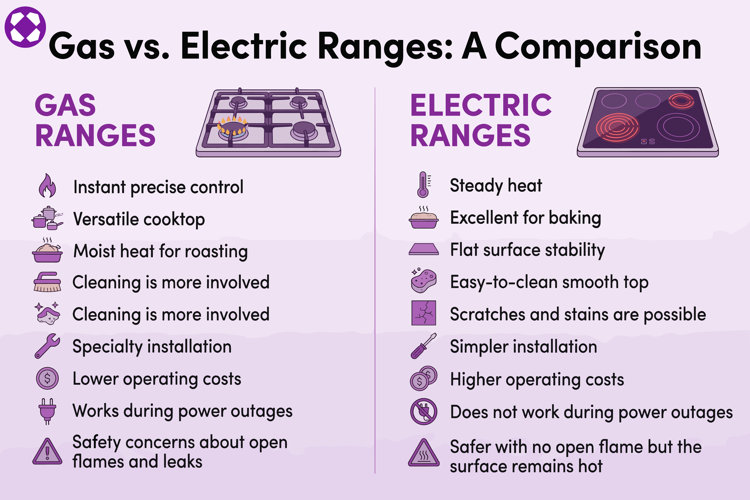
Pros: Gas ranges have fast and precise temperature control to enhance your cooking experience and the quality of some cooking techniques. While they may cost more upfront, they are generally more cost-effective to run.
Cons: Because they are fueled with gas, these appliances require connection to a gas line in your kitchen and a range hood – making them more complicated to install in some homes. Their complex parts require more maintenance than electric stoves and are generally more difficult to clean.
Electric Ranges
Smooth-top stoves feature a flat surface made of glass or ceramic with hidden heating elements inside while coil-top stoves have exposed metal coil burners that heat up when powered – but both are electrically fueled.
Pros: Electric ranges typically have lower upfront costs – especially coil-top stoves which are the most budget-friendly appliance option. Smooth-top electric stoves provide a modern look that is easy to clean, and electric stoves are simple to install in most kitchens.
Cons: While they may be less expensive upfront, electric stoves will likely increase your electric bill and cost more over time. Electric stoves take longer to heat up and cool down, making precise temperature control more difficult while cooking.
(Shop this image: black gas ranges, wall-mounted range hoods, white backsplash tiles, leather bar stools, and gold pendant lights)
1. Decide on Your Budget
Your budget is one of the first things to consider when choosing between a gas or electric range. Generally, electric ranges tend to have lower upfront costs but will likely increase your electricity bill. Between glass-top and coil-top electric ranges, coil can offer an even more affordable electric option. Gas ranges, on the other hand, may have higher upfront costs but they typically cost less to run over time.
2. Factor in Installation Requirements
Gas ranges require a natural gas or propane connection, which might involve extra installation costs if your kitchen isn’t already equipped with a gas line. Alternatively, most electric ranges only require a 220-volt outlet, making them easier to install in most homes.
Another installation factor to keep in mind is the need for a range hood. Gas ranges require a range hood or a ventilation system to remove combustion gases and smoke from the kitchen. Since electric ranges don’t produce combustion gas, they don’t require a hood – though it is still recommended for air quality and odor control when cooking.
3. Consider Cooking Capabilities
On gas ranges, the open flame evenly heats the bottom and sides of pots and pans to cook your food consistently. They offer precise and immediate heat control which provides faster preheating and cooling time and is ideal for searing and stir-frying.
Electric ranges take longer to heat up and cool down, making temperature adjustments less responsive while cooking. However, they provide a more stable, even heat which can be beneficial for slow cooking or simmering.
4. Determine Aesthetic Preferences
If you’re remodeling your kitchen or simply replacing an appliance, consider your desired aesthetics so your range will blend seamlessly with your kitchen style. Gas or coil-top stoves often have a more traditional appearance with their raised burners, while smooth-top electric stoves provide a sleek modern look.
5. Think About Cleaning & Maintenance
When it comes to cleaning, glass-top electric stoves are the easiest to maintain because they can simply be wiped down, though they can be prone to scratching. Coil-top stoves often come with removable coils for easy cleaning – just be sure they’ve cooled down first! By comparison, gas ranges require more effort to clean and maintain due to their grates and burners.
