How Do Self-Watering Planters Work?
Keeping your plants hydrated has never been so easy.
Gardening is fun, but plants are often tricky when it comes to how much water they need. One minute you think they're drowning, and then you look away and suddenly they're shriveled up. So, what's the secret to perfect water balance? A self-watering planter. Read more from our guide to answer, "How do self-watering planters work?".
What Is a Self-Watering Planter?
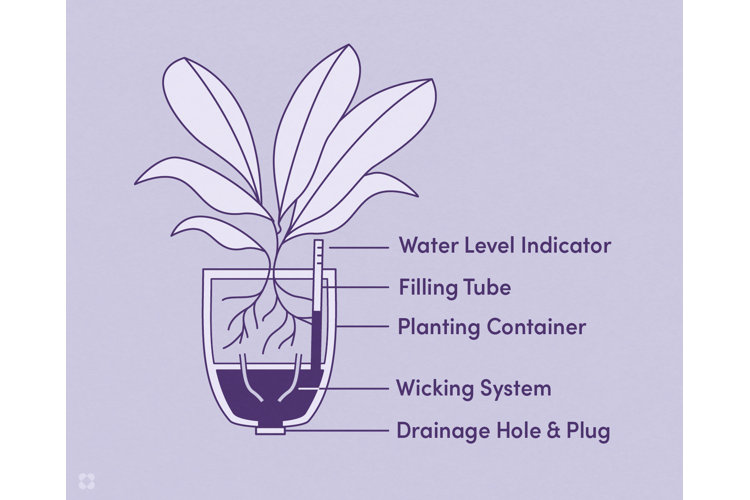
Sub-irrigated or self-watering planters are designed to eliminate the guesswork of watering by allowing plants to water themselves. With this type of planter, planters are able to draw from a water reservoir at the base of the planter to water themselves at their own pace.
A self-watering planter is made of 4 main components. A growing bed holds the potting soil and the plant, essentially just the usual pot. Specifically, the potting soil for a self-watering planter needs to be light and avoid being compacted. You could also include perlite to help with absorbance. Then, the main water reservoir at the bottom of the planter needs to have an access point to be able to be refilled – like a terracotta plate or water pipe – and be separate from the planter. Lastly, you need a wicking system. This is what delivers the water from the reservoir to the plant roots and soil. The best wick materials are absorbent, like cotton or nylon, or something more durable like a fiberglass wick used in oil lamps.
How Do Self-Watering Planters Work?
Start by filling the water reservoir at the base of the planter with water. Then place your plant in the pot with a barrier to keep the roots from becoming oversaturated or potentially cause root rot. Place one end of your wick in the water reservoir keeping the other end of it exposed while you pour in your soil and other growing media. Generally, you need two wicks per plant. Lastly, repot your plant in the new absorbent soil and watch the magic (science) happen.
The water travels from the reservoir up the roots via capillary action. The attractive force between the the liquid (the water reservoir) and the solid (the roots) propels the liquid along the solid force. Think how a paper towel soaks up a spill. With self-watering pots, you need to thoroughly water the potting soil from the top at planting. The water that's absorbed from the soil by the roots is in turn constantly replaced by capillary action within the soil. With the proper potting mixture and wicking mechanism, the soil remains consistently moist but not overly wet. You'll know it's time to add more water when the wicks you added are dry, usually on a three week cycle.
Self-watering planters eliminate the inconsistency in watering and visually display when it's time to add more water when the reservoir is empty. They also provide more consistent soil moisture for a longer period within the pot and are great if you can't go out and water your plants every day.
Yes! Every plant can use a self-watering planter. Since most house plants are of tropical plant species, they require consistent levels of moisture in the soil and constant water intake. Even plants with shallow root systems like cacti and succulents can thrive with a self-watering planter, as long as they're paired with the proper amount of sunlight.
Now that you know how self-watering planters work, you can set up your garden for success this season. Explore all of our self-watering planter options and all of our planter options.
