How to Build an Outdoor Shower
Tips and tricks for installing an outdoor shower.
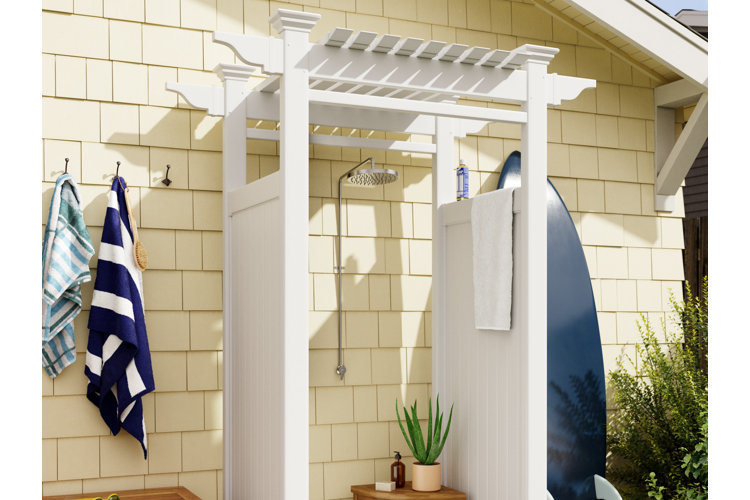
Whether you want to rinse off after a run or shower near the pool, an outdoor shower is an excellent addition to your home. This refreshing spot to shower allows you to connect with nature and helps you avoid a sandy walk to your bathroom. Keep reading to learn how to build an outdoor shower and find helpful considerations for perfecting your plan.
Benefits of an Outdoor Shower
How to Build an Outdoor Shower
Benefits of an Outdoor Shower
Outdoor showers are a convenient addition to the outside of your house. They're perfect for showering off after the beach, before jumping in the pool, or rinsing off after exercising. Outdoor showers are also great for cleaning up kids or pets without tracking sandy feet or muddy paws through the house. Plus, they can elevate your outdoor space and raise the value of your home.
How to Build an Outdoor Shower
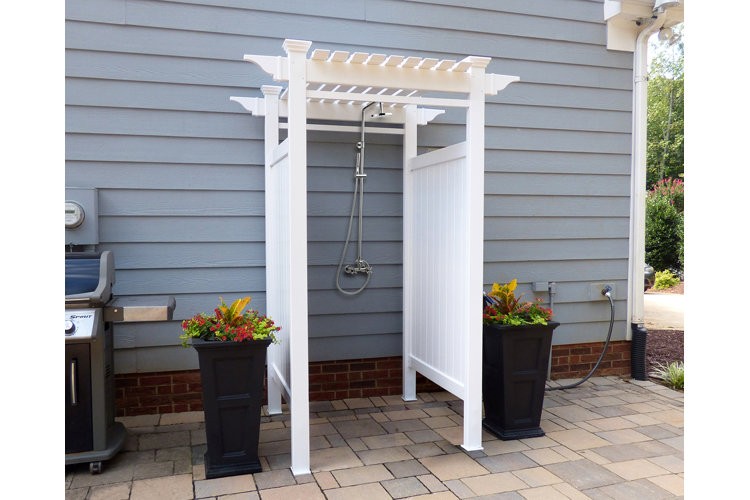
Before you start to gather your materials, it's important to create a clear plan for your outdoor shower. You need to consider the cost, placement, drainage, and types of outdoor shower systems so that you can find the right fit for your home.
Calculate the Cost of an Outdoor Shower
The cost for an outdoor shower depends on the features you'd like to include. Convenient elements like a custom enclosure, an attached changing room, or an adjustable temperature can make the outdoor shower design cost more.
Determine the Best Location
When choosing the location for your outdoor shower, you'll want to consider how you plan on using it. Some prefer to place an outdoor shower near a back door for a quick rinse before heading inside, while others prefer to place the shower in a more private location that feels close to nature.
You'll also want to think about the size of the shower. While decks and patios are optimal spots for outdoor showers, the space can be limited. The minimum space needed for an outdoor shower is 3 sq. ft., but you can always opt for a larger space.
Existing plumbing is another important consideration. Placing an outdoor shower near existing plumbing will make the process easier and less costly. Think of exterior locations close to a kitchen or bathroom so you can have easy access to both hot and cold water lines.
Figure Out Drainage Considerations
Before you start building an outdoor shower, you'll need to consider any drainage concerns. While most outdoor showers simply let the water drain naturally into the ground, some building codes require a proper drain to handle gray water (or water that has been used for showering).
There are a few options for outdoor shower drainage: a shower pan, French drain, or a dry well. A shower pan is a type of drain used in indoor showers that collects the water and funnels it into your home's sewage or septic system, a French drain, or a dry well. A French drain is built from a perforated pipe surrounded by gravel and directs the water into the ground, which disperses the water gradually through the perforated holes in the pipe. A dry well is similar to a "catch basin" made of a perforated barrel and surrounded by gravel to slowly disperse the water into the ground.
Choose the Right Type of Outdoor Shower Systems
There are three main types of outdoor showers to choose from. Each type has a different installation method that can impact the design and installation process.
Freestanding: Freestanding outdoor showers can be portable or permanently fixed to one location. Permanent freestanding outdoor showers can be costly because they'll require a dedicated water supply line. Portable freestanding models can be connected to an outdoor water supply like a garden hose.
Hanging: This type of outdoor shower consists of a hose, a shower head, and a vinyl or PVC bag. The bag is filled with water and uses gravity to start the shower stream. Hanging outdoor showers are a great option for camping trips or locations that aren't close to water supply lines.
Wall-Mounted: These outdoor showers are mounted to an exterior wall and are connected to the water supply lines in your home. Wall-mounted outdoor showers are best installed near an existing water supply line in a kitchen or bathroom.
Opt for an Outdoor Shower Enclosure
Outdoor shower enclosures are structures designed to add privacy and contain the water from the shower. These enclosures come in a variety of styles, ranging from simple stalls to four-sided enclosures with doors. Outdoor shower enclosures can also include convenient features like built-in shower benches, shelves, or towel hooks.
Tip!
If there aren't any shelves, place a teak shower bench to make space for toiletries or spare towels. Teak is lightweight, waterproof, and durable, which makes these freestanding benches ideal for outdoor use.
