How to Can Tomatoes at Home
Learn how to can tomatoes at home.
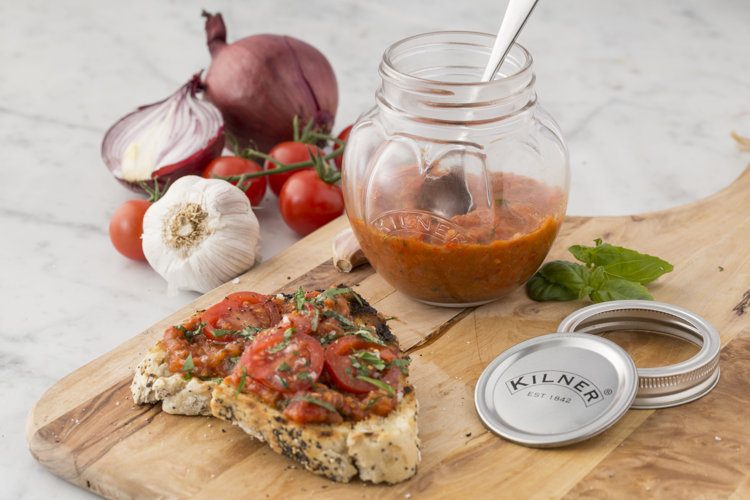
Do you love the taste of fresh tomatoes? Are you looking to savor their flavor into the winter season? Perhaps it is time you try your hand at preserving. With this step-by-step guide and simple utensils you likely already have at home, you too can learn how to can tomatoes.
How to Preserve Tomatoes
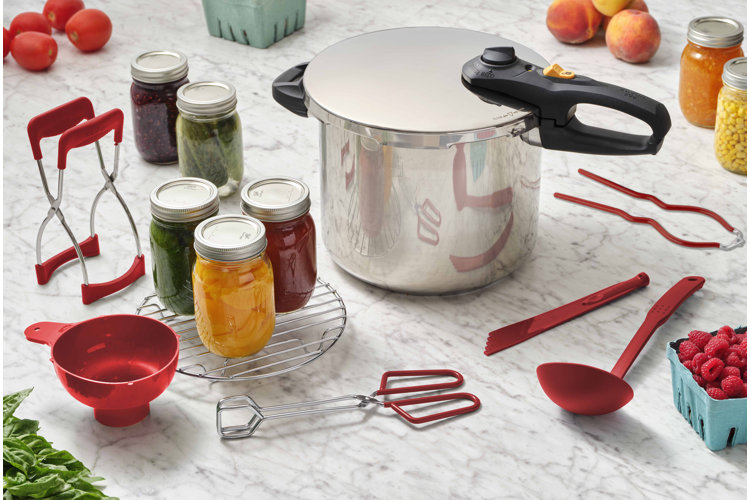
So how do you can tomatoes? There are two methods you can use, depending on what canning tools you have. The first method is done via boiling water canning while the other is by pressure canning. Below are instructions for both.
Tools
Canning Jars
Pressure Canner (optional)
Stock Pot/Large Pot
Trivet / Cooling Rack
Slotted Spoon / Tongs
Kitchen Towels
3 Bowls
Colander
Paring Knife
Cutting Board
Wide-Mouth Funnel (optional)
Wooden Spoon
Measuring Spoons
Saucepan
Tip!
If you are unsure of the difference between a colander and a strainer, read our guide.
Ingredients
Fresh fully ripe tomatoes with no blemishes (1 1/2 pounds for a pint jar and 3 pounds for a quart jar)
Bottled lemon juice
Salt
Ice
Step 1: Prepare the Jars
One of the most important parts of learning how to can tomatoes is ensuring your canning supplies are sterilized and contain no cracks or imperfections. You want to ensure there is no room for bacteria to grow.
- Use hot and soapy water to wash the jars and lids.
- Rinse thoroughly.
Step 2: Prepare to Sterilize
Place a trivet or rack in the bottom of a large pot (to prevent the jars from resting directly on the pot).
- Insert the jars and cover them with hot water and slowly bring it to a simmer over medium heat.
- Allow the water to simmer for 10 minutes.
- Keep the jars immersed in this water until you are ready to begin canning them one by one.
- At the same time, place the jar lids in a bowl of hot water from the sterilizing pot (these cannot be boiled).
Step 3: Blanch the Tomatoes
Obviously you can prepare the tomatoes however you want, but they keep best when their peels are removed. Begin by washing them in cold water.
- Use your paring knife to score to bottoms with an X.
- Fill a bowl with boiling water and place a few tomatoes in there for 30 seconds or until their skin begins to peel away .
- Use a slotted spoon to immediately place them in a bowl filled with cold water and ice.
- Place them in a colander to dry with a bowl underneath to collect the drippings.
Step 4: Process the Tomatoes
This process can vary according to how you want your tomatoes to be canned. Whether you want to halve or dice them, you still need to use your paring knife to remove their skins and core them.
- Place the tomatoes and their liquid in a saucepan and cover with extra water.
- Bring to the boil.
- Reduce heat to medium-low and cook for 5 minutes.
Step 5: Remove the Jars
Once your tomatoes are prepared, you can begin to remove the jars one at a time. Use the tongs to dump out the water and place them on a clean damp kitchen towel. This will prevent them from slipping while you fill them, keep them sterile, and help avoid cracking when you fill them with the hot tomatoes.
- Make sure not to touch the jars.
- Keep the water in the pot simmering.
Step 6: Fill the Jars
Now you can start canning your tomatoes. Begin by adding one tablespoon of lemon juice to a pint jar or two tablespoons to a quart jar. This helps to raise the acidity of the tomatoes and allow for correct canning).
- Ladle the tomatoes into the jars (you can use the wide-mouth funnel here if you like). Remember to add any juices as well.
- Use your spoon to push them down and pack them tightly to remove any air pockets.
- The tomatoes need to be fully submerged in cooking liquid, so add more if needed (add boiling water if you have run out).
- Make sure not to over- or under-fill the jars to ensure a proper seal.
- Leave a 1/2 inch space between the lid (called the head space).
Step 7: Process the Jars
Make sure there is no residue or food on the jar once you remove the funnel and finish filling the jars. Use a clean damp towel to wipe away any traces of food to ensure a perfect seal. Now it's time to complete the canning process. The method varies depending on the type of canning you intended to do.
Boiling Water Canning
- Place the lid and screw band on the jars and seal them according to manufacturer's instructions
- Place the jars back in the boiling water canner and make sure they are not touching.
- They should be covered by at least one inch of water (add more if needed).
- Cover the canner and process the tomatoes in steady boiling water.
- 40 minutes for pints and 45 minutes for quarts.
- Your timing only begins once the water has begun boiling again.
Pressure Canning
There are two types of pressure canners available: weighted- or dial-gauge canning.
Dial-Gauge: Shows what the pressure is and allows you to control it using a stove burner knob. Process pints and quarts for 25 minutes at 11 PSI or 40 minutes at 6 PSI.
Weighted-Gauge: Releases any pressure above the desired amount of pressure.
Process pints and quarts for 25 minutes at 15 PSI or 40 minutes at 10 PSI.
Tip!
It is best to consult the manufacturer's instructions for correct operation and exact measurements.
Step 8: Check Jar Seals
Now your jars are done processing. For boiling water canning, turn off heat and leave them in the water for around five minutes to allow a gradual heat change. Then carefully remove them and set them on a damp tea towel to cool down.
- Before you store any jars away, you need to check their seals to ensure they are safe for consumption later on. If you have jars that didn't seal correctly, it's possible to still save them.
- To check if your jars are sealed correctly, press the center of each lid (after they have cooled). If the dop in the lid remains, it is correctly sealed.
- If the lid bounces back up, it is not correctly sealed and you have one of two options: either place that jar in the fridge and eat the contents within three days or reprocess it again within 24 hours.
- Make sure to label the jars and their contents along with the dates.
- Your canned tomatoes should remain good for one year.
Now that you know how to can tomatoes, you can make the most of your fresh produce this year.
You Might Also Like:
