How to Choose a Rug Pad: Find the Perfect Pairing for Your Rug & Floor Type
Rug pad shopping, simplified.
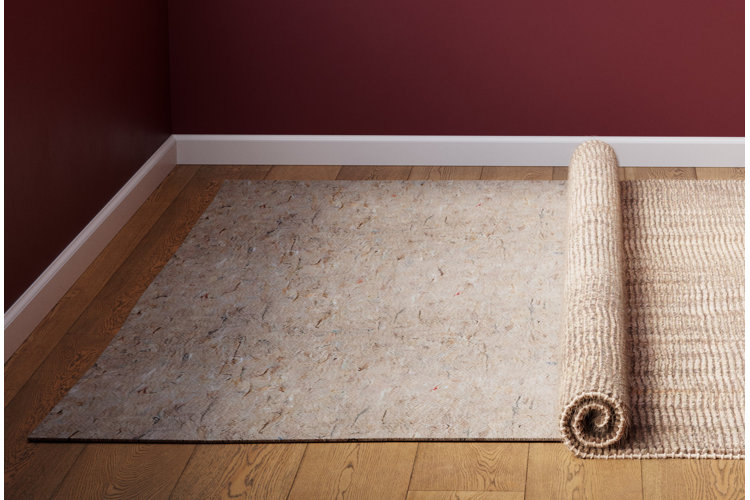
Rug pads help anchor area rugs in place and protect both the rug and the floor from wear and tear, keeping them pristine for the long term. Follow these steps to determine the right rug pad for your needs.
1. Select a Compatible Size & Shape for Your Rug
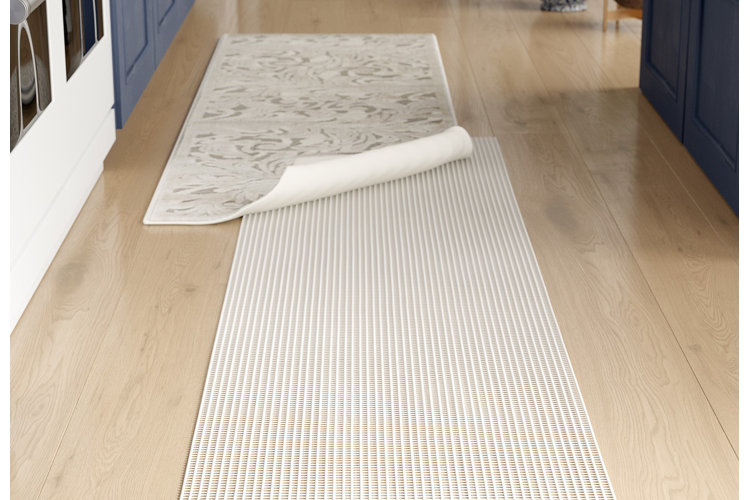
The general rule of thumb is to purchase rug pads that are about 1"–2" smaller on each side (length and width) than the rug they're being paired with. For example, a 9' x 12' rug pairs well with an 8' x 10' rug pad. This ensures that the rug pad stays hidden while still offering the proper coverage and preventing the rug from curling or bunching. For the best results, we recommend starting with a rug pad that's 1" smaller on all sides. This way, you can always cut the rug pad down if needed.
If purchasing a rug pad for a rug you already have:
- Start by measuring the length and width of the rug with a tape measure.
- Once you have the length and width measurements, apply the 1" rule, subtracting 1" from both the length and width measurement. The result will be the proper rug pad size.
- For example, if your rug measures 6' x 9', you'll want a rug pad that is 5' x 8'. Similarly, if your rug measures 4' x 6', you'll want a rug pad that is 3' x 5'.
- If you don't have a tape measure at your disposal, you can always order a larger rug pad size than you think you'll need and cut it to the shape/size of your rug.
If purchasing a rug pad at the same time as a new rug:
- Start by selecting a rug shape, size, and design style that suits your space.
- Use the size and shape of the rug to determine the proper rug pad size.
- For example, if you plan to purchase an 8' x 10' rectangular rug, you'll want a 7' x 9' rectangular rug pad.
- If you're still trying to decide on a rug size, take a look at How to Choose the Right Rug Size: Your Rug Size Guide.
Important Sizing Tips
If your rug measures 9' x 12', 10' x 14', or 12' x 15', you might find that the closest compatible rug pad sizes are 2" smaller on one or more sides. This is completely fine, and shouldn't affect the coverage. Just go with the next closest size. The same goes for rugs that have the same size length or width as the next available rug pad size. An example would be a 7' x 9' rug and a 6' x 9' rug pad. Go with the 6' x 9' rug pad size and cut an inch off if it sticks out from under the rug. Here's a breakdown of rugs and compatible rug pad sizes:
- 3' x 5' rugs + 2' x 3' rug pads
- 4' x 6' rugs + 3' x 5' rug pads
- 5' x 8' rugs + 4' x 6' rug pads
- 6' x 9' rugs + 5' x 8' rug pads
- 7' x 9' rugs + 6' x 9' rug pads
- 8' x 10' rugs + 7' x 9' rug pads
- 9' x 12' rugs + 8' x 10' rug pads
- 10' x 14' rugs + 9' x 12' rug pads
- 12' x 15' rugs + 10' x 14' rug pads
Once you know the compatible rug pad size and shape for your rug, it's time to consider the best rug pad options for your floor type. Ultimately, a compatible rug pad will help reduce strain on your floors, add cushioning, and ensure the rug stays in place.
Smooth Hardwood, Linoleum, or Tile Floors
For hardwood, wood alternatives, linoleum, and smooth tile floors, you'll need a rug pad with textured grips that help keep the rug in place and prevent slipping.
Concrete or Stone Floors
For concrete or stone floors, you'll want a rug pad with extra cushioning to promote warmth and comfort.
Carpeted Floors
For carpeted floors, a felt rug pad will help keep the rug in place while also protecting the carpet fibers underneath.
Tip!
Learn more about types of rug pads, their benefits, and floor compatibility in our What Is a Rug Pad? guide.
3. Consider Additional Features to Protect Both Your Floors & Rug
In addition to size and floor compatibility, you should also consider what helpful features you're looking for in a rug pad:
To Keep Your Rug in Place:
Non-slip and non-bunching rug pads keep your rug locked in place and ensure it always rests flat. This prevents creases from forming in the rug, which also helps keep people from tripping as they walk. Rug pads with these features work best on smooth floors or high-traffic areas of your home.
To Absorb Shock & Enhance Comfort:
Cushioned rug pads are thicker and designed to help keep your floors and rugs protected from wear and tear. The extra padding also makes the rug more comfortable to walk on – especially helpful if you have hardwood or stone floors.
To Protect Your Rug from Moisture or Heat:
For rugs in entryways, bathrooms, or concrete basements, a moisture-resistant rug pad can help promote air flow and prevent water from getting trapped underneath – thus protecting your floors and rug from water-related damage. Have heated floors? There are rug pads specifically designed to tolerate heat and allow for the heat to rise up from the floor through the rug without issue.
