Comment choisir le meilleur robot culinaire
Tout ce que vous devez savoir sur cet appareil incontournable.
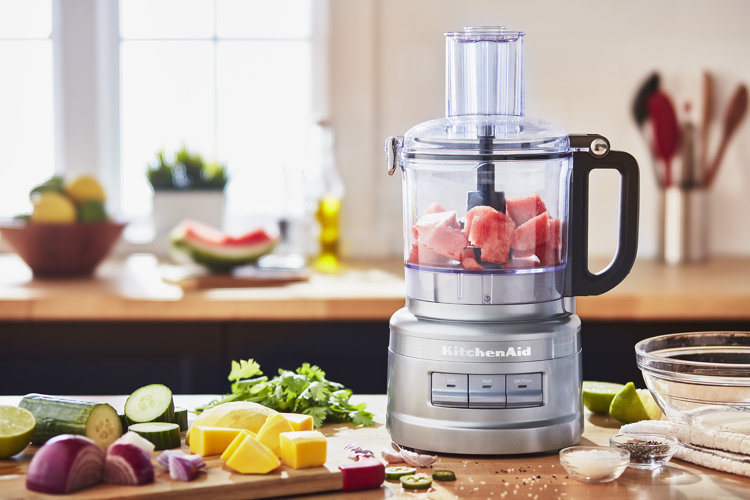
Le bon robot culinaire peut vous faciliter la vie dans la cuisine de bien des façons. Si vous n'êtes pas encore propriétaire d'un robot culinaire ou que vous cherchez à remplacer le vôtre par ce qu'il y a de mieux, il est conseillé de faire vos recherches avant d'acheter. Nous sommes là pour vous aider. Dans ce guide, nous survolons les bons robots culinaires afin que vous puissiez acheter le meilleur pour vous.
Les robots culinaires versus les mélangeurs
Tout d'abord, un robot culinaire n'est pas la même chose qu'un mélangeur. Bien qu'il s'agisse de deux appareils de comptoir dotés d'une base, d'un récipient et de lames rotatives, ils ne sont pas interchangeables. Découvrez la différence entre un robot culinaire et un mélangeur en consultant notre guide Quelle est la différence entre un robot culinaire et un mélangeur ?
Les meilleurs types de robots culinaires
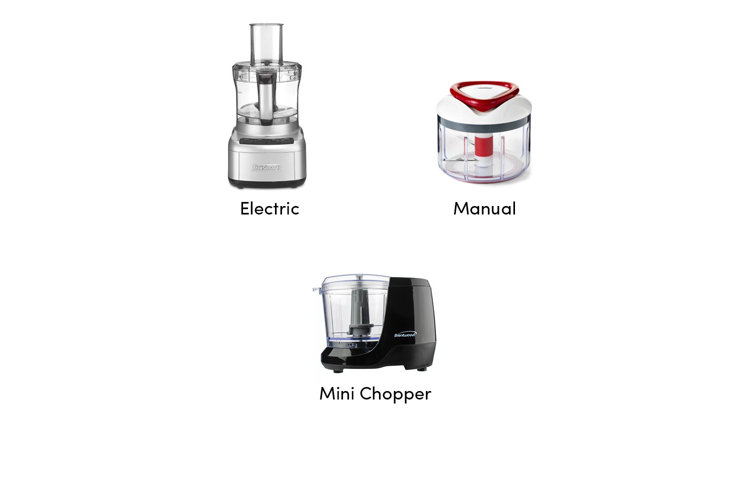
Électrique
Les robots culinaires électriques sont de gros appareils de comptoir qui peuvent faciliter plusieurs tâches culinaires différentes, notamment hacher, râper, râper, trancher, couper en dés, pétrir, etc. Si le robot culinaire est capable d'effectuer des tâches aussi polyvalentes, c'est grâce à sa lame rotative. De nombreux robots culinaires électriques sont équipés d'une multitude de lames, chacune adaptée à une tâche différente. Si vous êtes à la recherche d'un robot culinaire standard capable d'effectuer un large éventail de tâches, nous vous recommandons un robot culinaire électrique. Ces appareils sont puissants ; vous ne réaliserez pas le nombre de tâches fastidieuses que vous effectuez pour préparer vos aliments jusqu'à ce que votre robot culinaire les accomplisse toutes pour vous en un clin d'œil.
Les robots culinaires sont composés d'une base lourde avec des boutons et des réglages, d'un récipient ou d'un bol qui se monte sur la base, de lames qui s'insèrent au fond du récipient ou du bol, et d'un couvercle de récipient avec un grand tube d'alimentation. Les réglages situés sur la base permettent de contrôler la vitesse des lames et la fonction de pulsation. Le récipient et les lames sont posés sur un arbre motorisé qui dépasse de la base. La plupart des récipients des robots culinaires sont larges et peuvent généralement contenir une quantité importante d'ingrédients. Les robots culinaires électriques sont munis d'un couvercle sécurisé qui se verrouille en place. Le tube d'alimentation situé dans le couvercle vous permet d'ajouter des ingrédients pendant que le robot est en marche à l'aide d'un poussoir en plastique. La plupart des robots culinaires électriques exigent que toutes les pièces soient correctement verrouillées en place avant que leur moteur ne commence à faire tourner les lames. Les lames du robot électrique sont faciles à retirer pour les remplacer par d'autres lames ou pour les nettoyer.
Petit hachoir
Plus petits, plus légers et plus faciles à nettoyer que les robots culinaires électriques de grande taille, les petits hachoirs sont les meilleurs robots culinaires pour ceux qui recherchent un appareil plus convivial. Leur petite taille limite leur efficacité et les rend mieux adaptés aux petites quantités de salsa, de légumes et de noix hachés, ou encore aux épices et aux herbes moulues. Si vous envisagez d'utiliser un robot culinaire principalement pour de petites tâches secondaires pendant que vous cuisinez (pour hacher de l'ail, par exemple), optez pour un petit hachoir.
Les petits hachoirs offrent généralement une capacité de 1 à 6 tasses, mais les capacités de 3 à 4 tasses sont les plus courantes. La plupart des petits hachoirs ressemblent à des robots culinaires électriques de taille réduite, tandis que d'autres ont un aspect légèrement différent en raison de leur base décalée. Les petits hachoirs ne se contentent pas de hacher ; en remplaçant les lames, certains petits hachoirs sont tout aussi polyvalents que les robots culinaires électriques de taille normale.
Manuel
Comme leur nom l'indique, les robots culinaires manuels ne sont pas alimentés par un moteur électrique. Ils comptent plutôt sur vous pour accomplir le travail.
Les robots culinaires manuels sont généralement beaucoup plus petits que les robots électriques et ne peuvent préparer qu'une certaine quantité d'ingrédients à la fois (généralement 1 à 3 tasses). La plupart des robots culinaires manuels sont équipés d'un petit récipient en plastique transparent, d'un ensemble de petites lames et d'un couvercle muni d'une manivelle ou d'un gros bouton-poussoir. Pour utiliser un robot ménager manuel, il suffit de remplir le récipient, de fermer le couvercle et d'actionner le mécanisme manuel en tournant la manivelle ou en appuyant sur le bouton.
Bien entendu, ces appareils bon marché ne sont pas à la fine pointe de l'innovation. Leurs lames étant légères et moins durables, nous vous recommandons d'éviter d'utiliser les robots culinaires manuels trop souvent ou pour des ingrédients très durs. Bien que les robots de cuisine manuels nécessitent un peu d'huile de coude, ils rendent certaines tâches répétitives et salissantes beaucoup plus rapides, propres et faciles que si vous les faisiez entièrement à la main. Si vous voulez un moyen rapide et facile de préparer une recette de salsa ou de guacamole, le robot culinaire manuel est peut-être celui qu'il vous faut.
La capacité du robot culinaire représente la taille du récipient dans lequel les ingrédients sont préparés. Il existe quatre tailles principales de robots culinaires : miniature, petit, moyen et grand. En fonction de l'utilisation que vous souhaitez faire du robot culinaire, vous pouvez choisir un appareil plus petit ou plus grand. Les robots culinaires de grande taille sont généralement les plus polyvalents et les plus durables, mais ils sont plus chers, plus lourds et parfois plus difficiles à nettoyer. Les petits robots de cuisine sont peu coûteux, légers et faciles à rincer, mais ils ne résisteront probablement pas à l'épreuve du temps. Les grands robots culinaires sont les mieux adaptés aux tâches de préparation importantes, comme des repas familiaux, tandis que les petits robots culinaires sont mieux adaptés aux petites tâches lorsque vous ne souhaitez pas vous salir les mains (par exemple, pour hacher de l'ail).
Miniature : 1 à 2 tasses
Petit : 3 à 4 tasses
Moyen : 5 à 10 tasses
Grand : Plus de 11 tasses
Conseil !
La plupart des robots culinaires peuvent être remplis d'ingrédients presque à ras bord et fonctionner correctement. Pour en savoir plus sur l'utilisation d'un robot culinaire, consultez notre guide Comment utiliser un robot culinaire.
Les meilleurs types de robots culinaires
Pièces allant au lave-vaisselle : le nettoyage de votre robot culinaire ne doit pas vous faire perdre tout le temps qu'il vous a fait gagner. Grâce à des pièces lavables au lave-vaisselle, le nettoyage de votre robot sera aussi facile que celui de tout autre plat dans votre cuisine.
Lames interchangeables : veillez à ce que votre robot ne se contente pas de hacher, en limitant votre recherche aux robots culinaires dotés de lames interchangeables.
Fonction de pulsation : bénéficiez d'un meilleur contrôle sur votre robot grâce à une fonction de pulsation qui vous permet d'arrêter et de démarrer les lames d'une simple pression sur un bouton.
Fonction mélangeur : vous voulez un robot culinaire capable d'accomplir les tâches d'un mélangeur ? Recherchez des robots culinaires dotés d'une fonction de mélangeur qui leur permet de préparer des ingrédients secs et humides en même temps.
Alimentation continue : les robots de cuisine dotés d'une fonction d'alimentation continue restent en marche lorsque le couvercle du tube d'alimentation est ouvert, vous permettant ainsi d'ajouter des ingrédients tout au long du processus de préparation des aliments.
Tube d'alimentation double : les tubes d'alimentation doubles sont deux fois plus larges que les tubes d'alimentation classiques, ce qui vous permet d'insérer des ingrédients plus gros. Cela réduira votre temps de préparation, car vous n'aurez pas besoin de couper vos ingrédients aussi petits pour les insérer dans le tube d'alimentation.
