How to Compost Like a Pro
Learning how to compost has never been easier.
By understanding how to compost, you are going to help your plants flourish. Composting creates natural, healthy soil and will lessen the amount of food waste that ends up in landfills. Composting is a great way to create free food for your plants while doing something great for the environment.
What Is Compost?
Compost is a mix of uncooked food scraps and natural materials. Food scraps should consist of anything that comes from nature. This means fruits and vegetables, coffee grounds, and eggshells are types of food scraps that can be composted. The natural materials that make up the other part of compost are leaves, twigs, grass, dead flowers, and even newspaper and cardboard.
Tip!
Food scraps that cannot be composted include meats and dairy products. You’ll want to steer clear of composting these items because the bacteria naturally found in them will cause an acidic imbalance in the pile.
How to Compost
Composting can be broken down into three simple steps: creating a compost pile, turning, and adding to soil.
Creating a Compost Pile: To create a compost pile, you’ll want to keep your pile three parts brown and one part green. Brown items include wood, leaves, and twigs, while green items include kitchen scraps and grass.
Turning your Pile: Turn your pile in order to mix the items together and to create an evenly broken down fertilizer. Doing this will result in a heat that comes from your waste successfully breaking down. You’ll know when your compost is ready when it consistently gives off heat no matter how much you turn it.
Tip!
For an ultra-fast compost, turn your pile every three to five days.
Adding Compost to Soil: Once your compost is finished you can use it as a natural fertilizer for outdoor plants and gardening by adding it to soil.
Tip!
Due to the fact that insects can make their way into your home through compost, freeze your compost to kill anything living before you use it for indoor plants.
Types of Composters & Their Features
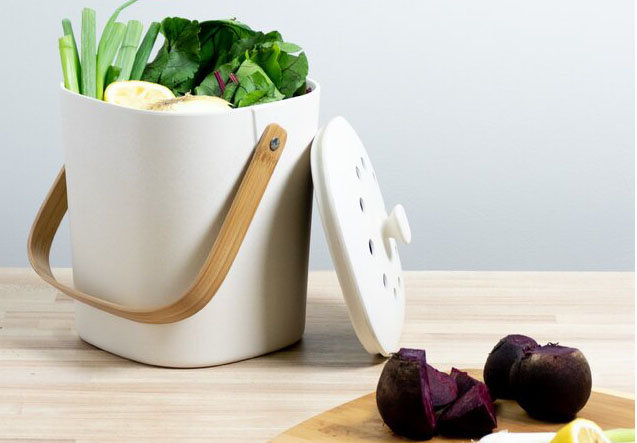
Kitchen: Kitchen composting bins are small bins with lids that are made to be used indoors. Their small size makes them ideal for those living in smaller homes and for those who don’t have a yard. Their lids prevent smells from escaping into your home.
Tip!
If you’re interested in learning how to compost indoors but are worried about potential mess and smell, opt for a compost filter and a compost bag. A compost filter will filter out any bad smells while a compost bag will line the inside of your compost bin and keep everything neatly in place.
Stationary: Stationary compost bins are meant for outdoor use. They are permanent fixtures that come with access doors close to the ground so you can use your oldest compost first. Stationary compost bins are a great solution for longtime gardeners who need a bin that is going to last.
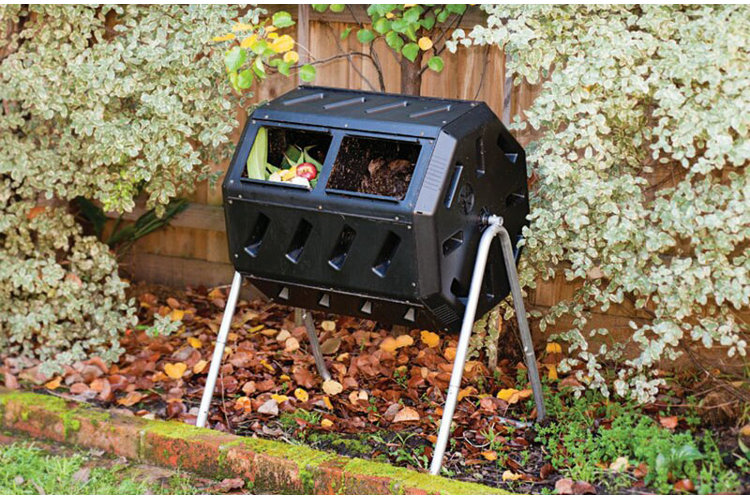
Tumbler: Tumbler bins are a type of composter that spins the compost with the turn of a handle. These kinds of compost bins are useful if you don't want to spend time and effort turning your compost with gloved hands or a shovel.
Worm Bins: Worm compost bins are the best type of composter for you if you want to break down your waste quickly using worms. These types of composters are small enough to be used indoors, but they can be used outdoors as well. Keep in mind that the worms you use won’t be able to withstand extreme heat or extreme cold.
Assembled: Looking for types of composters that don’t require assembly? Check out assembled composters so that you can get started right away.
Odor-Resistant: This type of composter offers a built-in solution to leftover odors from your compost. An odor-resistant composter is a great option if you want to keep your compost indoors but do not want a smell left hanging around.
Recycled Content: These types of composters are made from recycled materials. Recycled content composters are best if you are looking for a sustainable and durable composter that will last for years to come.
Rodent-Proof: If you’re worried about attracting rodents with all of the leftover food scraps, try rodent-proof composters. These types of composters are built strong to prevent rodents from getting into your compost pile.
Tip!
If you want to speed up your composting process, try a Booster Kit. Booster kits accelerate the composting processes so that you’ll have nutrient rich fertilizer in no time.
