How to Hang-Dry Clothes: Everything You Need to Know
Using a tumble dryer isn't always the best option, so learn how to hang-dry clothes and preserve them for longer.
There is no doubt you want to take care of your wardrobe and preserve your favorite clothing pieces for as long as possible. There are a great myriad of ways to accomplish this – the most important being laundering. While many people focus on correctly washing their garments, you would be surprised to know that drying requires just as much thought. Although you may immediately be drawn to the tumble dryer, it is a good idea to also learn how to hang-dry clothes for those items in need of extra care.
Why Learn How to Hang-Dry Clothes?
While dryers are the most convenient way to complete your laundry, finding shrunken, faded, or damaged clothes is less than ideal. Here are just a few more reasons you should learn how to hang dry clothes:
- Air-drying allows you to save on electricity and thus save money by reducing dryer usage.
- Your clothes will last longer because they won't experience as much dryer wear-and-tear.
- Certain garments cannot be tumble-dried making it good to know best drying practices.
- Stains that are not completely removed in the wash can potentially become permanent when placed in the dryer.
Tip!
Generally, clothing that can be laundered on a regular cycle or permanent press can go into the tumble dryer. If you are unsure, it is best to check the label for clothing care.
Different Ways to Hang Clothes
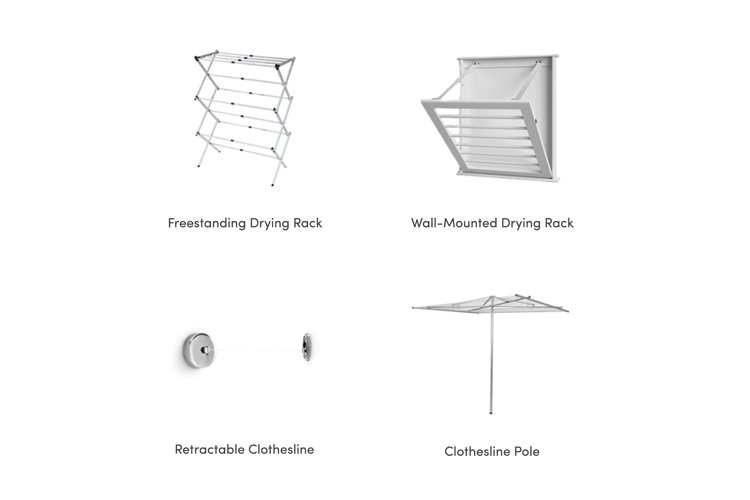
When it comes to air-drying your clothes, you don't simply want to hang them anywhere – especially not where they can cause rust, get stained, or even damage or wrap items. There are four different types of hanging/drying apparatus you can choose from depending on your needs, space, and location preferences.
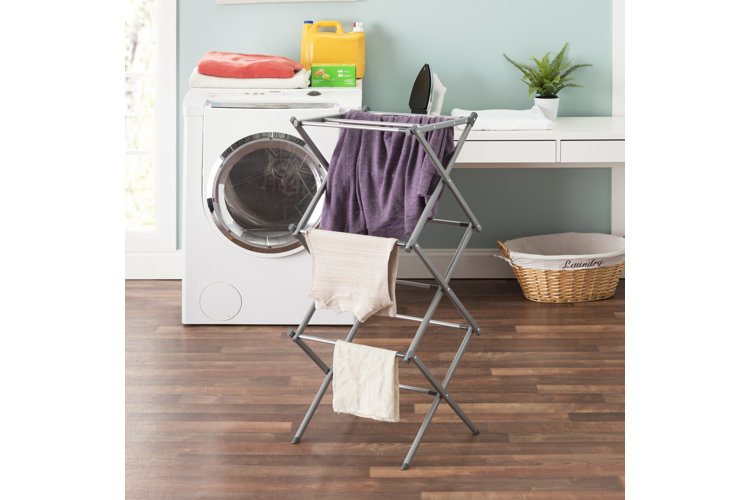
Freestanding: Freestanding drying racks are collapsible frames that often feature modular designs for multiple configurations. They can usually be set up to accommodate flat-lying clothing along with a great number of regular hanging garments. As an added bonus, freestanding hangers can be used both indoors and outside, and are especially suitable if you don't want to install a permanent clothing drying option.
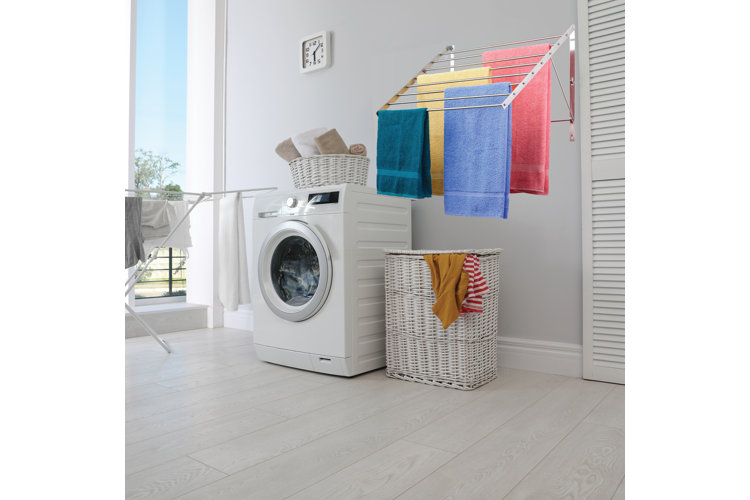
Wall-Mounted: Wall-mounted racks are most commonly installed indoors as a space-saving custom drop-down clothes drying option. These need to be installed into the wall however, and although they do have multiple rods, they are usually only best for smaller loads of laundry.
Retractable Clothesline: Another great option for small interior spaces is a retractable clothesline. They are often hung across bathtubs but can also be installed in laundry rooms, or even outside. These hangers comprise two components – the first larger piece houses the retractable line/lines which is mounted on one wall, and the second is the clip for the clothes line to hook into which is then installed onto the opposite wall/surface.
Clothesline Pole: These traditional clotheslines are more heavy-duty and can only be installed outdoors. They come in a range of designs but all function the same way – via a base pole inserted into the ground featuring protruding prongs at the top with lines run between them for hanging clothing on. These poles are ideal for regular hang-drying, especially larger linens.
Tip!
When hanging your clothes indoors, make sure to place them where there is ample ventilation. For the outdoors, it is best to put them where they can receive ample sunlight.
Hang-Drying Best Practices
Before you get to understanding how to hang-dry clothes, you should first sort your clothing items to make the job easier.
- It is best to sort your garments by fabric type when it comes to drying. This is because different fabrics require different attention (cotton and linen can be hung up immediately while silk and wool require additional care).
- Make sure to shake out every piece before hanging it up – this will help to reduce the number of wrinkles.
- Hang your clothes by size, starting with the largest (linens and jeans) first, and move to smaller items last to ensure you hang each item with enough room around it to dry.
- Clothes that are too close together or overlapping will take longer to dry, remain damp, or possibly even grow mildew.
- For sweaters and garments with stretch to them, it is best to dry them lying down to help them retain their shape. This can be done by draping them over several rods of a hanger. Just be sure to turn them once during the drying process.
How to Hang-Dry Clothes
For the most wrinkle-free laundry, you should know just how to hang-dry clothes. Each item needs to be hung up in a specific manner for the best results.
Pants: No matter what type of trousers you are hanging to dry, it is best to hang them all in the same manner. Begin by matching up the inner leg seams and then pin the hems of the legs to the line with the waist facing downward. If you have extra space, you can hang the pants unfolded with each leg pinned to the line, allowing for faster drying.
Tops & Shirts: If you are using clothespins, hang the shirt by the hem – making sure to pin them as close to the side-seams as possible to prevent any visible drying marks. Alternatively, you can place the shirt on a clothes hanger and hang that from the drying rack.
Socks & Undergarments: For your convenience, use clothespins to hang socks in pairs by the toes and let the top opening hang down. Other undergarments should be carefully pinned at the waistbands or hung over the line while making sure to expose as much surface area for quick drying.
Tip!
Reshape any padding in bras or boning in shapewear before hanging undergarments up.
Bedding & Towels: Drape the sheets or blankets in half over the line and pin each end to secure them. Hang towels vertically and pin them at the corners and make sure to leave room between items if possible for maximum drying. To ensure your linens are fluffy, use a mineral-based fabric softener during the washing cycle.
Tip!
If you find there are still a few stubborn wrinkles once your clothes have dried, use a steamer or iron to get rid of them. Read What Is a Steamer? to learn more about these handy tools.
Now that you know how to hang-dry your clothes, you can ensure your garments are protected and wrinkle-free.
YOU MIGHT ALSO LIKE:
