Window Treatments 101: Layering Curtains & More
Layer it up.
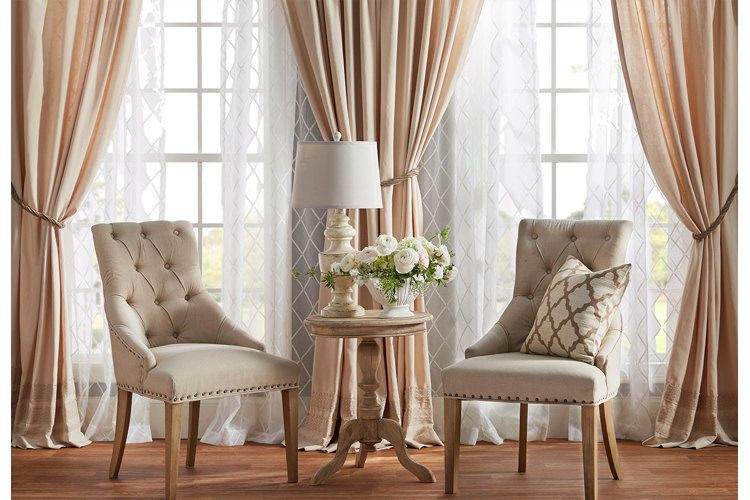
On their own, window treatments like curtains, drapes, blinds, shades, and valances can add a decorative edge to a basic window frame. But why stop there? Consider layering curtains over blinds – by putting curtains and blinds together, you can unlock a world of decorative window-treatment combinations. In this guide, learn how to layer curtains or drapes over blinds and take your window treatments to the next level.
Define Your Layers
How to Order Your Layers
Window Treatment Layering Tips
Define Your Layers
The first step to understanding how to adorn your windows with a dimensional, beautiful set of window treatments is understanding what the different layers are. Keep reading for a quick overview.
Curtains & Drapes: Regal and flowing in appearance, curtains and drapes are classic full-coverage window treatments. They flank the sides of windows and hang from curtain rods mounted above the window frame. They can be pulled wide open to let light in or drawn shut to block light out completely.
Tip!
Need to know the difference between curtains and drapes? Check out our Curtains vs. Drapes guide to learn the answer as well as more information about different styles of curtains and drapes.
Window Scarves: Similar to curtains and drapes, window scarves hang from a rod and border the two sides of the window. Unlike curtains and drapes, window scarves don't require hooks and instead are draped loosely around the curtain rod for a more relaxed look.
Valances: Typically ruffled and stiff, window valances are short single-panel curtains that hang from a rod above the window frame. Because they are so short, they aren't optimal for providing shade or privacy and are best for decoration.
Blinds & Shades: Blinds and shades hang either from the very top of the window frame or just above it and pull all the way down in one sheet. Shades are typically made of one solid piece of fabric, while blinds are made of vertical or horizontal slats that can be angled open or shut. When shut, blinds and shades tend to provide the most solid window coverage of all window treatments.
How to Order Your Layers
Once you've decided which of the above window treatments you'd like to mount on your window, it's time to decide how to order the layers so that they'll look best. Some of this process is about making sure you have enough room on your window, but most of it is about personal preference.
Base Layer
Inside-mounted blinds and shades hang almost flush against the window, so they're an excellent layer to start with. To install these, you'll only need to worry about the size of the inside of the window frame, so you'll definitely have ample room for upper layers. It is possible to use outside-mounted blinds or shades as your base layer, but because those treatments hang from a rod or sheath mounted above the window frame, your secondary layers will have to jut out at least an inch farther. If you have indoor shutters, those work great as a base layer as well.
Tip!
Learn the difference between inside- and outside-mounted blinds and shades in our How to Measure for Blinds guide.
Second Layer
Because of their length and thick folds, curtains and drapes look great mounted over simpler blinds and shades. These window treatments require a rod mounted above the window, which is why they're best paired with inside-mounted blinds and shades. This layer is also the perfect place to install sheer liners for a little added texture.
Tip!
Blinds and shades are optional – if you'd like, you can layer curtains over curtains!
Outside Layer
You can stop with two layers or finish your windows' look with an outer layer of a valance or window scarf. Because of their decorative appearance and ample texture, these treatments look best on top rather than buried below other fabrics. To install a valance over curtains or drapes, you will need to install a second curtain rod over the existing one, unless you purchased a drape and valance set, in which case both parts are hung from the same rod. Most window scarves can be draped gracefully over an existing curtain rod without the need of additional hardware.
Tip!
If your room has several windows beside each other, consider layering window treatments over the set as a whole in addition to each individual window.
Window Treatment Layering Tips
Even if you're confident about your choice of window treatment styles and their layering order, it can still feel daunting to decide between all the different materials, textures, and designs available. Here are a few tips to help you get inspired.
- Mix and match textures. Basic, solid curtains and drapes look great paired with textured blinds, and simple shades pair beautifully with ruffled valances.
- Use pattern sparingly. Layering conflicting patterns on top of each other can look busy and take away from the dimensional look of layered window treatments. Stick with one accent pattern and choose a complementary color scheme.
- No window is too small. Layering curtains over blinds certainly looks grand on the larger windows of a living room, but don't limit yourself – any window in your house can benefit from some styled layers.
