How to Measure for a Bedroom Set
Smart sizing for your dream sleep space.
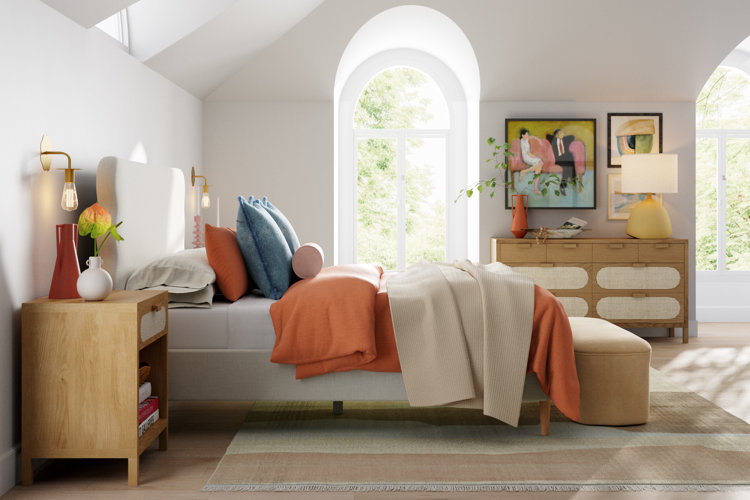
Eager to upgrade your sleep space with a new bedroom set? To find the perfect fit, it’s important to measure your bedroom to ensure proper function. Taking a few simple measurements ahead of time can save you the headache of a cramped layout. Keep reading to learn exactly how to measure your space, so you can shop with confidence and create a bedroom that feels as good as it looks.
What You’ll Need
Here are a few tools to gather before you get started:
- A tape measure
- A pen and paper or smartphone to record your measurements
- Painter’s tape
Step 1: Measure Your Bedroom
Begin by measuring the basic dimensions of your bedroom. These measurements will help you determine how much furniture your space can comfortably hold.
- Measure the Room’s Length & Width: Use a tape measure to record the distance from wall to wall in both directions. Round to the nearest inch, and write down both numbers.
- Measure Ceiling Height: Measure the height from the floor to the ceiling. This is especially helpful if you’re considering a tall headboard, canopy bed, or wardrobe.
- Measure Doorway & Entry Points: Next, record the width and height of the bedroom door and any other entry points, like closet or bathroom doors. Note which direction each door swings open, as this may affect where you can place your furniture.
- Note Window & Closet Placement: Measure how far each window or closet placement is from adjacent walls. Then, record the height between the windows and the floor to determine if you can place furniture underneath.
- Identify Built-In Elements or Obstacles: Take note of radiators, vents, ceiling slopes, or architectural details that could interfere with your furniture placement. Measure their width and height, recording them in your notes.
- Sketch a Floor Plan: An optional step, drawing a rough layout of your room can help you visualize where each piece of furniture may best fit. Be sure to label the walls, windows, doors, and fixtures.
Tip!
Browse our Bedroom Set Buying Guide for more advice on choosing the best pieces, materials, and styles for your space.
Step 2: Note the Dimensions of Each Bedroom Set Piece
Bedroom sets include several pieces of furniture, making it important to know the measurements of each item before ordering yours. Keep reading for the most common bedroom set pieces and how to measure them.
- Bed: Take note of the full length, width, and height of the bed frame, including the headboard and footboard. It’s important to account for clearance space around the bed, ideally 25 to 30 inches on each side and at the foot.
- Nightstands: Record the width, depth, and height of each nightstand. Be sure that there’s enough space for them on either side of the bed. For easy access, ensure the height is within 3 to 6 inches of your mattress top – simply add the height of your mattress to the height of your bedframe to determine the ideal nightstand height range. If the nightstands include drawers or doors, allow room for them to fully open.
- Dresser or Chest: Record the width, depth, and height of the dresser or chest in your chosen bedroom set. You’ll need a clear wall space against which to place it, and at least 36 inches of clearance in front, allowing for drawers to fully open. If it comes with a mirror, be sure to include this measurement when accounting for the piece’s height.
- Additional Pieces: If your bedroom set includes extra pieces like a bench, vanity, or mirror, note their dimensions and consider where you’ll place each item. Allow for 18 to 24 inches of space between a bench at the foot of the bed and nearby walls, and enough sitting or standing room to comfortably use a vanity or mirror.
Step 3: Test the Layout
After you’ve measured the room and noted the dimensions of each piece in the furniture set, it’s time to test how everything will fit together in the space.
- Use Painter’s Tape: Grab your painter’s tape, using it to mark the outline of each piece on the floor where you plan to place it. This process provides a clear visual of how much space each item will take up.
- Walk Through the Space: Move around your taped furniture outlines, ensuring you have enough space to comfortably navigate around each piece.
- Account for Drawers & Doors: Imagine opening dresser or nightstand drawers and doors within your outlined space, leaving at least 36 inches of room in front of anything that opens outward to allow for practical use.
Step 4: Measure the Delivery Path
It’s important to ensure each piece of your bedroom set can be successfully transported through your home and into the bedroom, especially larger items like beds, dressers, or chests. The goal is to confirm that your home’s entry points and walkways can accommodate how the furniture will arrive, which is typically in multiple manageable pieces.
- Measure Doorways: Begin at your front door, then measure the width and height of every doorway along the path to your bedroom. Be sure to account for door swing and any walls or fixtures that may impact clearance.
- Check Hallway Width: Measure the width of any hallways your furniture will need to pass through. Be mindful of any sharp turns, tight corners, or low ceilings that may be more difficult to maneuver.
- Measure Staircases: If your home includes stairwells, measure their width and the height clearance above the steps. These measurements ensure you can successfully carry tall or bulky pieces to their destination.
