How to Safely Baby-Proof Your Home
Make your home as safe as possible.
Bringing a baby home is a major life event, so you want to make sure you're as thoroughly prepared for their arrival as possible. For both their well-being and your peace of mind, read this guide to find out how to safely baby-proof your home.
What Is Baby-Proofing?
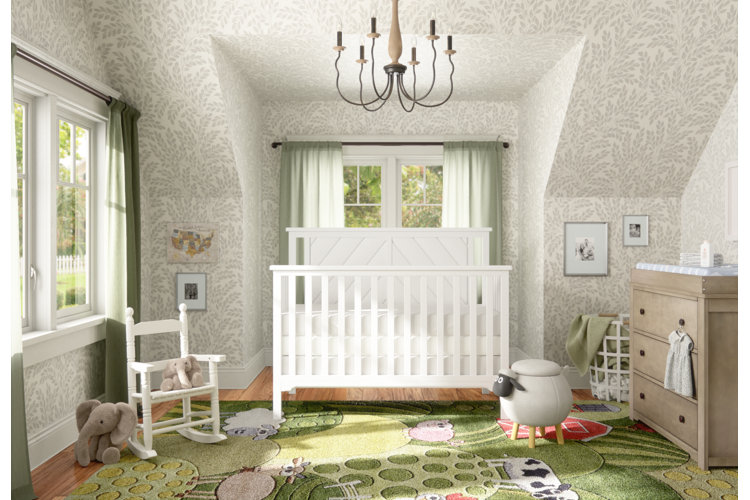
(Shop this image: white cribs, changing table dressers, green baby & kids area rugs, kids chairs & seating, and white laundry hampers & baskets)
Babies are naturally curious but don't have an innate understanding of what is dangerous or not. For this reason, you need to make your home safe before they start exploring on their own. Baby-proofing a home means removing any hazardous objects, fixing any safety issues, and ensuring your little one can't get into anything they shouldn't. From baby gates to cabinet locks, and even nonslip area rugs, here are the top purchases to make your home baby-safe.
When to Start Baby-Proofing?
Families begin baby-proofing their homes at different points in their child-rearing journeys. Whether that be during pregnancy or after the baby is brought home, you just want to make sure that these safety measures are in place before your little one becomes mobile. Bear in mind, mobility is not limited to walking and every baby develops on their own timeline. As soon as your baby can sit, roll over, crawl, and even scoot, they will be able to pull, grab, and prod, so you need to be prepared for it all.
Tip!
Get down on your hands and knees in each room to see exactly what is in your baby's reach. This will help you better determine what baby-proofing essentials you'll need to invest in.
How to Safely Baby-Proof Your Home
Start with the basics below but remember each home is unique, so pay close attention to your interior and exterior to find any additional hazards. You can always increase and add to your safety measures as time goes on, but it's good to have a basic foundation in place from the get-go.
1. Start With the Nursery
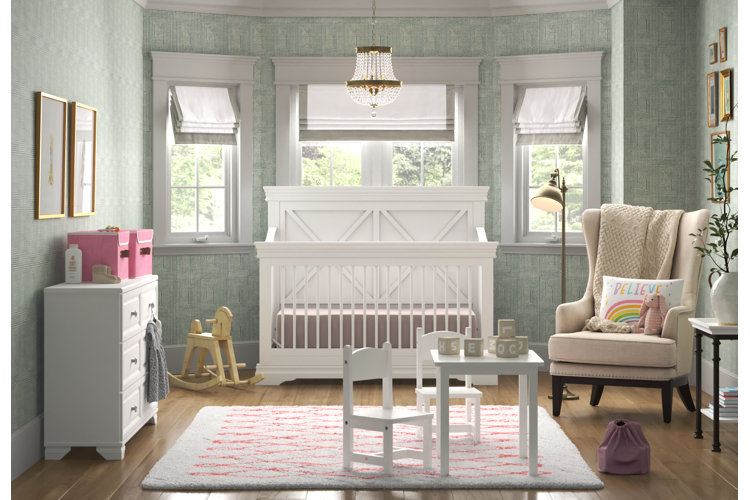
(Shop this image: white toddler & kids area rugs, white cribs, rocking horses, white wingback accent chairs, and white toddler table & chair sets)
Whether your baby will be sleeping in your room or in their own nursery, it is imperative they do so safely.
Cradles & Bassinets: If you intend to keep your newborn in your room (at least in the beginning), a cradle or bassinet will provide a safe sleep space of their own. They are smaller than standard cribs and can fit right next to your mattress, giving you instant access to your baby without having them sleep in the bed with you. Cradles and bassinets are intended only for babies of around six months or younger. Once they start rolling over, they will need a larger crib for their safety and comfort.
Cribs: Once your baby is old enough (over six months), they can be moved to a crib that is designed with their safety at the forefront. Cribs feature adjustable heights that can be raised or lowered into position, allowing you to easily reach in without having to drop the side down. When your baby is an infant, the base will be positioned higher up to allow you quick access, but as the child begins to sit and stand, the base must be lowered so they can't reach the top of the crib or climb out on their own.
Tip!
Read Bassinet vs. Crib: What Does Baby Actually Need? to learn more about each option.
Safety Conversion Rails: These rails allow you to convert any bed into a safe sleeping area for your toddler. Mesh safety rails can be placed on either side of your bed to keep the baby from rolling off when you're changing their diaper or while they nap. Toddler bed rails are great when your little one is big enough for their own bed. These rails provide just a small gap for your child to climb in and out of the bed, reducing the risk of their falling off the mattress in the night.
Infant Pillows: Infant pillows offer additional peace of mind when your little one is napping outside of their crib. They are designed to surround your baby with cushioning to keep them from rolling off the pillow while providing a soft and comfortable place for them to sleep.
Wall-Mounted Bookcases: Store your little one's books, toys, and other play items on a wall-mounted bookcase. By affixing it to the wall, you'll reduce the risk of the bookcase tipping over when tiny hands pull or reach inside.
Tip!
Alternatively, use wall-mounted anchors to keep furniture upright and prevent any accidents. Tall furniture, such as dressers or bookshelves, should be anchored to the wall to avoid tipping or falling.
Storage Bins & Cubes: You may not think of these as baby-proofing options, but they do have a safety purpose. Storage bins and cubes allow you to tuck away any toys and other items that aren't in use. This keeps them off the floor, which keeps items out of baby's reach and away from your footpath, preventing any tripping hazards as you walk with your child in your arms.
Baby Gates: These are probably one of the most versatile baby-proofing products you can buy. Baby gates allow you to create a safe play area for your little one, keeping them in one designated spot. Additionally, you can place a baby gate at the top and bottom of any staircases to prevent tumbles. They can also be used in front of the fireplace or heater and even outdoors to keep your little one from going places they shouldn't.
(Shop this image: white upholstered kitchen & dining chairs, jute & sisal area rugs, stand mixers, and round fruit & bread baskets)
The kitchen is full of hazards, so make sure to keep yours as safe as possible.
Lock & Bolt Cabinet & Drawer Hardware: Keep the contents of your cabinets and drawers inaccessible by using child-proof cabinet locks. You place these simple devices on the exterior of any drawers and cabinets to prevent little hands from opening them. These special locks can't easily be unlocked by children, so they won't be able to access any cleaning products or any other dangerous items on their own.
Smoke Detectors: Smoke detectors are especially ideal in the kitchen where all the cooking gets done, though they should also be distributed throughout the house. The same goes for carbon monoxide detectors. Read How Many Smoke Detectors Do You Need In Your Home? for more info on these useful devices.
(Shop this image: black floral & botanical wallpaper, rattan vanity mirrors, farmhouee sink bathroom vanities, woven baskets, and white step stools)
Keep your little one safe from harm in the bathroom.
Medical Lock Medicine Cabinets: Give yourself peace of mind and ensure all your prescriptions and other medications are out of reach with a medical lock medicine cabinet.
Nonslip Bath Mats: Bathrooms can get slippery, so you want to keep the floor free of water with a bath mat. Select one with a nonslip backing for when you are bathing the baby or carrying them to and from the bathroom.
Lock & Bolt Cabinet & Drawer Hardware: These child-proof cabinet locks are just as useful in the bathroom. From cleaning supplies to cosmetics, locking bathroom cabinets keeps your little one accessing any items.
(Shop this image: blue loveseats, low square coffee tables, geometric jute & sisal area rugs, white wool throw pillows, and frame-style end tables)
The rest of the house will also need a few safety checks.
Nonslip Area Rugs: Maintaining softness underfoot is best for little ones who are crawling on their hands and knees as well as those who are learning to walk, cushioning their falls. It's vital to select rugs with nonslip backing so they don't bunch up and cause a tripping hazard for you or the baby.
Rounded Furniture: As your little one starts crawling, pulling themselves up on furniture, or walking, it’s best to swap any furniture with sharp corners for rounded edges to reduce the risk of bumping into any corners. You can also install furniture bumpers on any existing furniture or architectural details to add a protective layer of padding for your little one.
Door Stop: Doors can be dangerous for little ones, especially when they open up against a wall. There are a number of door stops you can choose from. These include baseboard stops, which are typically installed on the baseboard to prevent the door from slamming against and damaging the wall while still allowing it to open and close, and floor-mount stops that are installed into the floor to create an obstacle for the door to open against. There are also edge floor stops that slip under the gap beneath the door and hold it in place and weighted floor stops that are heavy enough to sit in the door's path to prevent it from moving at all.
Gun Safe: Store any and all unloaded firearms in a gun safe to ensure they are completely out of your child's reach.
Cord & Cable Management: Babies are naturally curious, so it’s important to keep any cords and cables out of reach. Use cord organizers to store and conceal cords, unplug devices when they’re not being used, and place outlet covers on each outlet to reduce the risk of burns or electric shock.
Smart Lock: Upgrade your locks to smart-enabled options and ensure your home is that much safer. Smart locks typically let you know when the door has been locked or unlocked, provide unique entry codes (meaning keys can't be stolen or lost), and offer a simple way of monitoring activity in your home.
Tip!
For any other baby essentials you may need, read New Baby Checklist: Everything You Need to Bring Your Newborn Home.
