How to Store Kayaks & Keep Them in Water-Worthy Shape
How to store kayaks and protect them from damage.
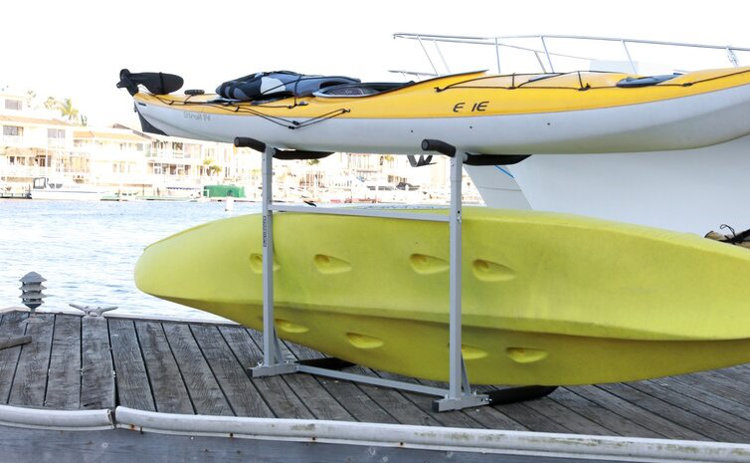
Your kayak is an investment that you want to take care of, whether you are storing it short-term or long-term. When you have finished kayaking season on the water, it is best to use kayak storage systems to prevent any damage to or warping of your vessel. Storing inflatable kayaks is as simple as deflating and rolling them up, but finding the right kayak storage ideas for hard-shelled kayaks can pose a challenge. This guide will help you discover how to store kayaks safely so they last for years to come.
How to Store Kayaks
Kayak Rack Mount Types
Kayak Rack Materials
Kayak Rack Features
How to Store Kayaks
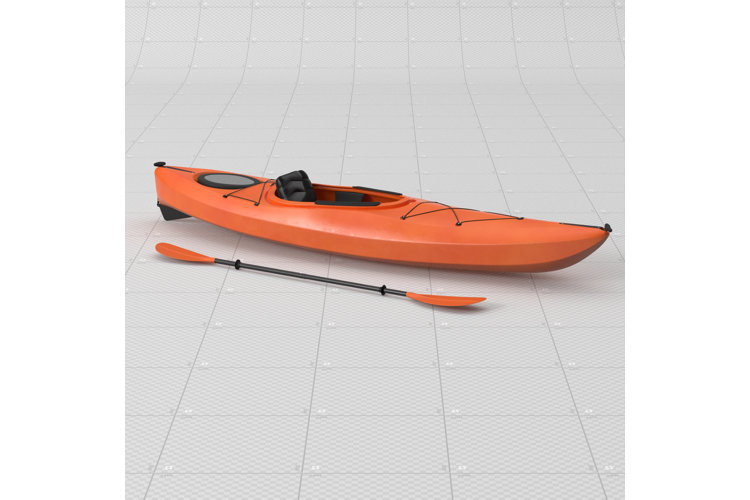
Learning how to store kayaks is just as important as their initial purchasing. Kayaks are best protected when indoors in locations such as the garage, though due to a number of factors, this may not always be practical or possible. It is important to find a good place to store your kayak, whether indoors or outdoors, as improper storage may shorten the life-span of your boat or even render it unusable.
When storing your kayak, try to keep a few safety precautions in mind:
Location:
- Storing your kayak indoors is best, but this is only possible if you have the space to do so.
- If you are only able to store your kayak outdoors, ensure it is protected from sun, moisture, heat, and cold, as they all may potentially degrade or damage it.
- It is best not to store a kayak directly on the ground, as the moisture and dirt can damage it.
Position:
- Avoid storing your kayak cockpit-side-up, as any prolonged pressure on the hull may cause dents.
- The best kayak storage positions are hull-side-up, sideways, or suspended from the ceiling.
- When using straps to secure your kayak, ensure they are not fastened too tightly, as the pressure may deform the hull.
- Avoid supporting your kayak by the bow or the stern (front or back), as the weight of the kayak may place undue pressure on one end which in turn may begin to change the shape of the hull.
- Keep your kayak from sitting directly on its hull for extended periods, as this may negatively affect its body.
- Avoid storing your kayak by its handles, as they may become weakened and break.
- Avoid leaving your kayak tied to the top of your car unless it is in transportation.
Kayak Rack Mount Types
Learning how to store kayaks is an important part of owning them. The better you store your kayak, the longer it will last. When preparing your kayak for the off-season, it is a good idea to consider different types of storage options.
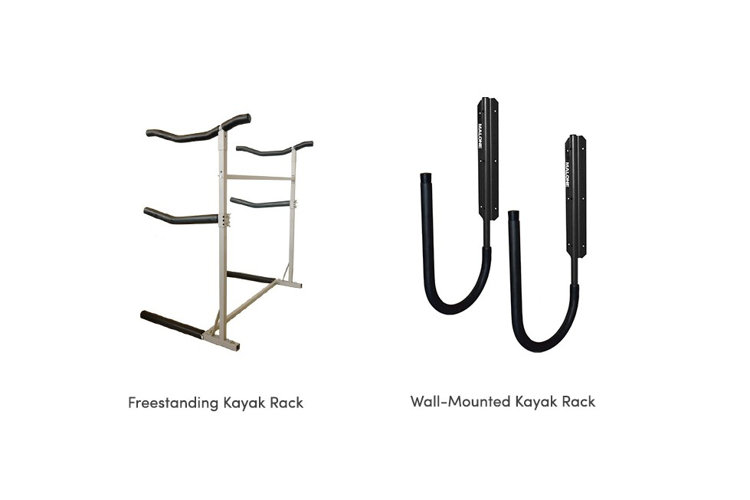
Freestanding Kayak Racks: A freestanding kayak rack has feet on the ground for stabilization and extended arms to hold your kayak. These arms are spaced to support the kayak on both sides, either sideways or with the hull facing up, depending on the model. More often than not, these arms are padded to prevent any scratching and dents. Kayak racks offer a space-saving solution to storing your raft, and though there may be models with a larger footprint, many of these can still save space by storing multiple kayaks at a time. Some freestanding kayak racks can be used indoors and outdoors, though (as with any other outdoor kayak storage) it is important to protect yours from the elements. If you plan to use your freestanding kayak rack as a permanent storage solution, it is a good idea to bolt it to the ground as an additional safety precaution.
Wall Mount: If you are short on floor space, a wall rack poses a good kayak storage solution. It is best to place a wall mount in areas with little traffic to avoid any injuries and inconvenience that may be caused by the kayak. Wall mounts usually support a kayak on its side, and many have straps to further secure your investment. There are also wall mounts that can support multiple kayaks at a time. Whether you are using the wall rack to store your kayak for a few days or through the winter, you will want to make sure that it is not mounted too high. Your kayak should be within reach and readily accessible for your outdoor water adventures. It is essential the wall rack is securely mounted according to instructions to prevent any injury or damage. It's a good idea to check the weight capacity of the kayak rack to ensure the safest installation possible.
Kayak Rack Materials
Not only will you benefit from knowing exactly how to store kayaks, but learning more about the storage rack materials may help you choose the best type for your needs.
Steel: Steel is an alloy made from metal and is used for its weight-bearing quality. It is strong and cost-effective, though it is heavier than other materials. A steel kayak rack is a sturdy option for storing a large number of heavier kayaks
Metal: Metal is resistant to tarnishing and has a high freezing and melting point, which makes it good for extremely hot, cold, and wet weather. Though it is best to keep your kayak from inclement weather, if you do need to store it outdoors, a metal rack should hold up well against the elements.
Aluminum: Aluminum is the most malleable and lightweight metal that is often selected for wheeled or portable kayak storage. These kayak racks are lightweight, making them easier to move, carry, and store.
Some kayak racks come with features to make storage options a little more versatile. These features may help to take the work out of figuring out just how to store kayaks.
Adjustable: An adjustable kayak storage rack is particularly advantageous if you plan to expand on your kayak collection. Even if you don't intend to grow your collection, being able to expand it will help you accommodate any additional gear or even adjust the height to a level that is out of the way yet still within reach.
Assembly Required: Assembly-required kayak racks will require a little bit of handiness, though they are not overly complicated to set up. If you don't mind assembling your kayak rack yourself, you will find a larger range of racks to pick from.
Multiuse: If you have several water hobbies, a multiuse kayak rack will benefit you by storing multiple sporting items. You should also be able to store your kayak accessories and equipment on a multiuse rack so that you have all your gear in one easily accessible place.
How to store kayaks no longer needs to be an unanswerable question. Choose the right kayak rack to ensure yours lasts a long time.
