Marble vs. Granite: Your Guide to Choosing the Best Material
Which one meets your needs in terms of budget, style, and quality?
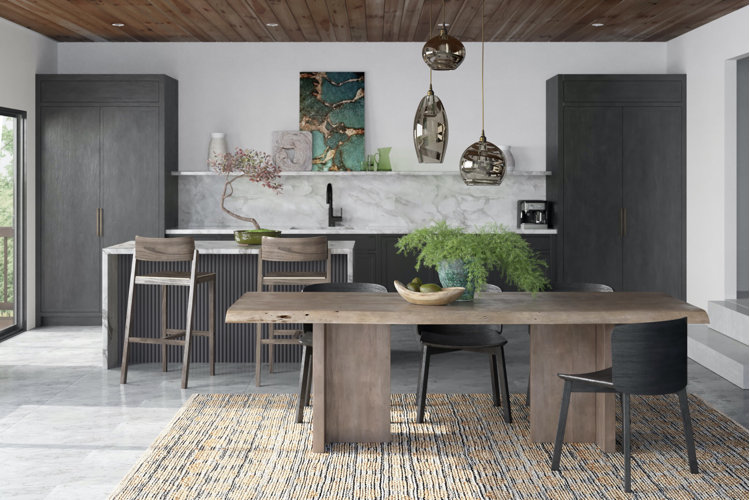
Whether you're after a sleek kitchen countertop, stunning floor and wall tiles, or stylish furniture and decor, there are a variety of home materials to choose from. Marble and granite are two material options that can add to the style and functionality of your space, but which one is right for you? In this guide we compare marble vs. granite to help you decide which one checks off all of your boxes.
In this guide:
Defining Marble & Granite
Marble vs. Granite: An Overview
Marble vs. Granite vs. Quartz
Defining Marble & Granite
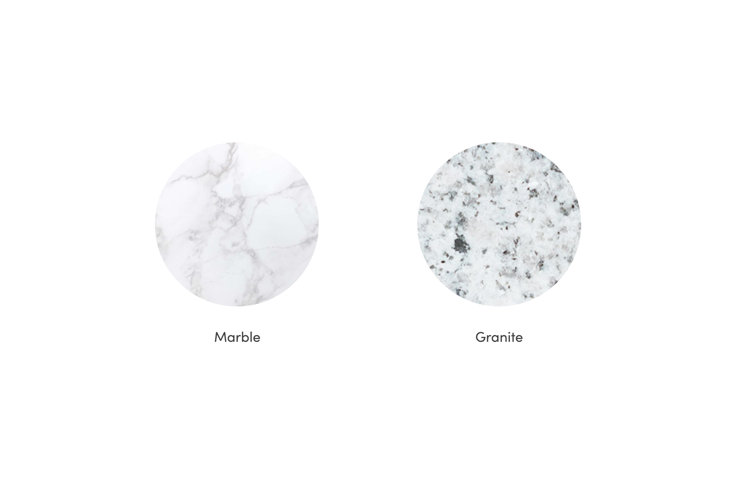
Below, we define marble and granite so you can get a better understanding of these two material options.
What Is Marble?
Marble is a type of metamorphic limestone. Metamorphic refers to the natural process that occurs when the limestone gets exposed to pressure and heat over thousands of years. This heat and pressure combined with water deposits causes minerals in the limestone (like calcite, graphite, and quartz) to recrystallize and evaporate. The result is the distinctive appearance of layered streaks and color variations that we recognize as marble. In its natural form, marble can be white, gray, black, or even brown in coloration. Its unique look and polished appearance makes it a sought-after material for modern and traditional homes alike.
What Is Granite?
Granite is a type of igneous rock – igneous referring to the natural process of cooling, crystallizing, and solidifying magma or lava deep underground. This process occurs over millions of years to produce a hardened, ultra-durable material: granite. Granite's coarse-grain pattern and speckled appearance is due to a variety of minerals (like feldspar, quartz, and mica) that crystallize and solidify together as the magma cools and gets exposed to pressure. Granite comes in a variety of natural color variations depending on the minerals present and the area it's from. Learn more about granite as a home material in What Is Granite & How to Incorporate It Into Your Home.
Marble vs. Granite: An Overview
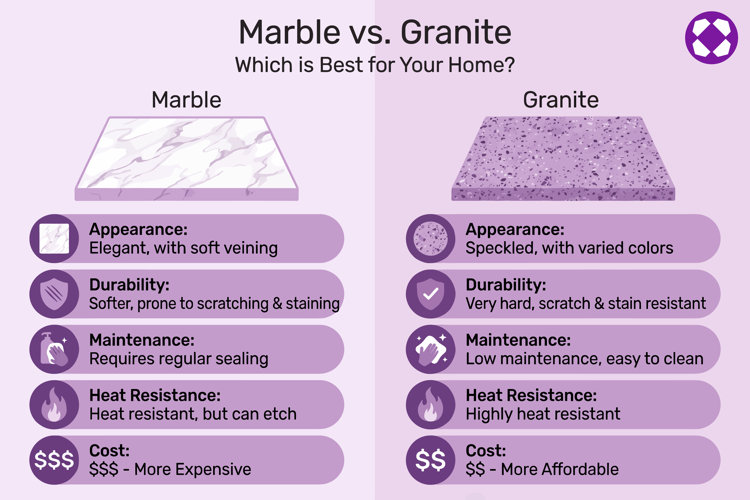
Now that you have a basic understanding of both materials, let's go over how they compare to each other in terms of appearance, durability, price point, and versatility.
Appearance
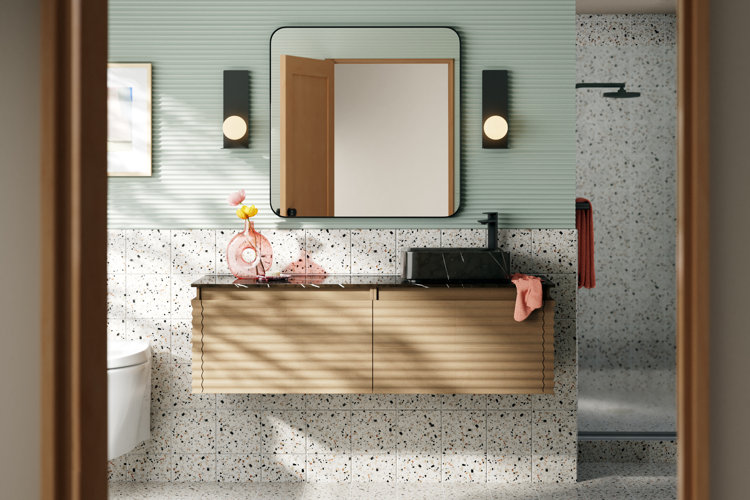
Appearance is the main difference between marble and granite because each material brings a distinctly different look to your home. Marble features an abstract, streak- or vein-like pattern and can be white, gray, black, or brown to add neutral beauty to any space. Granite has a speckled pattern and textured appearance that also comes in a variety of natural color variations. Overall, marble and granite both work well in modern and traditional spaces alike. However, marble is a more popular choice for modern backsplashes and countertops because of its sleek appearance. It all comes down to preference!
Durability
When comparing the durability of marble vs. granite countertops, as well as other home fixtures, granite proves to be the strongest option. Granite's natural cooling process and mineral composition combines to create an ultra-durable surface that's resistant to scratches, chips, stains, and moisture-related damage. These qualities make granite a sought-after material for bathroom and kitchen tiles, countertops, and backsplashes because it can stand up to daily wear-and-tear. Marble tends to scratch, stain, and chip more easily because it is softer and more porous than granite – but you'll be happy to know that manufacturers usually apply protective sealants to marble pieces to help enhance their durability and preserve their quality over time.
Both marble and granite are heat-resistant, meaning they're less likely to crack or develop heat-related marks. This is especially important for maintaining the quality of table tops or kitchen countertops even when they’re exposed to hot pans, plates, or cups. However, we always recommend using coasters or potholders to maintain a protective barrier.
Price Point
When it comes down to the cost of marble vs. granite, marble is typically more expensive because it's heavier, more rare, and requires more work to cut and refinish – not to mention, it provides a luxe look and feel that adds to the value of your home. However, there are faux-marble alternatives that can help you achieve the look you want while staying within or below budget. Granite is lighter, more easily-sourced, and lower-maintenance, which makes it the more budget-friendly option overall.
Home Uses
Both marble and granite are used for a wide variety of home finishes, furnishings, and decorative items. This includes tiles, tables, sinks, home accessories, light fixtures, and of course, countertops. Below we've compiled a list of areas to incorporate marble or granite in your home:
Kitchen:
Granite Kitchen Islands & Carts
Marble Kitchen Islands & Carts
Granite Kitchen Backsplash Tiles
Marble Kitchen Backsplash Tiles
Granite Kitchen Floor Tiles
Marble Kitchen Floor Tiles
Granite Kitchen Sinks
Bathroom:
Granite Bathroom & Shower Floor Tiles
Marble Bathroom & Shower Floor Tiles
Granite Bathroom Sinks
Home Decor:
Marble Home Accessories
Marble Countertop Bathroom Sets
Marble or Stone Table Lamps
Tip!
Check out our guide on Decorating With Marble: 22 Ways to Add Marble Decor to Your Home and Before & After: A Marble Kitchen Inspired by Childhood Memories to learn about how to incorporate sleek marble elements into your home.
Marble vs. Granite vs. Quartz
Quartz is a mineral found in both marble and granite that has a crystal-like appearance. Manufacturers combine quartz with resin and other human-made materials to achieve the look of marble or granite. That's why you may come across quartz countertops or quartz tiles, despite it not being a form of rock like marble or granite. When comparing these materials, quartz is the most budget-friendly of the three. This is because it contains human-made filler components (like resin) that are easily-sourced and cheaper to produce. These same components actually help enhance the quality and durability of quartz items without upping the price point. We recommend taking a look at our guide on How to Choose the Best Bathroom Countertop Materials to learn more about these three materials and how they compare.
Tip!
Review Travertine vs. Marble: Which Material Is Better? to learn about more home materials for countertops, tiles, and tabletops.
