Rabbit Cage Sizes for a Happy Hopper
Bunny’s new home.
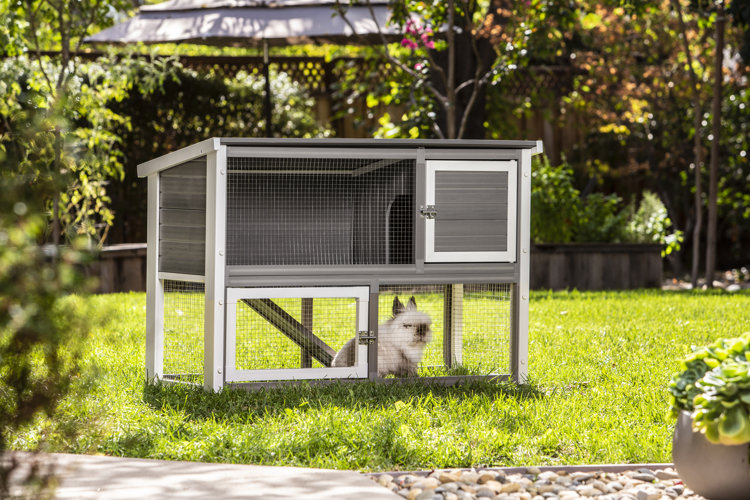
Rabbits are a wonderful choice for young families or individuals of any age looking for a spunky and social starter pet. But don’t be fooled by their small size – rabbits require a certain amount of space to be their happiest, healthiest selves. Here’s a few tips to help you find the right rabbit cage size for your new pet.
Rabbit Hutches & Cages: Sizing Basics
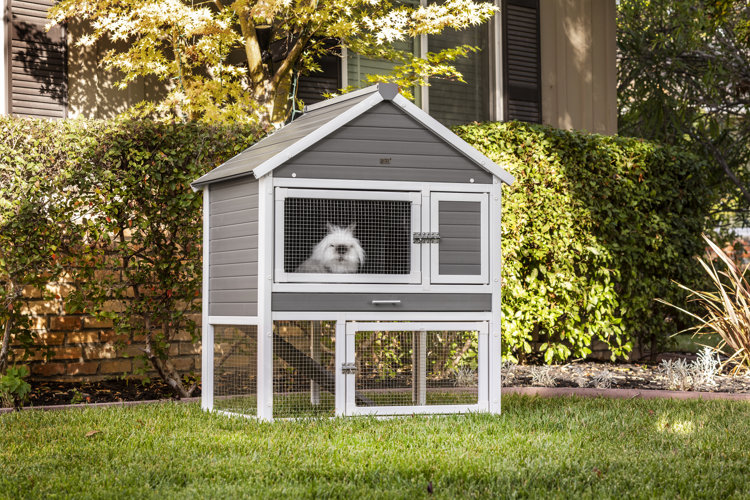
Rabbit cages require the right amount of space to ensure the health and happiness of your pets. A habitat that is too small can lead to spinal issues, obesity, and muscle atrophy in your furry friends. The rabbit’s living area should be a minimum of 12 sq. ft. and include a litter box, feeder, water bottle, and hay for nesting. They also require an additional 32 sq. ft. run area where they can exercise, play, and engage their natural instincts.
As a general rule of thumb, hutches should be at least three to four times longer than your rabbit so that it has enough room to hop three times consecutively. The width of the cage should be at least two times the length of your rabbit to allow ample space for stretching and turning around. While height varies depending on the breed, you want a cage that will allow your rabbit to stand on its hind legs without its ears touching the ceiling.
Tip!
Check out our related articles What Is a Rabbit Hutch? and Our Guide to Small Animal Cages & Habitats for more information to guide your rabbit habitat setup.
How to Determine the Right Rabbit Cage Size
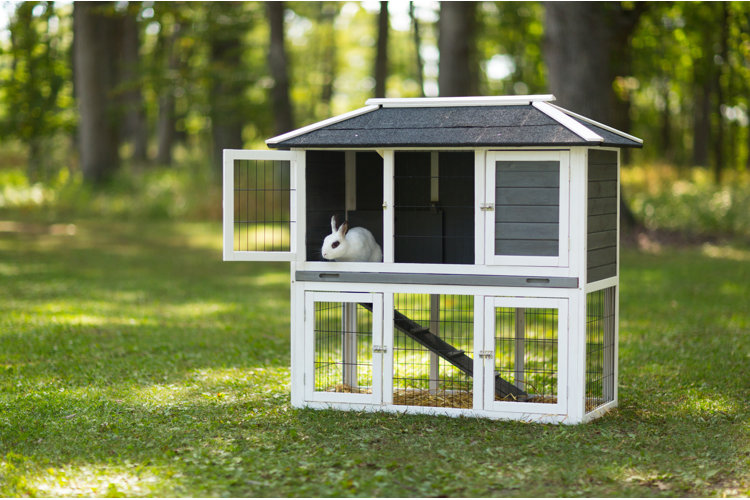
There are a number of key factors to consider when determining which rabbit cage size you should buy. Wherever you plan to place the habitat, be sure to measure the area to ensure you have enough space to suit the needs of your animals.
1. Count the Number of Rabbits
Rabbits are social creatures and should be kept in pairs at a minimum to ensure proper health and socialization. However, more rabbits require more space. Although bonded rabbits can be kept in closer quarters, you should ideally aim for 12 sq. ft. of living space and 32 sq. ft. of run space per rabbit. This is especially important if your rabbits are not bonded, as they may appreciate more personal space.
2. Consider the Breed
Some types of rabbits require more space than others. The average domestic rabbit is usually between 12" – 16" tall when standing on their hind legs. Dwarf breeds may be 9" – 12" tall and should have a minimum cage height of 24", while giant breeds can be up to 28" tall and require a cage that’s at least 36" tall.
3. Think About the Function
The size of your rabbit cage may vary based on how you plan to use it. If you’re looking for temporary or supplemental housing – like a place to keep them while you clean their hutch, a mobile cage so you can bring them to the vet, or a house to place in a larger enclosure – you can opt for a smaller cage. However, if you’re setting up permanent living quarters for your rabbits, aim for 12 sq. ft. of living space and 32 sq. ft. of exercise space as a bare minimum.
