Storing Food: How to Store Vegetables
How to store vegetables for a yummy taste every time.
Storing food can be tricky – just check out some of the labels on the back of the items you have in your home. Some say “Store in a cool, dry place,” while others say "Refrigerate after opening.” Storing vegetables can be even harder because they don’t come with any storing instructions. And vegetables, like plants, are sensitive; if you don’t store them properly, they end up going to waste (along with the money you spent on them). If you want to avoid wasting food and save money, keep reading to learn how to store vegetables.
Where to Store Vegetables
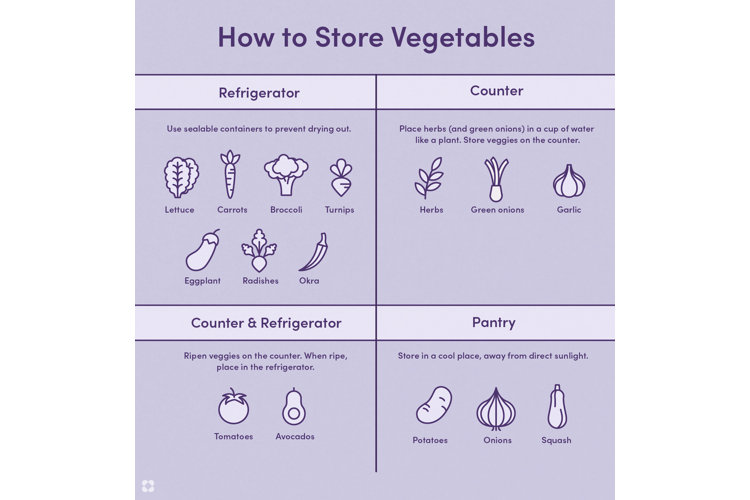
When storing vegetables in the refrigerator, veggies that wilt (such as lettuce, cabbage,and collard greens) need to be placed in an area with high humidity, while vegetables that develop mold (such as bell peppers, cauliflower, carrots) need to be stored in an area with low humidity. Vegetables that belong on the counter and in the refrigerator (tomatoes and avocados, for example) need to ripen on the counter first. At peak freshness (when even in color without any dark spots or mold), place them in the refrigerator for lasting freshness. Veggies that can be stored on the counter are very low maintenance. Just leave them in a cool spot away from direct sunlight and they’ll stay fresh! Lastly, pantry-dwelling vegetables only need a cool, dark space to thrive. Just be sure to separate onions from other vegetables as they give off a gas that causes other vegetables (and fruits too!) to decay at an accelerated rate.
How to Store Vegetables in the Refrigerator
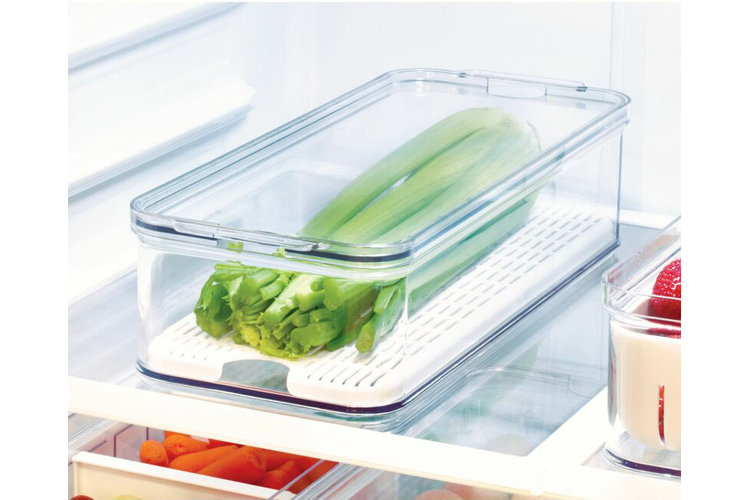
Keeping these vegetables in the fridge allows you to control their climate and keep them fresh.
Refrigerator Bins & Crisper Drawers: Learning how to store vegetables wouldn’t be complete without a lesson in fridge bins. Fridge bins are key to storing food that needs to be refrigerated, including vegetables that hold a lot of water like lettuce, cucumbers, and tomatoes (when fully ripe). Fridge bins provide lasting freshness by protecting vegetables from bruising and from over-ripening due to gases other fruits and vegetables may be emitting. If there’s a spill, fridge bins are super easy to clean; be sure to snag fridge bins with lids so that you can stack them and make the most of your fridge space. Having a crisper drawer is super handy as well – crisper drawers typically come with refrigerators and provide a temperature controlled space specifically designed for produce.
Reusable Food Storage Bags: Understanding how to store vegetables can be intimidating because storing food doesn't have a one-size-fits-all solution. But because there are many solutions to one problem, that also means that you have many options. One alternative to storing food in hard bins that don’t allow for flexibility is to store them in bags. Food storage bags are a great option for those who have limited space and/or oddly shaped veggies. Food storage bags are also more practical for taking food on the go. Try storing carrots or kale chips in bags for a quick snack.
Herb Storage Containers: When you buy vegetables from the store, you might not think that they’re going to continue growing. But that’s not true for all veggies! For the vegetables and herbs that continue to grow, try storing them in herb containers. Herb containers are containers that delay the aging of herbs (and asparagus) and keep them fresher longer by surrounding the roots in water. These containers are perfect for veggies like green onions that will flourish when their roots are submerged in water and may continue to grow for weeks after they’ve been picked! Herb containers will ensure lasting freshness and can be an amazing way to stretch your dollars.
Airtight Food Storage Containers: Some vegetables that may be stored on the counter and then the refrigerator (such as tomatoes and avocados) need to ripen before they can be used or placed in the refrigerator. Once these veggies are ripe, store them in airtight containers to slow the oxidation process. You'll also need to store cooked and sliced vegetable leftovers in airtight containers in the fridge, even if those vegetables are usually stored on the counter or in the pantry.
Canisters: Canisters are essential for storing food that has been dehydrated. Canisters are usually airtight, which is essential for vegetables that aren’t supposed to be exposed to moisture, including peas, beans, corn, and chickpeas. Not only can canisters function to keep moisture out of your vegetables, but they are also very beautiful. They can make a kitchen less cluttered by eliminating distracting packaging. If you opt for transparent canisters, you can see exactly how much you have and when it’s time for a refill.
Jars: When learning how to store vegetables, people often forget about vegetables that are pickled and preserved. Making and storing food like this requires a flawless, airtight seal. If not done properly, food can go bad and will have to be thrown out, wasting time, effort, and money. This is why jars are a must-have! They are the only vegetable storage solution with a guaranteed airtight seal that can make or break your vegetables. They’re also great for storing ready-to-eat vegetables, so there’s no need to buy separate containers for each stage of the process.
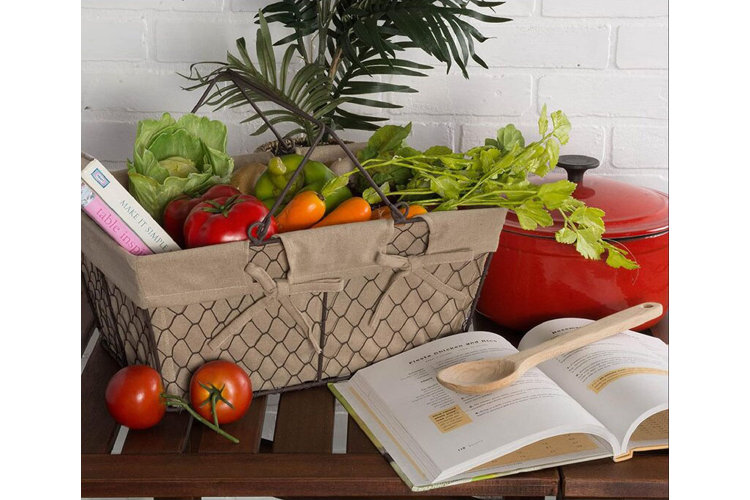
Baskets: Some vegetables are simply low-maintenance; they're perfectly fine with just being placed on the counter and they don’t need refrigeration or lack of light. Learning how to store vegetables like this can feel like you’re unlearning everything you thought you knew about storing food. Low-maintenance veggies like tomatoes and potatoes can be stored practically anywhere, so why not turn your vegetables into natural kitchen decor with a beautiful basket? You could also use the basket as the centerpiece on your table during family dinners.
Odor-Resistant Containers: While vegetables are delicious to eat, they’re not always the greatest to smell. Looking at you, onions. Storing food and keeping your home smelling fresh can be a balancing act. For the more pungent veggies, odor-resistant onion storage containers are great. They are made to prevent the smell of one of the strongest smelling vegetables. Plus, you don’t have to only use them for onions! While they’re great for saving onions and preserving their freshness, these containers can also be used for garlic and other vegetables that leave an unwanted smell behind. It’s important to note that this tip only applies to veggies that haven’t been opened yet!
Bento Boxes: Originating in Japan, bento boxes allow for meals to be taken anywhere. Food storage bags and bins may allow for food to be transported but they are lacking one crucial element that bento boxes have perfected: separation. Bento boxes have dividers that ensure your food and flavors stay separate, this way you don’t have to pack brussel sprouts in one container and pie in another. Or worse – both of them together. Unless you like brusselsprout-flavored pie, a bento box is the perfect container for storing food that needs to be taken to work, school, picnics, etc.
Portable Food Steamers: Storing food doesn’t usually require electricity, but if you’re interested in learning how to store vegetables and keep them hot while on the go, portable food steamers are the best option. These devices can best be described as a thermos mixed with a lunchbox. The bottom compartment holds water that steams when you turn it on. This heats food evenly; to keep it warm, don’t allow any steam to escape before eating. Not only will a portable food steamer store your vegetables, but it will steam them and keep them warm on the go. It’s perfect for picnics, long car rides, or simply bringing your food to a place with no microwave.
Tip!
After vegetables have been cooked, be sure to store leftovers in airtight containers in the fridge.
