The Best Greenhouses for All Regions
Grow your plants for longer.
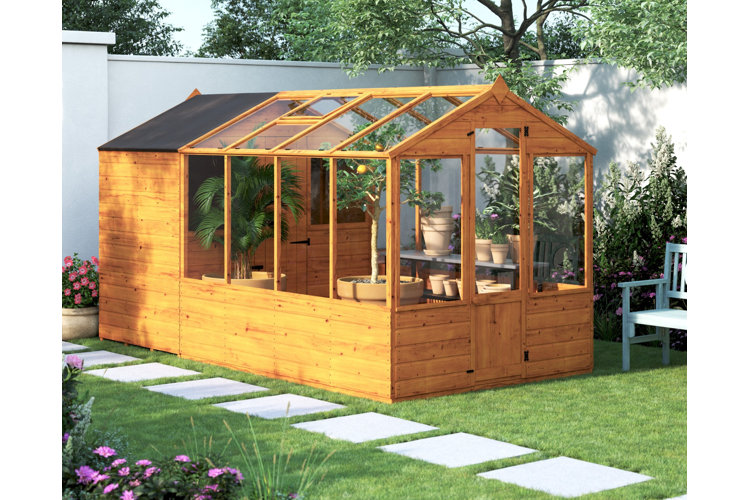
While a greenhouse is designed to help you with your gardening and cultivation, not every state experiences the same weather conditions, meaning not every greenhouse design will be ideal for where you live. No matter if you're looking to extend your growing season, planning to start germination early, or in need of a place to protect your plants from pests, here are the best greenhouses for all climates.
What Are the Best Greenhouses?
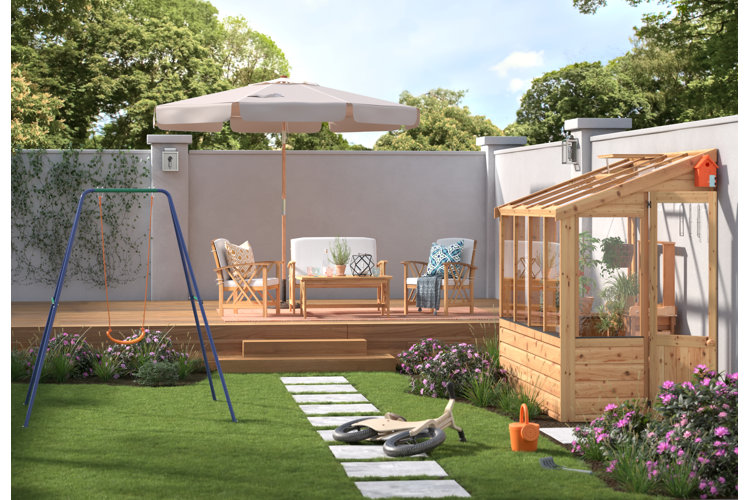
(Shop this image: wood greenhouses, pavers and cobblestones, three- to four-person patio conversation sets, swing sets, and beige patio umbrellas)
Greenhouses are designed to create ideal growing conditions for your plants, helping to protect them from inclement weather and pests. Since there are so many types of greenhouses available, you will want to choose one that is best suited not only to your needs but also the climate of your state.
Before making any sort of decision, it is important that you consider two things: purpose and size.
The first is what you plan to use your greenhouse for. Do you want to start seeds in the colder months? Are you looking to grow vegetables for longer? Will it be solely for flowers? Read Types of Greenhouses to learn more about the options available to you.
Second, you need to choose the size of your greenhouse. Are you looking for a mini greenhouse or do you want something on the larger side? Read Your Guide to Greenhouse Sizes for extra info.
Tip!
Before purchasing and setting up your greenhouse, make sure to check with your local building department to see if any permits are needed. Large permanent structures – especially ones with electricity or plumbing – can require building permits in.
Best Greenhouses for Each Region
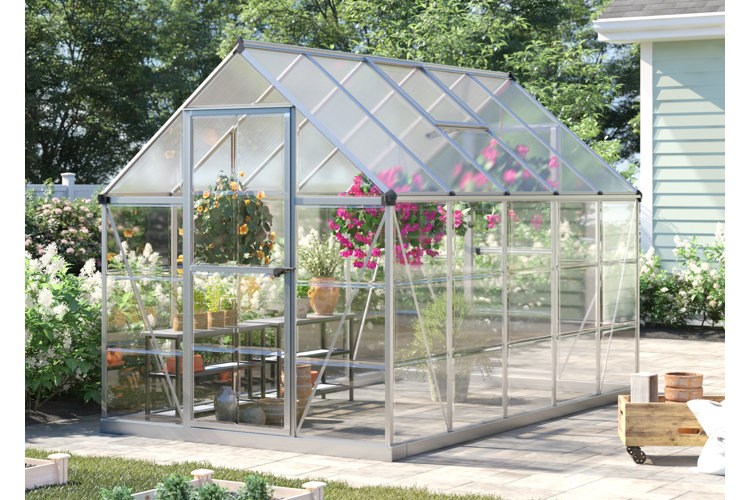
(Shop this image: glass greenhouses, hanging basket planters, pot planters, raised garden planters, and potting tables)
Best Greenhouse for the Northeast
The Northeast has a short growing season due to its long winters with heavy snowfall, so a well-insulated greenhouse with a high snow- and wind-resistance is a must. Additionally, you want to pick something with a double- or triple-paned design for good insulation. Shelves or growing benches can also help with drainage and keep the plants from sitting directly on the cold ground. Other features to look for in a greenhouse that can withstand Northeast weather include:
- An aluminum or galvanized steel frame for durability and weather resistance
- A pitched or rounded roof to help shed snow
- Built-in vents to allow for humidity control in the summer
- A solid foundation with an insulated concrete floor to help keep out the cold
You will also require a heater for extra warmth and a grow light for the winter months. Be sure to place your greenhouse where it receives ample sunlight and is somewhat sheltered from the wind with a south-, southwest-, or southeast-facing exposure.
A greenhouse like the Canopia Hobby Greenhouse can enable year-round growing thanks to the light-diffusing polycarbonate panels which also protect against insects. Meanwhile, the galvanized steel frame with a pitched roof prevents and protects against snow accumulation.
Best Greenhouse for the Midwest
The Midwest experiences all four seasons in full – including cold winters and hot, humid summers – often with extreme temperature fluctuations. These drastic temperature differences can stress plants, which is why you want to provide them with a greenhouse with stable growing conditions. This will allow you to extend growing seasons into late November and start seeds in February. Things you want to look for in a greenhouse in the Midwest are:
- A rounded roof, which is good for airflow and snow runoff
- Polycarbonate panels, which provide good insulation and UV-resistance
- A galvanized steel or heavy-duty aluminum frame to withstand wind, rain, hail, and snow
- Built-in vents to allow for airflow during the hot weather
- Good insulation so it can retain heat
Be sure to place your greenhouse where it is protected from strong winds and can receive the most sunlight – especially during the winter months (a south- or southeast-facing position will be best). A fan might be required for the summer heat along with a shade cloth to protect your plants.
The Backyard Discovery Walk-In Outdoor Greenhouse is made from insect-resistant cedar wood and polycarbonate panels that block up to 99.9% of harmful UV rays. It has both a high snow load capacity and high wind-resistance, making it ideal for the Midwest weather.
Best Greenhouse for the Northwest
The Pacific Ocean creates moderate temperatures in the Northwest region, making for long growing seasons that are ideal for a variety of crops. When choosing your greenhouse, you want to prioritize light penetration for cloudy weather, insulation against cold temperatures, and a strong frame for wind-resistance. Extra features you want in a greenhouse in the Northwest are:
- A domed or rounded greenhouse with a roof angle of between 75° and 80° to actively shed snow
- A galvanized steel or other metal frame with weather-sealed joints to withstand the wind and colder weather
- Anchors to protect against high winds and keep your greenhouse from being knocked over
Black barrels of water can also help to add thermal mass by storing heat in the daytime and releasing it at night. You may also need to provide supplemental heating to grow year-round. Be sure to face the structure south for maximum sunlight.
The Backyard Discovery Walk-In Outdoor Greenhouse is made from polycarbonate and cedar wood and has both an impressive snow load capacity of 5,700 lbs. and a wind resistance of 100 mph, making it ideal for weather in the Northwest. Additionally, the apex roof will help with preventing snow buildup.
Best Greenhouse for the South
The South is known for its heat and humidity with long hot summers and mild winters. It has a long growing season and receives plenty of rain, but it can also experience extreme weather events like heat waves, drought, tropical storms, and tornadoes. Unlike the other colder states, the primary concern when growing in the South is not maintaining warmth but instead keeping your greenhouse cool and controlling pests. You want to protect your plants from the hot sun and heat buildup, which is why a greenhouse with plenty of ventilation can help to reduce the temperature variations of this climate. Additional considerations for greenhouses in the South are:
- A fine mesh screen to protect from pests but still allow for airflow
- Polycarbonate panels to allow for better light transmission
- Deep ground anchors, which are essential for the high winds during hurricane season
- A corrosion-resistant aluminum frame or strong galvanized steel option (both are extremely durable)
- Roll-down sidewalls, which provide maximum airflow in the warm months and can be closed for protection during the colder months
During the summer, a shade cloth can also help to reduce the amount of sunlight that comes into the greenhouse. You may also want something like an evaporative cooler or misting system for temperature and humidity control. Be sure to face your greenhouse where it will get the most sunlight exposure (north-to-south is typically best).
The AMERLIFE Polycarbonate Greenhouse fits the bill perfectly thanks to its large walk-in doors, functional vents, and light-diffusing UV-resistant panels. It has a high wind rating of 70 mph and can withstand a diverse range of weather conditions.
Tip!
Once you have made your selection, read How to Use a Greenhouse for more info on using your new greenhouse.
