Your Guide to Buying a Trampoline
Encourage family fun.
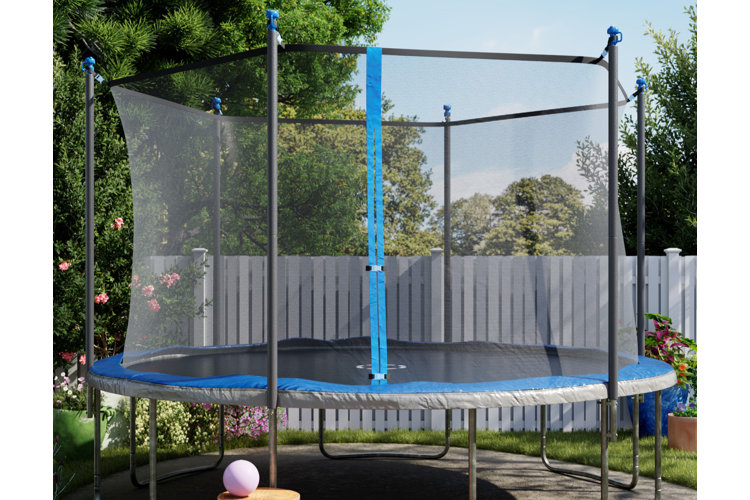
If you’re looking for a fun and easy way to keep your kids entertained and help them burn some energy, consider a trampoline! By choosing a trampoline for your family, you can give you and your children a fun outlet for play, whether indoors or outdoors. Use this guide to make purchasing a trampoline a breeze.
1. Choose the Perfect Type of Trampoline
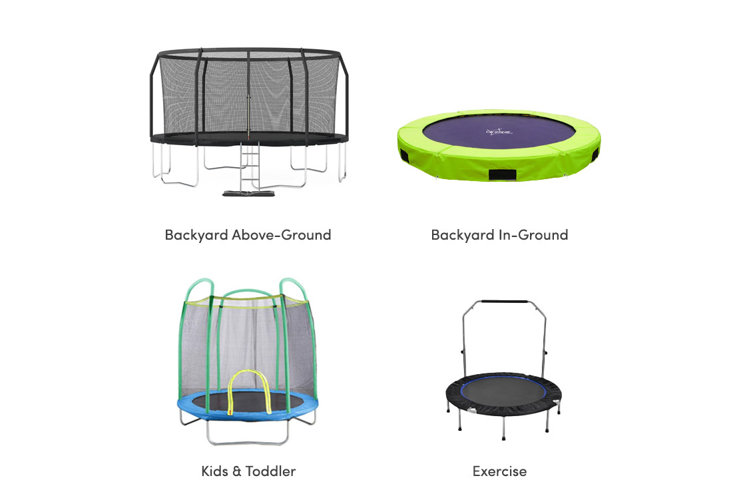
Trampolines can be used for fun or exercise both indoors and outdoors, depending on their design. Not only are they a great option for kids with energy to burn, but trampolines can also help to improve balance and mobility while offering a fun physical activity. When browsing for trampolines, keep these types in mind.
Backyard Above-Ground: Backyard above-ground trampolines are a popular choice for outdoors. Their legs sit on the ground with no anchor, enabling you to reposition them (the smaller they are, the easier this is). Backyard above-ground trampolines come in a large range of shapes and sizes, so you can cater to your kids' age groups and your outdoor space.
Backyard In-Ground: In-ground backyard trampolines either have no legs and sit directly on the ground, or have shortened legs that bring them much lower down to the ground. Some are even inflated. This lowered center of gravity means these trampolines are less likely to tip over and are more easily accessible.
If you need help installing your backyard trampoline, Wayfair offers an assembly service. Simply check the box for Expert Assembly on the product page when adding your trampoline to your cart.
Kids & Toddler: If you are in search of something even the youngest family member can enjoy, a toddler- or small kid–friendly trampoline is a great choice. These are ideal for younger children, because kids’ trampolines are small and have additional safety features to help your little one enjoy their jumping time more safely. Kids’ trampolines are also portable, allowing you to easily move them both indoors and outdoors.
Exercise: Trampolines aren't exclusively for recreational use. Exercise trampolines are small in size and low to the ground with a sturdy base, allowing you to jump without sinking too low or bouncing too high. Many models also come with a balance bar to offer additional stability while jumping.
Before choosing a trampoline, it’s important to consider the space the trampoline will be placed in. The ground area should be level, free of rocks, and have a minimum 2' of additional space around a trampoline with a safety net, and at least 8' of additional space for trampolines without safety nets. It’s also very important to consider the space above the trampoline. We recommend at least 24' of overhead clearance to prevent jumpers from being injured.
Important Note:
Trampoline sizes are measured from frame to frame, which means the jumping surface is smaller than the overall dimensions.
Mini: Mini trampolines are under 5' wide. They are the best option for kids as young as three years old; however, there are also some mini trampolines that are designed for adult exercise. This size trampoline takes up minimal floor space and can be easily moved around or stored when not in use. Mini trampolines can only accommodate one jumper at a time.
Small: Small trampoline sizes are between 5' and 9' wide. They are ideal for toddlers and can accommodate them as they grow. These types of trampolines are also compact and easy to move, making them ideal for those with space constraints. Small trampolines are only suitable for one jumper.
Medium: Medium trampolines are between 10' and 12' wide. Many medium-sized trampolines can accommodate more than one jumper at a time with a weight capacity of 200 to 600 lbs. Medium trampoline sizes are the best trampolines for families with more than one child. Medium trampolines are also budget-friendly.
Large: Large trampolines range between 13' to 15' wide. Their large surface area makes them the best trampolines for kids who need a lot of space to jump and play. Large trampolines often come with additional features such as basketball hoops or ladders for easy access.
Extra-Large: Extra-large trampolines are 16' wide and wider. They are an investment that is worthwhile for families with multiple children or families who regularly entertain and plan to use their trampoline often. Extra-large trampolines take up a large amount of space in your backyard but will withstand the challenge of regular use.
When purchasing a trampoline, keep in mind not only the size, but how many people will be using it at one time. The right trampoline should have a total weight capacity that exceeds the weight of the user(s) to prevent damage or injury. Always check the weight capacity of your preferred trampoline before purchase to ensure you make the best choice. Some trampolines have a weight capacity of 500 lbs. or more to accommodate multiple jumpers at a time.
You can also choose a trampoline based on the number of jumpers it's designed to support at a time. This number is per manufacturer's recommendations due to the size of the jumping surface area and the trampoline's weight capacity. When you select a trampoline, make sure to review the specifications tab on the product page to determine the total weight capacity for a group of jumpers. Some trampolines are designed to support one jumper (common for kids' trampolines or exercise trampolines), while other models can handle up to four jumpers or five or more!
The right trampoline should have a number of safety options to prevent injury while still allowing the family to be active and enjoy themselves. Here are some of the top safety features to consider:
Safety Net Enclosure: A safety net enclosure is one of the most popular trampoline safety features available. They help to prevent falls from the trampoline by keeping your child from bouncing off the edge. Some safety nets drape inward enough to cover the trampoline springs, thus keeping fingers and toes from getting pinched. A net that is attached on the inner side also does a better job of keeping jumpers off of the springs and prevents close contact with the poles. Most trampolines come with a net/enclosure. For those that don’t, you can purchase one separately.
Stake/Anchor Kit: For outdoor trampolines, you might want to invest in one with a stake or anchor kit. This will secure the trampoline to the ground to prevent it from blowing away during strong wind or shifting during big bounces. Anchor kits are specially designed for each trampoline model, so if this is a feature you want, ensure you purchase your trampoline with the kit.
Padded Poles: A trampoline with padded poles also helps to reduce the risk of injury. This foam padding is designed with a protective layer over the otherwise bare metal poles that could pose a potential safety risk.
Frame Safety Pad: A trampoline frame safety pad creates a buffer between the jumper and the edges of the trampoline. Pads that completely cover the trampoline frame, metal springs, and hooks make for some of the safest trampolines as they reduce the risk of being pinched.
Springless: Eliminate the risk of pinched fingers with a trampoline without any springs. Instead of springs, there are flexible composite rods that rest beneath the jumping surface of the trampoline. This is the best option for you if you want a trampoline that reduces the risk of skin getting pinched due to its no-gap design.
Handlebars: Trampolines with handlebars offer extra stability. They are usually found on mini or small trampolines and can help to keep the jumper in the center, preventing them from falling off when jumping. This is an especially helpful feature for small children who need that extra support.
Storage: Opt for a trampoline model with detachable legs, bag storage options, or a foldable configuration. This way you can set up and take down your trampoline and store it in the event of inclement weather. Being able to store your trampoline during colder months also helps it stay in pristine condition for years to come.
Last but not least, decide which fun add-ons and play features your trampoline has to have.
Basketball Hoop: This is the best trampoline accessory for kids who want to practice their slam dunk techniques. This fun extra will encourage your kids to spend more time outdoors and playing with friends on the trampoline.
Ladder: A ladder makes it easier to mount your trampoline for quick and accessible play. The top of a trampoline ladder usually hooks onto the steel frame of the trampoline, while its bottom rests on the ground. This is an especially helpful accessory for trampolines that are above-ground.
Browse additional add-ons like crush-proof balls, slides, or clubhouse covers, below.
You Might Also Like
For high-quality indoor or outdoor fun for everyone in your family, shop all of our trampolines.
