Travertine vs. Limestone: Which Is Best?
Find which stone is best suited for around your home.
Whether you're renovating your kitchen or retiling your bathroom, natural stone is a great way to bring an organic feel to your space. The varied texture and durable finish give natural stone a unique look while its soft neutral tones add an elegant touch. We've put together a guide to cover the ways travertine and limestone are different, including tips on where each type of stone would be best placed. Keep reading to learn the pros and cons of travertine vs. limestone.
Travertine vs. Limestone
How Are These Stones Formed?
How Does Maintenance Compare?
Where Should You Use Each?
How Much Does Each Cost?
Travertine vs. Limestone
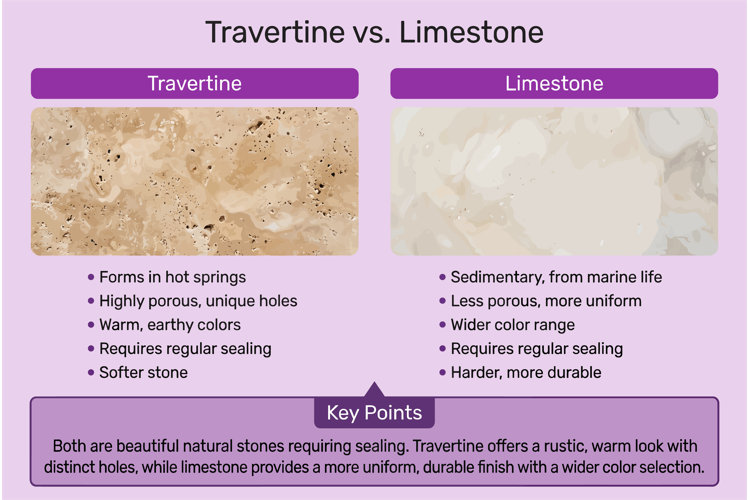
Though travertine and limestone are both sedimentary rocks that form at the bottom of a body of water, each has its own distinct look and characteristics. The two stones have beautiful earth tones and feature natural variations. Travertine has a deeper and darker shade, while limestone is usually composed of lighter colors.
With the proper care, these natural stones are a durable and long-lasting choice for elevating your bathroom, kitchen, or outdoor space. Both travertine and limestone have a softer, more porous appearance, which sets them apart from denser stones like marble or granite.
How Are These Stones Formed?
Limestone is formed at the bottom of the water deposits (like a lake or an ocean) and accumulates as sediment and calcium carbonate are placed under high amounts of pressure and heat. This type of natural stone is often composed of minerals and sediments, which gives limestone a layered look.
Travertine is a type of limestone. Similar to limestone, travertine is created from calcium carbonate and forms at the bottom of a body of water. It's formed by the rapid precipitation of calcium carbonate, and it is often found in places with natural springs or limestone caves.
The main difference between the two is the amount of heat and pressure applied to the stone during its formation. Without added heat and pressure, travertine stays travertine rather than turning into limestone.
Because limestone is the result of travertine being put under extra heat and/or pressure, limestone is often a harder and denser material.
How Does Maintenance Compare?
Maintenance can be a key factor when considering travertine vs. limestone tile.
Travertine
Travertine is a porous stone, so it requires a sealant to keep excess moisture out of its pores. Unfilled travertine can be difficult to keep clean and is more prone to collecting moisture. Because of its porous texture, travertine also needs to be resealed every few years to keep bacteria from forming. Sealing natural stones helps preserve the stone, add stain resistance, and makes them easier to clean.
Limestone
Limestone is less porous and easier to clean than travertine. With a lighter and less streaked appearance, limestone needs to be cleaned consistently to keep its bright look. Even though limestone is less porous than travertine, it also needs to be sealed every three to five years to prevent wear.
Natural stone tiles bring a soft and organic element to your home. With regular maintenance, travertine and limestone are durable materials that work well in bathrooms, kitchens, all-over flooring, and outdoors.
Travertine
Travertine is great for adding natural texture to low-traffic areas like a backsplash or shower walls. You can always place travertine where you'd use limestone, but it may need more maintenance in a high-traffic spot. For example, travertine floor tiles can bring a beautiful earthy color to your kitchen or bathroom, though you may have to reseal these areas more often since they’re so widely used and can become worn under your feet.
If you plan on placing travertine tiles in a damp space like a bathroom, it's best to choose a durable sealant to ensure a water-tight finish. Travertine’s open pores also make it best suited for indoor use – water on a deck or patio freezing and melting can cause the stone to crack over time.
Limestone
Limestone is less porous and more durable than travertine, which makes it more ideal for high-traffic spaces like floors or countertops. The dense stone is durable enough to withstand busy everyday spaces like kitchens, bathrooms, or entryways, and it's beautiful enough to work as a decorative backsplash. Plus, the light color palette brings a fresh wash of bright natural color to any space.
The high durability also makes limestone a great material for outdoor spaces. Just make sure to check the product description to see if the tile is designed to withstand the elements. Some variations (often light-colored limestone) can be more prone to damage when water within the tile’s crevices is frozen and thawed.
How Much Does Each Cost?
Travertine and limestone cost less than granite or marble while still creating an elegant and upscale look. When choosing between the two types of stone, budget can be a deciding factor. Each type of stone can range in price depending on the source, finish, and size of the piece.
Travertine
Travertine typically costs less than limestone. Though it can require more maintenance and is more prone to damage over time, travertine is still a durable and stylish natural stone. If you're not bothered by extra care or are working on a tighter budget, travertine is an excellent choice.
Limestone
Though travertine is more affordable than limestone, limestone can be a better investment over time because it is more durable, requires less maintenance, and generally has a longer lifespan. If you're looking for a more long-lasting stone to tile your bathroom or pave a patio, limestone is the better option for you.
Tip!
Check out our guide Travertine vs. Marble: Which Material Is Better? to learn more about the difference between these two natural stones.
