Types of Juicers & the Best One for You
Say “so long” to store-bought.
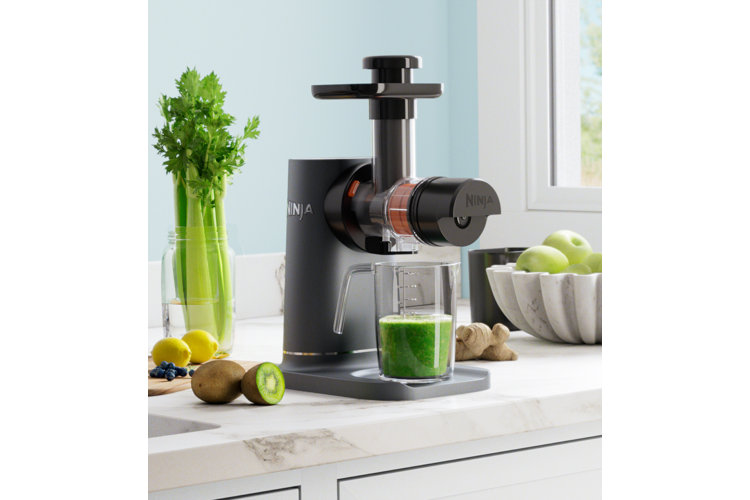
Interested in learning how to make your own juice at home? Making delicious, fresh-squeezed juice at home is not as tedious as you may think. Learning the different types of juicers will help you choose the right one so you can start enjoying your favorite drink at home. Here are six types of juicers to know so you can choose the right one for your needs.
Citrus Juicers
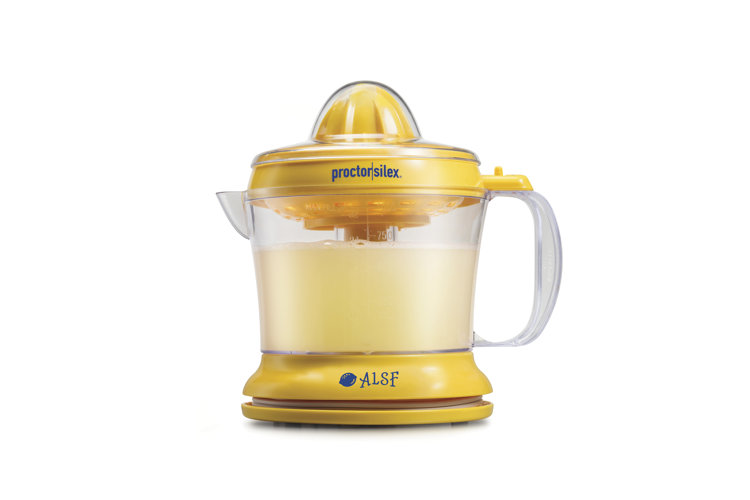
Arguably to most common juicers, citrus juicers are meant for citrus fruits such as limes, oranges or lemons. They typically feature a round cone with ridges that dig into the fruit – to use this type of juicer, cut your fruit in half and then press the half onto this cone and twist it side-to-side. These juicers are the perfect fit for those who are looking to get as much juice from their citrus fruits as possible, since the ridges of the cone dig deep into the fruit to extract the maximum amount of juice.
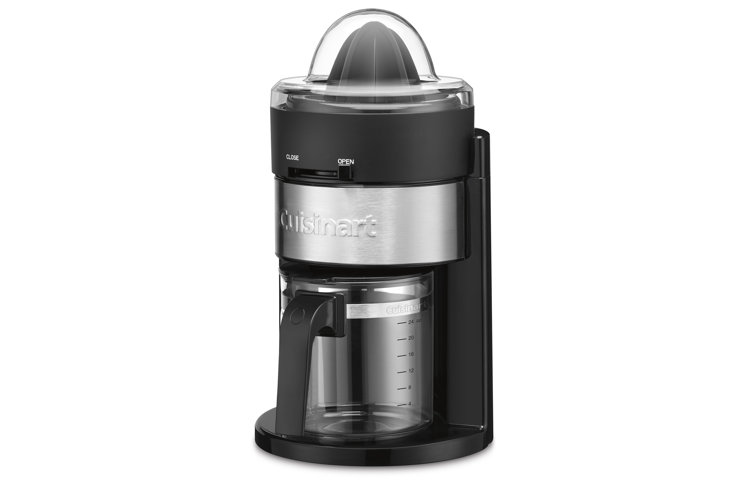
Electric juicers are responsible for doing the work for you when it comes to extracting juice from your chosen fruits or vegetables, making them very easy and efficient for saving time when making your own juice. Most electric juicers work by placing your fruits and vegetables (peeled and cut in half) in a little tube for the machinery to squeeze and extract juice. Some electric juicers come with a pulp-control feature to produce no pulp or as much pulp as you want when the juice comes out into the pitcher or your glass.
Manual juicers like the one above are types of juicers that are great if you prefer to do your citrus juicing yourself. If you’re needing a small batch of juice for a recipe or just an individual glass, manual juicers keep the process quick and help you control the amount of juice you get. These juicers look like large spoons, with one spoon containing a ridged cone to squeeze the juice, while the other spoon has at least three holes or slits for the juice to seep out of and into your glass or measuring cup. Just place one half of your citrus fruit into the bottom spoon and squeeze to extract its juice. Manual juicers ensure that no seeds sneak into your container while the juice is being extracted.
Centrifugal juicers use a disc to extract the juice rather than grinding the fruit on a ridged cone or squeezing it out like manual juicers do. This cutting disc acts as a grater that shreds the fruits or vegetables to extract the juice before releasing into your cup or pitcher. These types of juicers have a very fast speed compared to slow-masticating juicers and can rotate up to 25,000 times per minute, which is ideal for those who want a refreshing glass even faster than an electric juicer can create one. Centrifugal juicers are very convenient and efficient since they do the work for you..
Slow-masticating juicers operate – as their name suggests – at a slower pace so you can get as much juice and nutrients out of your chosen fruits and vegetables as possible. Slow-masticating juicers churn 40 times a minute, whereas electric/centrifugal juicers churn 100 times a minute. A cold-press juicer’s churn speed is similar to a slow-masticating juicer, but what does the “cold” part have to do with the process? Both slow-masticating and cold-press juicers work slowly so they don’t heat up their machinery, which can compromise the nutrients you get from the juice too. That’s why a slower type of juicer is best if you want the maximum amount of juice and nutrients for healthy, long-lasting juice.
Steam juicers offer a different method altogether when it comes to juicing – one that is geared towards those who want to make their own jam. As its name suggests, a steam juicer steams your fruits until they burst and then collects the juice through a tube. Since these juicers rely on steam to burst the fruit, it “cooks it”, which is why it’s more ideal for making jelly rather than enjoying a fresh glass. Steam juicers look a lot like a combination of a colander and a pot. To use it, first fill the bottom pot with water and place your fruits in the top colander basket, then bring it to boil on your range. Top it with the lid and let the pot heat up to get steamy and cause the fruits to burst. A little tube connected to the side of the pot collects the released juice and can transport it to your serving dish.
Now that you know about the different types of juicers, it’s time to find the one that fits your juicing needs!
