Types of Recessed Lights: How to Choose the Right One for Your Home
All you need to know about recessed lighting.

Recessed lights, also known as can lights, are installed directly into the ceiling or wall for a streamlined effect. Since they are flush with the ceiling, recessed lights illuminate a room without taking up much visual space, making the room feel more open. They can be paired with other types of lighting for a layered look, or used alone to create a spotlight effect. Recessed lights are also a great option for lighting small spaces like hallways, laundry rooms, and bathrooms. Our guide covers all you need to know about recessed lighting, including the various components that make up a recessed light, trim styles, and features. Keep reading to discover which types of recessed lights are best for your home.
Tip!
For more information on ceiling lights, read our in-depth guide Types of Ceiling Lights: How to Choose the Right One.
Types of Recessed Lights
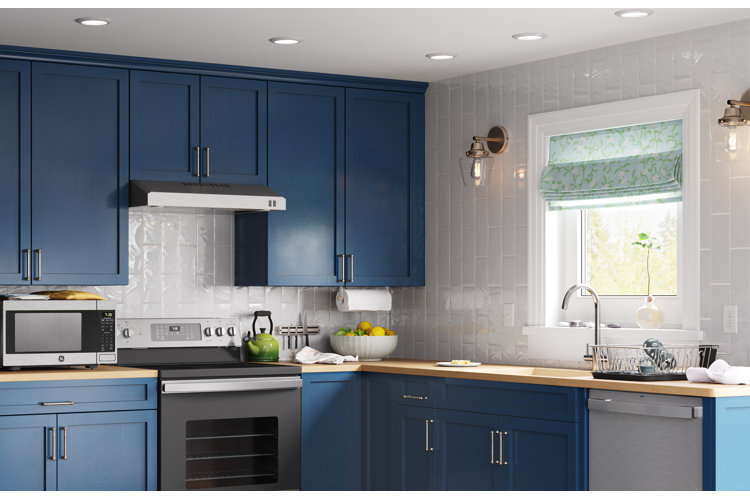
We love recessed lights because they can provide plenty of functional illumination or blend into a layered lighting design due to their simple design. The lights are made of three key components: housing, lamp, and trim. When choosing the right type of recessed lights for your home, each component is worth considering.
Housing
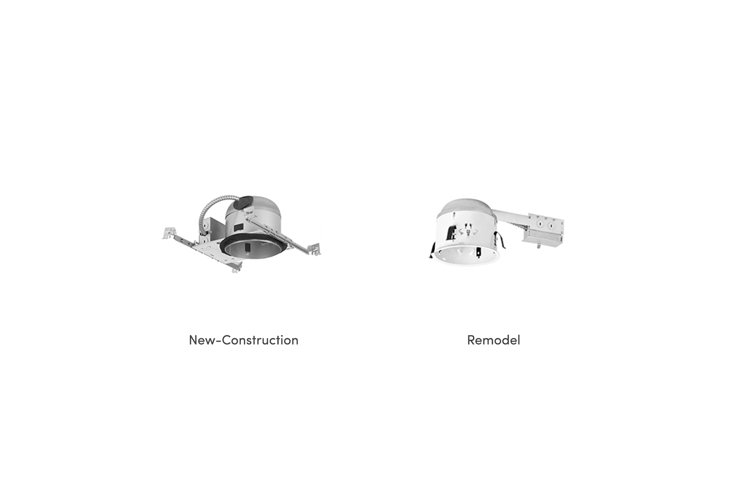
Housing is the part of the fixture that houses the lightbulb. It is installed directly into the ceiling. There are two main types of housing: new construction and remodel.
New-Construction: Currently building your dream home? Then you’re looking for new-construction housing. Like the name suggests, new-construction housing is made for newly constructed houses or additions. This type of housing can only be used if the ceiling hasn't been finished yet since new-construction housing is installed by screwing or nailing the fixture into the ceiling joists during construction.
Remodel: If you're in the middle of a remodeling project, you should choose this type of housing. Unlike new-construction fixtures, these remodel fixtures are made for existing ceilings. For this type of recessed lights, the remodel housing is inserted into a hole in the ceiling and secured with metal clips that keep the fixture in place.
Lamp
The lamp is a recessed light’s light source and can vary by the type of lightbulb. Options range from flood-style lightbulbs that produce a brilliant glow to LED lamps that are seamlessly integrated into the trim. For more detailed information on lightbulbs, check out our guide Types of Lightbulbs: How to Choose the Right One.
Wattage: Like all light fixtures, recessed lights are rated with a maximum wattage for safe use. Most recessed lights are rated for 75- or 100-watt bulbs. We recommend checking the wattage on the specific light fixtures to make sure you have the correct bulbs.
LED: LED bulbs are energy-efficient and stay cooler than most other types of bulbs. Since not all recessed light fixtures are compatible with LED bulbs, it's best to check if your specific fixture can house an LED lightbulb. Recessed lights with LED compatibility can be used with LED lightbulbs, while integrated LED recessed lights include a built-in LED bulb for an all-in-one fixture. If you already have recessed lighting, you can use a LED retrofit kit to add LED bulbs to an existing fixture.
The trim is the exterior piece of the light that you see; it can impact both function and appearance of your recessed lighting. Trim comes in a wide variety of designs, ranging from simple to more decorative options. To help you find the right trim for your home, we've outlined nine of the most popular trim styles.
Adjustable: This trim style features an adjustable interior light fixture that can be easily repositioned, so you have control over where you want the beam of light to shine. Adjustable styles are perfect for showing off art, illuminating built-in cabinets or shelves, and adding accent lighting.
Baffle: Baffle trim is known for its subtle ribbed interior, which is designed to reduce glare from the bulb, produce soft lighting, and reduce eye strain. The exterior part of the trim is simple and lays close to the ceiling. Its minimalist style is ideal for living spaces, entryways, and bedrooms. To reduce glare even more, opt for baffle trim in a darker finish.
Decorative: Decorative trim brings flair and visual interest to recessed lights. With plenty of styles to choose from, it's easy to find a decorative trim that suits your aesthetic – from classic to contemporary.
Open: Open trim has a simple silhouette and a clear, unobstructed opening that provides ample light. This trim style is a great choice if you're looking for bright lighting or want to light a larger space.
Pinhole: The pinhole style has thick trim and a very small opening that concentrates the light into a narrow beam. This type of trim is best for a light that highlights a specific decorative piece or architectural detail.
Reflector: Reflector trim is made with a mirror interior to maximize the amount of light that the fixture gives off. The smooth metal interior enhances the light’s brightness for a more luminous glow. This trim style is best for lighting large open spaces, such as dining rooms or living rooms.
Slotted: Similar to pinhole trim, slotted styles have a thick trim and a small opening. Slotted trim has a thinner, more oval-shaped opening that creates a narrow beam. Lights with slotted trim are often also able to tilt 35° for a spotlight effect.
Wall-Washer: This trim style has a half-shield design that "washes" the wall with soft light rather than in a concentrated beam. Wall-washer trim is ideal for showcasing an accent wall or piece of art.
Shower: Recessed lighting is an excellent option to illuminate a shower since it works well in a limited space. Trim designed for the shower features a tempered glass cover to keep the bulb safe and prevent moisture buildup.
Recessed Lighting Kits
Looking to easily install recessed lighting in your home? There are recessed lighting kits to streamline the process. With these three different types of kits, you can do it yourself with ease.
Standard Kit: For a smooth installation, standard recessed lighting kits come with all of the necessary components, including the housing, trim, and mounting hardware. Some kits also include a lightbulb, so we suggest checking the product description to see whether you’ll need to add your own or not.
LED Canless: The housing can sometimes be referred to as “the can” due to its can-like shape. Canless recessed lights are designed without the housing component. Instead, this type of recessed light has a slim profile and an integrated LED light, resulting in a thin lighting unit. The compact design of these recessed lights is great for small spaces, and the lights themselves are easy to install, using spring clips to keep the fixture secured.
LED Retrofit: If you’re interested in swapping your existing recessed light with one that works with modern LED bulbs, this is the kit for you. It comes in simple instructions for an easy installation.
Features
Once you’ve pin-pointed the right type of recessed lights, there are a few extra features to consider. From dimmable lighting to IC-rated safety, we've highlighted some key features that can help customize the recessed lighting in your home.
Dimmable: Dimmable recessed lighting gives you the ability to control the light’s brightness or adjust its ambience. This feature is ideal for highly-used spaces like living rooms, bedrooms, or kitchens.
Suitable for Damp Areas: Looking to add lighting to damp areas like a bathroom or laundry room? Opt for recessed lighting that is constructed to withstand moisture and condensation.
Suitable for Outdoor: Light up your porch or patio with recessed lighting. Outdoor-approved recessed lighting is built to resist the elements, so you can add clean, simple illumination to the exterior of your home.
IC-Rated: Insulation contact (IC)-rated fixtures are designed with extra heat protection so that recessed lights can be installed in insulated ceilings. Since recessed lighting can generate plenty of heat, it's important to use IC-rated fixtures if you have an insulated ceiling to reduce the risk of fire.
Airtight: This feature greatly lowers the amount of air or light that could escape around the fixture. The airtight design helps keep air conditioning or heat from leaking through recessed lighting, which can improve the insulation and energy-efficiency of your home.
For Sloped Ceilings: There is a specific type of housing necessary to accommodate sloped ceilings. This type of recessed light features an elongated housing with an angled opening so that the trim and lamp are flush with the sloped ceiling.
Tip!
Want to learn even more? Check out Your Ultimate Guide to Types of Lighting to learn all about the different types of lighting, lightbulbs, and light fixtures.
