Wallpaper vs. Paint: Find the Right Fit for Your Walls
Paper or paint, that is the question.
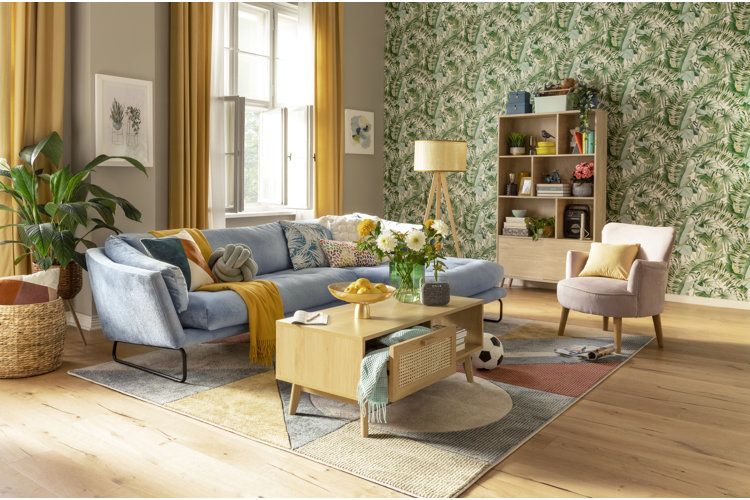
Are you looking to spruce up your walls but can’t decide between wallpaper or paint? Each will enhance the style of your home in a unique way, but deciding between them can be a difficult choice. Read on for a full comparison of wallpaper vs. paint, factors to consider when making your decision, and what each material will bring to your home.
Wallpaper vs. Paint Considerations
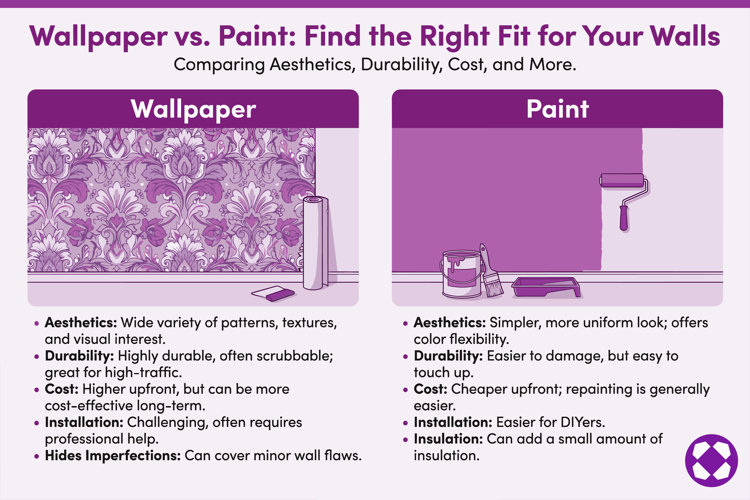
When it comes to transforming a room, your choice between wallpaper vs. paint can make a significant difference. This choice is largely dependent on factors such as your budget, energy to put towards the renovation, and personal style. Here are some aspects of wallpaper and paint to keep in mind:
Style
Both wallpaper and paint have a lot to offer in terms of style. While wallpaper is the best way to bring bold patterns and texture to your wall, paint offers a simple and clean look. Though paint can be used with stencils or different painting techniques to add a pattern or texture to your walls, those processes can be very intensive.
Cost
Paint is typically more cost-effective than wallpaper, seeing as one gallon of paint can cover around 350 square feet for $15 – $40 depending on the quality of paint. On the other hand, wallpaper can cost $350 – $1,050 in just materials for the same size room. Professional installation of wallpaper is also nearly three times more expensive than professional painting.
Location
Knowing which room you want to remodel can help you decide between wallpaper or paint. For instance, some wallpapers and paints have specific moisture-resistant properties that make either a viable option for bathrooms or kitchens. However, it’s important to note that some wallpaper adhesive doesn’t hold up well in humidity, so consider the type of wallpaper you purchase before placing it in a basement, bathroom, or other humid space. If you’re covering walls in a high-traffic area like a hallway, keep in mind if your wallpaper or paint is washable so it is easy to maintain after regular wear-and-tear.
Installation
In addition to installation costs, the process for paint vs. wallpaper installation varies greatly – something to keep in mind if you are looking for a DIY project. The process of painting a room is generally simpler than wallpapering, especially if you opt for non-pasted wallpaper that requires the addition of adhesive. However, pre-pasted and peel-and-stick wallpaper options make the process a lot easier.
Tip!
Check out How to Install Wallpaper and How to Apply Peel-and-Stick Wallpaper for step-by-step guides to wallpapering your room.
Durability
On average, wallpaper lasts a minimum of 15 years with little maintenance, which is nearly three times longer than paint. Paint typically needs to be reapplied every few years and requires regular touch-ups due to cracking, fading, and peeling. To ensure maximum durability for both wallpaper and paint, be sure to prime and seal your walls properly beforehand.
Maintenance
Most wallpaper is easy to maintain with occasional light dusting or vacuuming and a gentle cleanse with soapy water and a sponge. Painted walls are more prone to stains and should also be cleaned regularly, though it’s important to know whether your paint is washable or not. Paint also requires more frequent touch-ups to areas that have cracked or peeled.
Removal
Wall paint does not need to be fully removed before adding a new coat, but be sure to prime the wall by sanding and scraping off peeling paint so the new layer goes on smoothly. Wallpaper, on the other hand, should usually be removed before adding new paper and, depending on the type of adhesion used, wallpaper removal can be a difficult process that may require a professional service.
Tip!
Read our guide How to Remove Wallpaper for simple tips and tricks for removing wallpaper and wallpaper glue from your walls.
Renter-Friendliness
However, peel-and-stick wallpaper is easy to remove and one of the only options for transforming your walls that is renter-friendly. Peel-and-stick wallpaper can be applied and removed without leaving behind a residue or chipping the paint underneath, making it a great option for personalizing a rental space.
