Wet vs. Dry Bar: What's the Difference?
Smart hosting starts here.

Whether you love hosting cocktail nights or simply want a dedicated space for coffee, mocktails, or wine storage, adding a home bar can make entertaining feel more elevated and organized. Before you start designing your setup, it’s important to understand the difference between a wet bar and a dry bar. While both create a stylish space for serving drinks and storing essentials, one major feature sets them apart: plumbing.
Here’s everything you need to know about wet bars vs. dry bars, including the pros, cons, and how to choose the best option for your home.
Wet Bar vs. Dry Bar: Key Differences
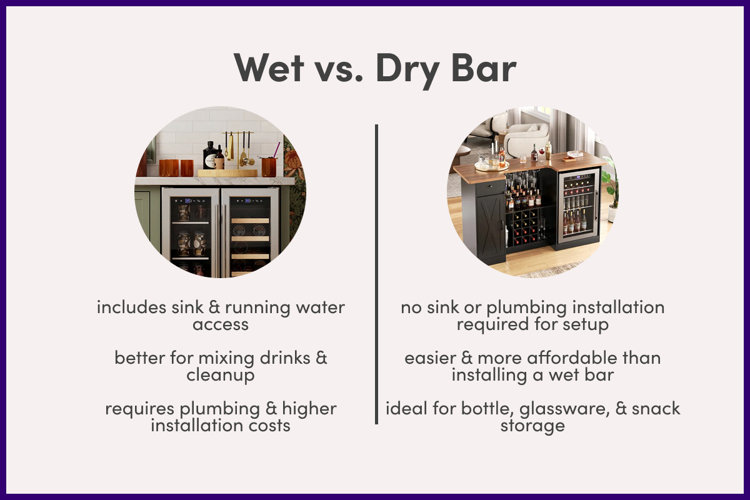
The biggest difference between a wet bar and a dry bar is access to plumbing. A wet bar includes a sink with running water, making it easier to rinse glassware, prep drinks, and clean up without using the kitchen. Because of this added functionality, wet bars typically require professional installation and come with a higher overall cost. They’re often built into entertainment spaces, finished basements, or large dining areas where frequent hosting happens.
On the other hand, a dry bar does not include a sink or plumbing connection. Instead, it focuses on storage, serving space, and style. Dry bars are generally more affordable, easier to install, and more flexible in terms of placement. Since they don’t require plumbing access, they work well in apartments, small homes, dining rooms, or unused corners that could benefit from extra functionality.
While wet bars offer greater convenience for entertaining, dry bars are ideal for creating a polished hosting setup with less commitment and a smaller budget.
What Is a Wet Bar?
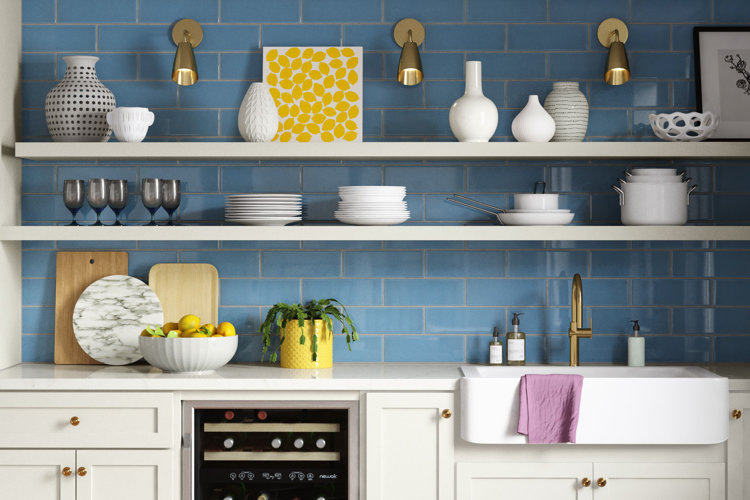
A wet bar is a home bar setup that includes a sink with running water. Because it’s connected to plumbing, a wet bar makes it easy to rinse glassware, prep garnishes, mix drinks, and clean up without leaving the room.
Wet bars are often found in finished basements, home theaters, dining rooms, or entertainment spaces and may include features like:
- A small sink
- Countertops for drink prep
- Cabinets or open shelving
- A beverage refrigerator or wine cooler
- Built-in lighting
Pros of a Wet Bar
- Convenient for entertaining and cleanup
- Creates a more functional hosting space
- Adds a built-in, upscale feel
- Great for larger gatherings
Cons of a Wet Bar
- More expensive to install
- Requires plumbing access
- Often needs professional installation
Tip!
For more information, check out our guide on What a Wet Bar Is & How to Design Your Own At Home.
What Is a Dry Bar?
A dry bar is a bar area without a sink or plumbing. Instead, it focuses on storage, serving space, and style. Dry bars can be as simple as a bar cabinet or as customized as a built-in with shelving, wine storage, and seating.
Because they don’t require plumbing, dry bars are typically easier and more affordable to add to a home.
Common dry bar features include:
- Bar cabinets or carts
- Floating shelves
- Wine racks
- Counter space for serving drinks
- Glassware and bottle storage
Pros of a Dry Bar:
- Budget-friendly
- Easier to install
- Flexible placement options
- Ideal for small spaces
Cons of a Dry Bar:
- No running water for cleanup
- Less convenient for mixing drinks
- Many require trips to the kitchen during gatherings
Which Option Is Right for You?
The right choice depends on your space, budget, and entertaining style. A wet bar is ideal for frequent hosts who want a more functional setup with easy drink prep and cleanup. Since it requires plumbing, it’s often best suited for larger renovations or spaces with existing water access.
A dry bar is a more affordable and flexible option for casual entertaining or smaller spaces. Without plumbing requirements, it’s easier to install while still providing stylish storage and serving space for drinks and entertaining essentials.
Frequently Asked Questions
What is the main difference between a wet bar and a dry bar?
The biggest difference is plumbing. A wet bar includes a sink with running water, while a dry bar does not. Dry bars focus more on storage, serving space, and style.
Does a wet bar require plumbing?
Yes. Wet bars require access to plumbing for the sink, which often makes installation more expensive and may require professional help.
Can you add a dry bar without renovating?
In many cases, yes. Since dry bars don’t require plumbing, they’re often easier to install and can be created with bar carts, cabinets, floating shelves, or other freestanding furniture.
Where should you put a wet bar?
Wet bars are often installed in finished basements, dining rooms, home theaters, game rooms, or entertainment spaces where people gather and existing plumbing may be nearby.
