What Is a Cold Press Juicer? A Detailed Guide
Your way to healthy drinking.
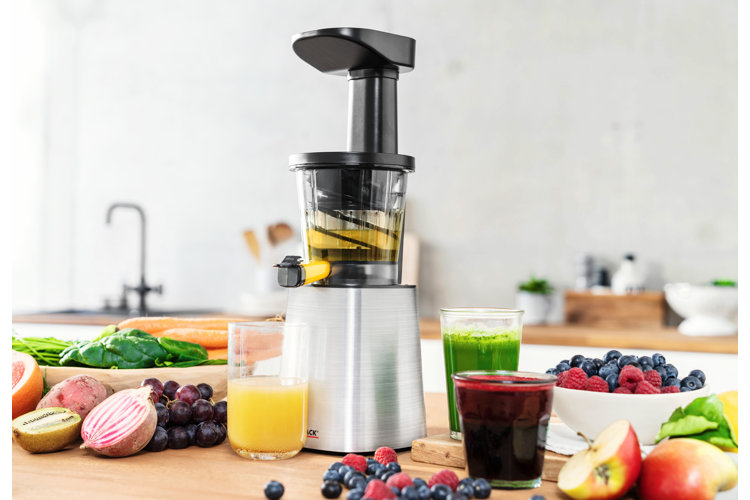
Juicing is a popular method of obtaining liquid from fresh fruits and vegetables to create healthy drinks filled with nutrients. Cold press juicing in particular, offers more benefits than other traditional methods, thanks to its unique extraction process. The question is – what is a cold press juicer and how does it differ from other juicers? Keep reading for an in-depth look at the design and benefits of this device.
What Is a Cold Press Juicer?
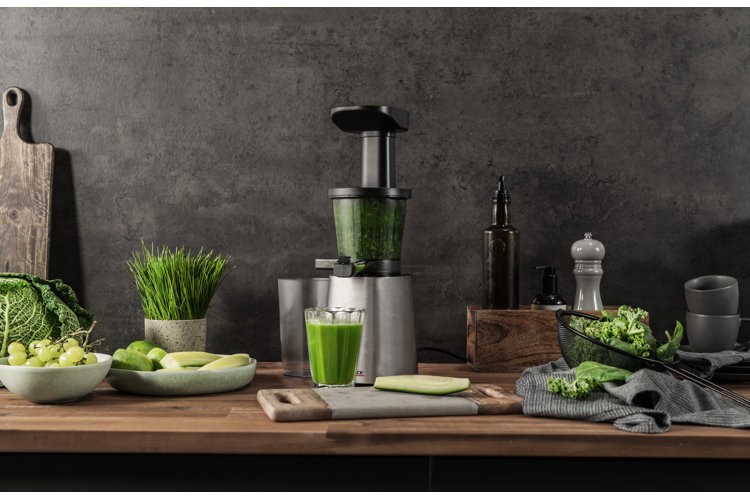
(Shop this image: cold press juicers , drinking glasses , wood cutting boards, food stainers, cruets, salt and pepper mills)
Cold press juicers feature an auger or screw inside of a machine that turns to extract juice from fruit and veggies using a slow-moving hydraulic press. This gradual process also helps maintain as many essential vitamins and minerals as possible, giving you a drink filled with soluble fibers which are important for your health.
The slow speed of the press does not generate any heat, which gives the "cold" part of the "cold press juicer" name and helps preserve any heat-sensitive nutrients.
Tip!
Fruit and vegetables contain two types of fibers – soluble and insoluble. While the body uses both, only soluble fibers feed your cells, while insoluble fibers act as a broom that sweeps and moves food through your digestive tract.
What Is the Difference Between a Cold Press Juicer & a Regular Juicer?
When you talk about juicing, there are two main appliances used – cold press and centrifugal juicers.
The auger in a cold press juicer spins at around 52 revolutions per minute (rpm) for a slow masticating process similar to chewing.. The cold press juicer then pushes the juices through a conical sieve to filter out the insoluble fibers, while the pulp is pushed out through a separate chute.
Centrifugal juicers use spinning blades to shred the ingredients, quickly separating the liquid from the pulp through a mesh filter, resulting in a more watery and solid-filled liquid.
Tip!
Read our guide on the Types of Juicers for more information.
Cold Press Juicer Pros & Cons
Pros:
- Cold pressing is a less aggressive extraction process that yields more juice from the produce, resulting in a drier pulp.
- The cold press process is the best option for juicing produce that won't typically have a high yield (leafy greens in particular).
- The process means soluble fibers are better separated from insoluble fibers.
- The highly concentrated juice has a deeper color and richer flavor while also containing less solids.
- It also has a longer shelf life and can be stored in the fridge in glass containers for up to three days.
- The slow pressing process squeezes the produce, resulting in less oxidation and heat-generating friction (thus the name cold pressing). This helps keep the heat-sensitive nutrients like vitamin C, thiamine, and folic acid intact.
- These appliances are typically quieter than their counterparts, which is great if you like to juice in the mornings.
Cons:
- Cold press juicers are also known as slow pressers because they take longer to extract the juices from the fruit and vegetables.
- They can cost more than centrifugal juicers.
- Cold pressers often require a more extensive cleaning process because of their screw-like design. *
Centrifugal Juicer Pros & Cons
Centrifugal juicing is the most traditional juicing method. This type of juicer uses blades that spin at around 12,000 rpm, pulverizing the fruit and vegetables to obtain the liquid.
Pros:
- Centrifugal juicers are faster than cold press juicers.
- They are more convenient.
- These appliances are usually cheaper than cold press juicers.
- They are typically easier to clean too.
Cons:
- Centrifugal juicers produce juice that includes up to 30% solids (stem, skin, and seeds).
- The fast-spinning blades suck air into the juicer, resulting in oxidation and generating higher temperatures which can destroy heat-sensitive vitamins.
- While centrifugal juicing is faster, the tearing and shredding process doesn't extract as much nutritional value from the produce as the cold press does.
- The resulting pulp is wetter, meaning less juice has been extracted.
- You must drink this juice quickly to prevent further oxidation.
- Centrifugal juice cannot be stored as the liquid will separate from the solids.
- They have a higher noise level.
Now you not only have the answer to your question "What is a cold press juicer?", but you also understand that there is a big difference between the cold press and centrifugal juicing.
