What Is a Dutch Oven?
Your cookware must have.
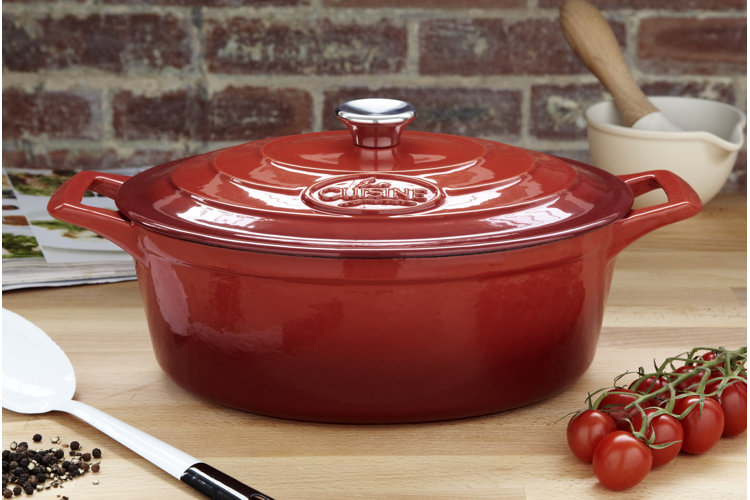
Wondering what a Dutch oven is? This versatile piece of cookware can be used for nearly anything from stewing to boiling, baking to searing. With a variety of materials and colors available, you can find a Dutch oven to meet your needs and aesthetic. Read on to learn what a Dutch oven is and all that it can do!
What Is a Dutch Oven?
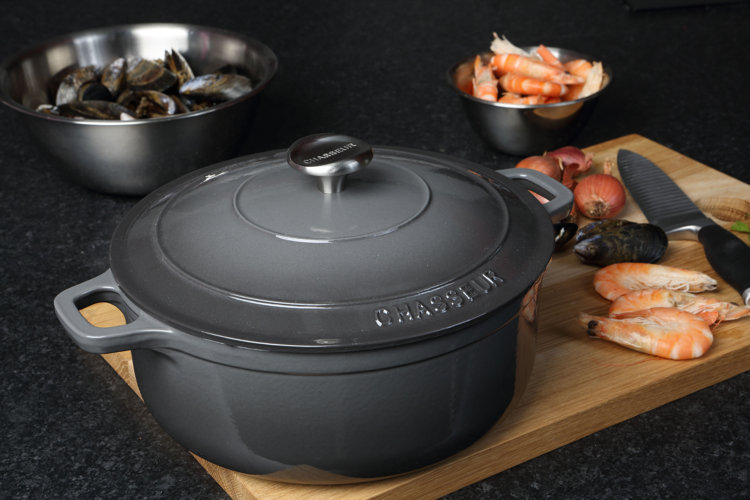
(Shop this image: gray Dutch ovens, a wood cutting boards, a chef's knives, and silver mixing bowls)
A Dutch oven is a versatile, heavy-duty cooking pot. It has thick walls, two sturdy outward-facing handles, and a tightly fitting lid that has a knob-like handle. The thick walls enable Dutch ovens to heat food at a consistent temperature from all angles throughout the cooking process. Their snug lids prevent moisture from escaping, which is essential when braising or stewing.
A Dutch oven can usually hold 4–8 qt., which is great for serving family-sized portions or to show off your skills at dinner parties. Due to its incredible heat-retention capabilities, it can be used for almost any stove top or oven cooking function – from simmering soup to baking bread.
Tip!
Use our helpful guide to choose the right Dutch oven for you:10 Best Dutch Ovens to Complete Your Kitchen.
Dutch Oven Materials
When it comes to Dutch ovens, cast iron is generally regarded to be the best quality material, however aluminum and stainless steel options have their benefits as well. Let’s break down these common Dutch oven materials.
- Cast Iron: This is the most durable option for a Dutch oven, since cast-iron is the most ideal material for temperature regulation. Cast-iron Dutch ovens have either an enameled or bare interior. Enameled cast-iron Dutch ovens feature a glass-like nonstick surface, making them resistant to rust, corrosion, or reactive to acidic foods.
Bare cast-iron Dutch ovens need to be seasoned thoroughly with a nonstick substance before they are ready for cooking. Because of their reactivity with acidic ingredients, bare Dutch ovens also tend to require more maintenance and care than their enameled counterparts.
- Aluminum: While not as durable as its cast-iron counterpart, aluminum Dutch ovens are more lightweight. If you’re worried about wrist strain, aluminum may be a good option for you. These Dutch ovens don’t require seasoning and can be washed with regular soap and water, which makes it a great low-maintenance option. Unlike cast-iron and stainless steel, aluminum can heat up more quickly making it easier to burn food.
- Stainless Steel Dutch Ovens: This is another lighter-weight option with added benefits. Stainless steel is a non-reactive material, which means you can cook nearly any kind of dish in it – including ones with high acidity that can cause a problem in cast-iron cookware. Stainless steel has even heat distribution like cast iron, but is an easy to clean option with no need for seasoning.
Tip!
Learn more about Dutch oven sizes in our guide: Dutch Oven Sizes: Everything You Need to Know.
How to Use a Dutch Oven
(Shop this image: red Dutch ovens, white dinnerware sets, green kitchen linens, and stemless wine glasses)
The Dutch oven is the king of multipurpose pieces. A huge benefit of cooking with a Dutch oven is that the whole pot can go directly from the stove top to the oven, saving you time and dirty dishes.
On the Stovetop
- Stewing, Braising & Simmering: The Dutch oven's heavy lid is essential for keeping moisture from evaporating out of flavorful dishes that require stewing, braising, and simmering. A Dutch oven should be your go-to for these types of recipes due to its ability to maintain low temperatures over long periods of time.
Tip!
Making a hearty stew or soup in the fall? Elevate the cozy dish with a pumpkin-shaped Dutch oven for a seasonal touch!
- Searing: A cast-iron Dutch oven is perfect for searing. You can get it smoking hot on the stove top and brown your meat directly in it before braising it at a low temperature. It's a true one-pot wonder.
- Boiling: A Dutch oven can also function just like your typical large cooking pot. You can use it to boil pasta, make rice, and even poach chicken.
- Frying: Fry oil also must be heated to a very high temperature, and because of their durability under high heat, Dutch ovens are optimal fryers. Dutch ovens can heat oil evenly, allowing you to easily control the temperature while cooking. However, not all Dutch ovens can be safely used at frying temperatures, so be sure to check with the manufacturer first.
- Reducing: An uncovered Dutch oven allows for the even, rapid evaporation of liquids and thus are ideal for making sauces and concentrates.
In the Oven
- Roasting: As with stovetop braising and stewing, good moisture levels are essential to having a tender oven roast. The Dutch oven’s winning combination of even, consistent heat capabilities and a heavy, snug lid enable it to produce perfectly juicy oven-roasted meats and vegetables.
- Baking: Dutch ovens have also long been used to bake bread and other oven-baked goods. Their radiant heat acts similarly to the stone hearth of a bread or pizza oven. When baking bread, the lid holds in moisture and steam, which creates a crispy crust. When cooking foods like casseroles, a Dutch oven’s ability to heat meat and aromatics on a stove top before being transferred to an oven to bake is key.
Tip!
Speaking of Dutch oven baking, learn how to make delicious homemade bread in your Dutch oven with our guide: Here’s How to Make the Best Dutch Oven Bread.
How to Care for a Dutch Oven
Follow these simple tips to make your Dutch oven last longer.
- Avoid chipping: The enamel on an enameled Dutch oven can chip, especially around the rim, so try not to let the lid drop too heavily onto the pot. Store it in a cabinet or hang it on a hook when not in use so it doesn’t get bumped and chipped by other cookware.
- Avoid reactive ingredients: When cooking with a seasoned cast-iron Dutch oven, beware of using highly acidic ingredients like citrus, tomatoes, and wine. Though well-seasoned pots should be able to withstand the acid, a weak or damaged seasoning might not – and your food could end up tasting like metal.
- Use the right utensils: Be careful when using metal utensils with enameled and seasoned Dutch ovens. Scraping the enamel or seasoned layer too roughly can result in scratches, and your Dutch oven might be rendered less acid-resistant and nonstick. We recommend using rubber utensils for the best results.
- Season & clean correctly: Follow the cleaning and seasoning instructors per your specific Dutch oven. Soap and water generally shouldn’t be used on cast-iron Dutch ovens and they need to be seasoned before their first use and occasionally when you notice it is losing its nonstick properties. Learn more about caring for cast iron with our in-depth guide How to Clean a Cast Iron Pan.
