What Is a Ramekin? Definition, Sizes, & Best Uses
Small dish, endless possibilities.
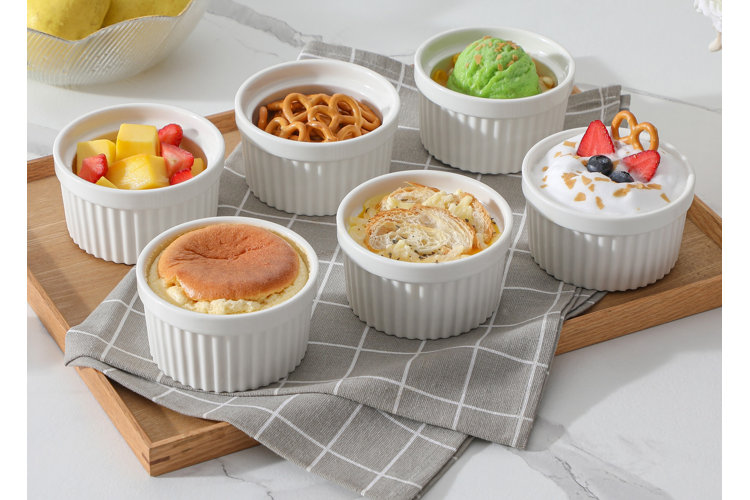
Also known as a soufflé dish, a ramekin is a small bakeware vessel often used for preparing and serving individual portions. The classic ramekin is white, cylindrical dish with a diameter between 3" and 4". It has deep, vertical sides and a fluted exterior with a rounded lip. Ramekins are also intended to be heat-resistant, making them oven-safe and able to withstand the heat of a blowtorch. Here’s a breakdown on exactly what a ramekin is and the versatile ways you can use it.
What Are Ramekins Used For?
While ramekins are ideal for baking delicious soufflés, they are also a versatile piece of bakecookware. The small size makes them great for serving up individually portioned meals, prepping your mise en place, or setting out snacks. Organize your ingredients in ramekins to streamline the cooking process and potentially avoid cross-contamination, or use them as table dishes for smaller snacks, like nuts, veggie sticks, or dips.
Here are some more ideas for what to make and serve in ramekins, from breakfast to dessert:
Breakfast
- Classic soufflés
- Oven-baked eggs
- Sandwich egg patties
- Oatmeal for one
- Baked French toast
- Muffins
Entrée
- Mini pot pies
- Single-serving soups
- Macaroni and cheese
- Twice-baked potatoes
- Casseroles
Dessert
- Crème brûlée
- Sweet soufflés
- Molten lava cakes
- Custard or flan
- Pudding
- Mini dessert pies or cobblers
- Mousse
Typical Ramekin Sizes
Ramekins can range from 2 oz. all the way up to 12 oz. in volume, but are most commonly available in 6 oz. sets of four to twelve, which are perfect for entertaining guests. Though similar in name and function, the soufflé dish and soufflé pan are in fact two different things; souffle pans are much wider and shallower and are used for baking full-size soufflés.
Ramekin Materials
While glazed stoneware is the most common ramekin material, there are several options. Consider these materials when choosing the right ramekins for your needs. Because care instructions vary by material, always check the manufacturer's recommendations before using a ramekin in the oven, microwave, freezer, or dishwasher.
- Stoneware Ramekins: Ramekins are designed to be as heat-resistant as possible, so they are often made of glazed stoneware, including ceramic or porcelain.That heat resistance is especially valuable when using a blowtorch to caramelize the sugar atop a crème brûlée. Most stoneware ramekins are oven-safe and can also be used in the microwave and dishwasher. To help prevent thermal shock, avoid transferring them directly between extreme temperatures, such as from the freezer to a hot oven.
- Glass Ramekins: If you’re looking to serve a dessert with A+ presentation, clear glass ramekins allow you to get creative. Most glass ramekins are heat-resistant enough to be used for baking, and clear glass allows you to monitor the food during the baking process. Choose tempered, oven-safe glass ramekins for baking, and avoid exposing them to sudden temperature changes, which can cause the glass to crack.
- Metal Ramekins: Ramekins can also be made of metal, such as aluminum and steel, but those materials are less heat-proof and shouldn’t come in direct contact with a flame. Metal ramekins have a polished silver look and are best used to serve dips or condiments. Some metal ramekins are oven-safe for baking, but they tend to heat up more quickly than ceramic or glass. Always use oven mitts when handling hot metal ramekins and follow the manufacturer's temperature guidelines.
While ramekins, soufflé dishes, and monkey dishes are all small dishes used for serving or preparing individual portions, they each have slightly different purposes.
- Ramekin: A ramekin is the most versatile of the three. It typically measures 3" to 4" in diameter and features deep, straight sides, making it ideal for baking and serving everything from crème brûlée and molten lava cakes to baked eggs and individual casseroles. Because ramekins are usually made from heat-resistant materials like ceramic, porcelain, or stoneware, they're designed to move easily from the oven to the table.
- Souffle Dish: A souffle dish is specifically designed for baking souffles. Individual souffle dishes look very similar to ramekins and are often used interchangeably, but souffle dishes are also available in larger sizes for making family-style souffles. Their tall, straight sides help support the batter as it rises during baking.
- Monkey Dish: A monkey dish is generally wider and shallower than a ramekin and is intended for serving rather than baking. Restaurants often use monkey dishes to serve condiments, dipping sauces, garnishes, olives, nuts, or other small snacks. While some ceramic monkey dishes are oven-safe, they're typically not designed for recipes that require the depth and heat retention of a traditional ramekin.
How to Choose the Right Ramekin for Your Baking Needs
The best ramekin depends on what you plan to make and how you use it. In addition to choosing the right size and material, consider features that can make baking, serving, storing, and cleanup more convenient.
Dishwasher-Safe Ramekins
If you bake or entertain often, dishwasher-safe ramekins make cleanup quick and easy. Many ceramic, porcelain, and stoneware ramekins are dishwasher safe, allowing you to move seamlessly from oven to table to dishwasher. Always check the manufacturer's care instructions before cleaning.
Nonstick Ramekins
Nonstick ramekins help baked foods release more easily, making them ideal for delicate recipes like soufflés, mini cheesecakes, baked eggs, and custards. They can also reduce the amount of butter or cooking spray needed before baking.
Ramekins With Lids
Ramekins with lids are a practical choice for meal prep, ingredient storage, leftovers, and grab-and-go snacks. The fitted lids help keep food fresh in the refrigerator and make it easy to transport dips, sauces, desserts, and individual portions.
Tip!
Check out the video below for a complete visual ramekin breakdown:
Frequently Asked Questions
What size ramekin should I buy?
Ramekins come in several common capacities, each suited to different uses. A 2 oz. ramekin works well for condiments, sauces, and small dips. A 4 oz. ramekin is ideal for individual desserts like crème brûlée or small sides. A 6 oz. ramekin is a versatile everyday size for baked eggs, dips, and single-serve desserts. An 8 oz. ramekin is great for heartier portions such as mac and cheese, chili, or larger baked dishes. Ramekins in the 10 to 12 oz. range are best for soups, casseroles, and mini pot pies.
Are ramekins oven-safe?
Most ceramic, porcelain, and stoneware ramekins are oven-safe, but you should always check the manufacturer's temperature recommendations before use. Not all glass or metal ramekins are suitable for every cooking method, so review the product details to confirm they can handle the heat level your recipe requires.
Can ramekins go in the microwave, freezer, and dishwasher?
Many ramekins are designed to withstand multiple environments, including the microwave, freezer, and dishwasher. However, care instructions vary by material, so always follow the manufacturer's guidelines to avoid cracking, warping, or other damage.
What can I make in a ramekin besides soufflés?
Ramekins are incredibly versatile. Beyond soufflés, you can use them to make baked eggs, crème brûlée, lava cakes, mac and cheese, mini pot pies, dips, sauces, and a wide range of desserts. They also work well as prep bowls for measured ingredients during cooking.
What's the difference between a ramekin and a custard cup?
Custard cups are typically smooth-sided, while ramekins usually have fluted or ridged sides. Functionally, both are small baking dishes used for individual portions, and the terms are sometimes used interchangeably depending on the brand or retailer.
Do I need to grease a ramekin before baking?
It depends on the recipe. Soufflés, cakes, and baked egg dishes often benefit from greasing to help prevent sticking and make removal easier. Custards, dips, and some desserts may not require greasing, especially if the dish is served directly in the ramekin.
