What Is a Tankless Water Heater & How Does It Work?
Save time and conserve water.
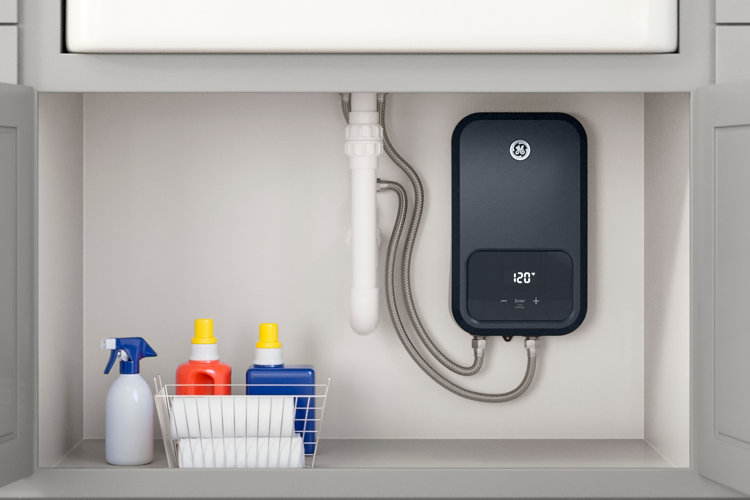
If your household often runs out of hot water, a tankless model might be what solves your water-heating woes. What is a tankless water heater, and more importantly, how exactly does one work? Our guide covers all you need to know about these convenient, water-saving water heaters.
What Is a Tankless Water Heater?
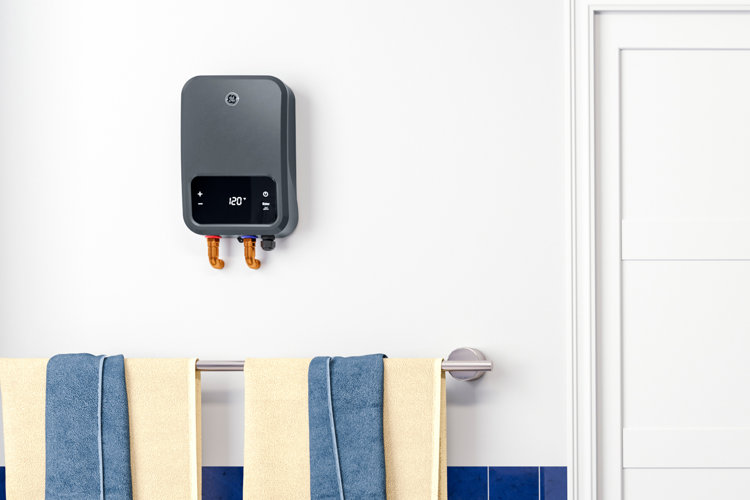
Unlike a traditional water heater that features a tank to hold the water supply, a tankless water heater is a compact, efficient unit that heats water as it passes from the pipe into the unit. This allows you to have hot water almost instantly, while a traditional tank water heater can take much more to reheat water after the tank has been emptied.
Not only do tankless water heaters save space, they also save energy – which can save you money on your utility bills. Though the initial cost is higher, tankless units can also last up to 25 years (as opposed to traditional tank water heaters, which usually last 8 to 12 years). Plus, many tankless water heaters feature easily replaceable parts that allow you to repair the units yourself and extend the lifespan of your water heater.
Tankless water heaters provide optimal convenience and comfort. Modern models come with increased efficiency, faster heating, and updated features like Wi-Fi–compatibility.
Tip!
Read our guide Types of Water Heaters: Tank vs. Tankless to find a detailed comparison between the two.
How Do Tankless Water Heaters Work?
Because tankless water heaters don't feature a water supply tank, cold water from the water supply is warmed as it passes through the unit when you turn on the hot water faucet. These tankless units are typically heated by gas-powered burners or electrical heating coils inside the water heater. The warmed water passes from the unit and into the pipes that lead to the faucet. This creates an almost endless stream of hot water within minutes, cutting down the time it would take a traditional water heater to warm its water supply tank. They take up such little space that they can be installed pretty much anywhere, such as a closet or small utility room.
Considerations for Tankless Water Heaters
You should consider these factors to determine if a tankless water heater is right for your home.
Water Usage & GPM
If you have a large household or require plenty of hot water to run different appliances, you might need to install more than one tankless water heater. You can install separate water heaters to accommodate multiple bathrooms or to pair with specific appliances like dishwashers or washing machines.
Water usage is typically measured in gallons per minute (GPM), so knowing the flow rate for the time of day when you're using the most hot water can help you find the right output to handle your household's needs. Here are the average GPM rates for common appliances:
- Dishwasher: 1.0 – 2.5 GPM
- Washing Machine: 1.5 – 3.0 GPM
- Shower: 1.0 – 2.0 GPM
- Kitchen Faucet: 1.0 – 2.5 GPM
You'll also need to figure out the total GPM of all of the appliances you'll be using at the same time. If your household often runs the dishwasher and washing machine at the same time, you should add the GPM of both to find the total water usage.
Tip!
One easy way to calculate GPM for showers or faucets is placing a one-gallon bucket beneath the faucet and timing how long it takes for the bucket to fill up when the faucet is at full capacity. Then, take the time and round it up to the nearest increment of five. Divide 60 by that number and you'll find your GPM. For example, if it takes 19 seconds for a bucket in the kitchen sink to fill, round that to 20 and divide 60 by 20 to get a GPM of 3.
Gas vs. Electric
Tankless water heaters come in gas or electric models. Here is how they compare:
Gas-powered water heaters have a higher capacity, allowing the unit to produce more hot water than electric models. This makes gas tankless water heaters a great fit for whole-home systems and colder climates.
Electric water heaters are a better choice for smaller households since they have a lower output (unless you plan on installing more than one water heater). They’re also best for households that live in warmer climates since you'll need less energy to warm the water to the right temperature, for singular appliances like washing machines, and for homes that don't have easy access to a natural gas option.
Regional Location
Your regional location is another consideration when choosing a tankless water heater because the temperature of the groundwater can impact how efficiently the unit can warm the water. For areas with colder groundwater temperatures, you'll need a unit with higher Btus per gallon to warm the water to 120°F, which is the standard aim for hot water). Regions where the groundwater is warmer will require less Btus to reach the desired temperature.
Tip!
British thermal units (Btus) are used to measure heat. In the most basic sense, the higher the Btu output, the more hot water a tankless water heater can produce.
Maintenance
Tankless water heaters also require professional maintenance once a year to ensure the burners and filters are working properly. If you live in an area with hard water, you'll also need to flush the water heater with a vinegar solution about every 500 hours of use to prevent mineral buildup. The vinegar flush only takes about 20 minutes and can be completed by you or a professional.
Cost
Tankless water heaters can range in price from $500 to $800 for an electric model and $750 to $2,300 for a gas-powered unit. On average, the cost of installing a tankless water heater is around $2,875 (when including the total cost of the unit, permits, labor fees, and materials needed for the installation process). Because the installation requires complex plumbing skills, it's best to hire a professional to complete this task.
Are Tankless Water Heaters Worth It?
Tankless water heaters can be an excellent addition to your home if you're seeking ways to be more energy-efficient and are willing to make the initial investment of installing one. It's important that you calculate the right capacity for your household and plan on installing more than one water heater if necessary to keep up with your family's needs.
