What Is an Easel & Why Should You Use One?
Discover what an easel is used for.
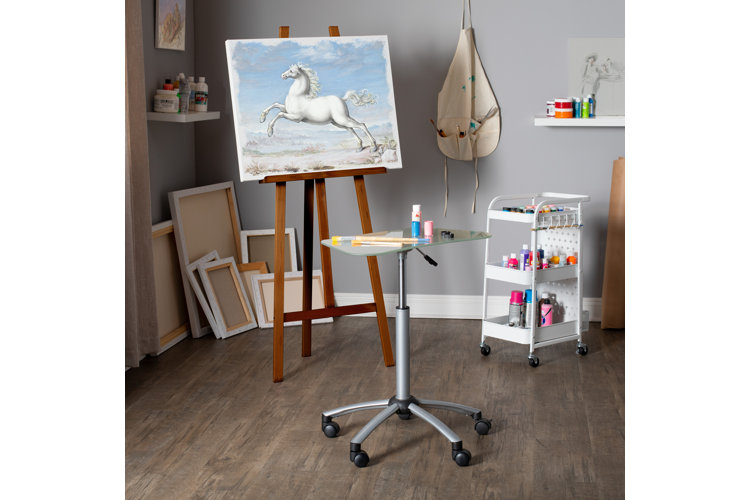
If you enjoy painting, you are sure to know how tough it can be finding a suitable place to place your canvas while you work. While there is nothing wrong with painting on a table or even the floor, easels have been created to help make the process easier and more enjoyable for you by providing the best possible position for your artwork. But what is an easel and how does it function? Keep reading to find out if you can improve your artistic endeavors with one of these tools.
What Is an Easel?
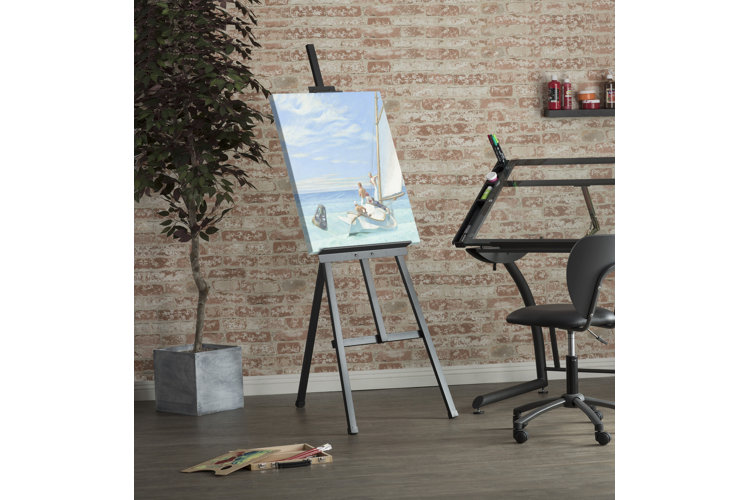
Easels are typically made from wood (though there are metal and plastic options available too) and function as a support to your canvas while allowing you to paint in a standing or upright position rather than hunching over a desk or the floor. They are designed to keep you comfortable as you paint, giving you the option to adjust the height to keep your canvas at eye-level for the best position.
They are not solely for painting though, as easels can also be used for drawing – if you tape the paper in place, they can be used for presentations, and even for displaying art. Easels come in a range of sizes and styles, and have evolved over time to suit a number of different purposes, all listed below.
Types of Easels
There are a few types of easels, each with their own characteristics and uses. This can help you decide what specific type you will need.
Artist Easels
The most common type is the artist easel. Designed to allow you to paint while standing up and using the full range of your arm and body as opposed to the limited reach of just your wrist when working on a flat surface.
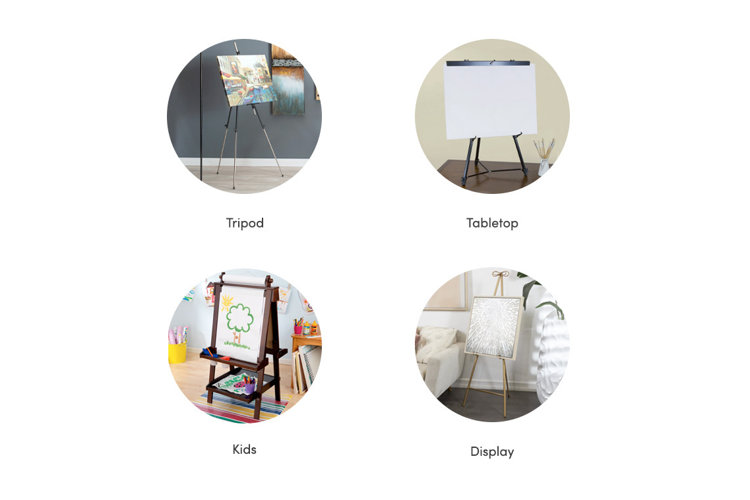
Tripod: Also known as an A-frame of Lyre, folds out into a triangular shape with three legs (two in the front and one at the back creating an "A" shape while being supported like a tripod), which is easy to tuck into a corner if you are short on space.
Additionally, the fact that the back leg can be pushed forward and flattened against the easel, means they can be conveniently packed away without too much hassle if you don't have a studio. These economical floor easels are fairly lightweight, making them portable, thus allowing you to paint "en plein air" or outdoors.
It's also possible to get H-frame easels, which form an "H" shape, that are stronger and sturdier with a larger footprint than their A-frame counterparts. H-frame easels are best used in dedicated art rooms.
Tabletop: As the name suggests, tabletop easels are designed to be small enough to fit on a table, thus allowing you to work from a seated position. These are best used by artists who work on a small scale, although their extreme portability makes them appealing to many. Tabletop easels are easy to pack up and store, making them ideal for anyone with limited space.
Kids: Little ones deserve artistic expression too! Kids' easels are often adjustable so they can grow with your child. Some models are even double-sided or side-by-side to allow two children to paint at the same time. Many kids' easels have additional features like a chalkboard, magnetic board, or dry erase board with a built-in replaceable paper roll that dispenses over the top to allow your child to participate in a range of artistic pursuits.
Additional Easels
As mentioned before, not all easels are designed for painting. While they may have the same or similar shape, their purposes usually vary slightly.
Display: Also known as a decorative easel, their sole purpose is to display artwork – whether in your home or in a gallery. Many of them feature ornamental designs to add to their aesthetic. Display easels are usually flimsy and without stability, so they are not meant to be used for painting but rather for showing finished work.
Tips for Using an Artist Easel
To make the most of your easel, there are a few tips and tricks you can follow:
- To minimize shadows, ensure your canvas is centered and in line with the canvas holder.
- Paint from the top to the bottom to avoid paint transferring from your hand onto the canvas.
- Check the sturdiness and balance of your easel before you start painting to avoid having to adjust it later on.
- Place your easel where the light hits your canvas as evenly as possible (you can use additional lighting to do so if you need).
- Tabletop easels don't usually have rubber feet to keep them from sliding, so place a tea towel or non-stick mat beneath yours before you begin.
What Are the Benefits of Using an Easel?
Easels are designed to make your painting process easier and more comfortable, among other things.
- They allow you to step back and view your art from a distance whenever you want, something you can't do when the canvas is lying flat (just make sure there is no wall directly behind you when you begin).
- They are good for your posture (so you are not hunched over a table).
- They often have castor wheels for easy movement to the best possible natural light to reduce any shadows.
- Others will have rubber to prevent them from sliding around while protecting your floor.
- They hold the canvas at about 20 degrees, which prevents distortion from occurring as you work.
- Many easels are height adjustable, so you can ensure they are in the most comfortable position.
- Some easels also allow you to adjust their angle so you can avoid any glare on your canvas.
Now we have answered your question, "what is an easel?", it's time for you to create your own masterpiece. Shop our range of easels to find the best one for your needs.
You Might Also Like:
