What Is Manufactured Wood?
Elevate your floors in style.
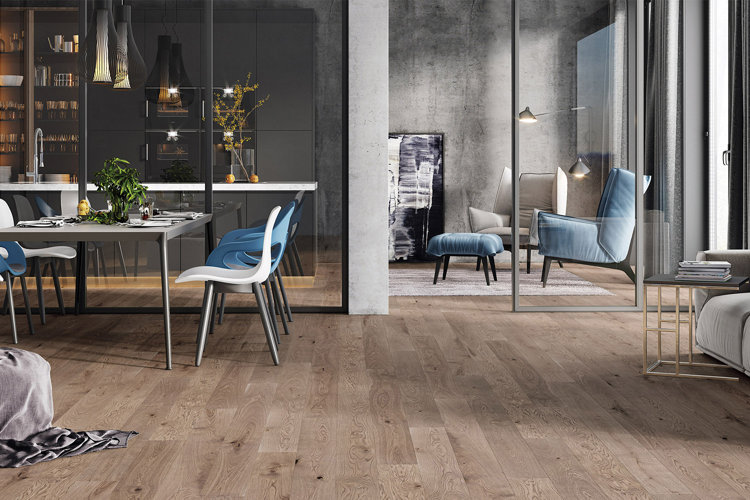
Manufactured wood flooring looks great in any room of the home – it adds beauty, character, and timeless appeal. Keep reading to learn all the ways it will enhance your abode.
What Is Manufactured Wood?
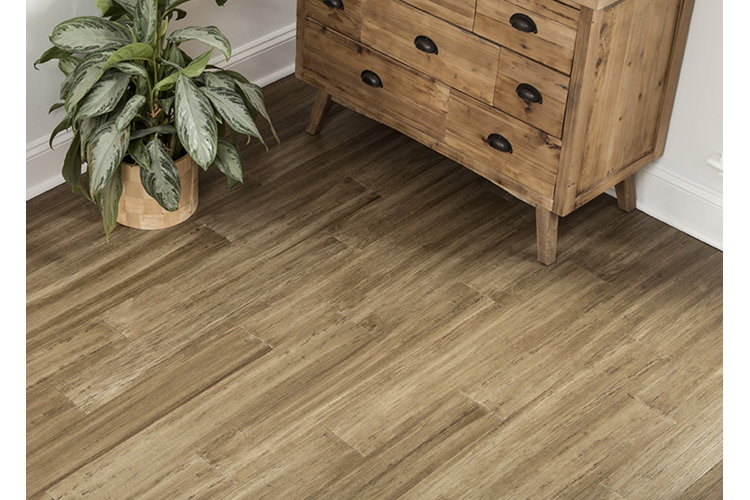
As its name suggests, manufactured wood (also known as engineered wood) is a type of synthetic wood. Unlike actual solid wood, manufactured wood floors aren't milled from trees. Instead, they are made in a factory out of a medium-density fiberboard (MDF) base, topped with a layer of veneer wood, and coated with a melamine finish.
Manufactured Wood vs. Solid Wood
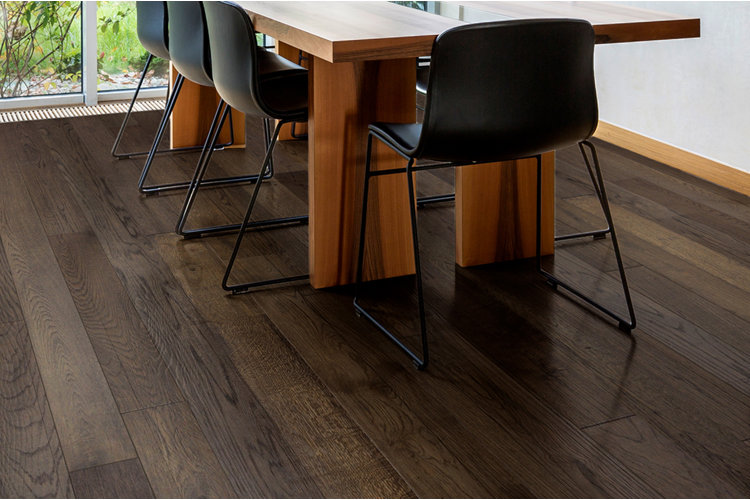
There are a few notable differences between manufactured wood and solid wood. Manufactured wood boards are generally made from the same hardwoods and softwoods used to make solid lumber, but mixed with additives like adhesives. Although manufactured wood flooring can't be refinished as often as solid hardwood, it lasts up to 30 or more years with proper maintenance.
Manufactured wood is made from waste wood sourced from sawmills. This waste is treated through chemical or heat processes to produce wood that meets specific size requirements not found naturally. Because manufactured wood consists of solid wood material scraps, manufactured wood floors come in a variety of species like oak and maple.
Manufactured Wood Installation Methods
Glue: If your room has a concrete subfloor, glue is the ideal manufactured wood installation method. This process results in seamless installation with fewer transition pieces. In dry or humid regions, gluing wood flooring down also limits its expansion and contraction.
Staple/Nail: Staples and nails are ideal for installing manufactured wood. This process requires wood or plywood subfloors, as concrete and other hardboard materials do not hold these fasteners. Staple/nail-down installation provides the best finished look because your floorboards are tightly aligned when secured.
Float: With this installation method, flooring is not directly fastened to the subfloor. Instead, a tongue-and-groove or click-lock system holds your planks together – the tension between them keeps the floorboards securely “floating” above the subfloor. This method is most cost-effective because it requires no nails or glue.
Manufactured Wood Thickness
A manufactured wood plank’s thickness directly correlates to its durability and lifespan. Thicker planks allow for more frequent sanding and varnishing after installation. While this flooring is available in various thicknesses, 3/8 inch and 1/2 inch options are recommended for manufactured wood’s longevity.
Manufactured Wood Width
Manufactured wood is typically seen in wider plank patterns than solid wood floors, but it is available in a variety of sizes. Base your width decision on personal preference, your room’s measurements, and the style you’re aiming for.
Manufactured Wood Surface Texture
No matter which finish you choose, manufactured wood’s surface textures are smooth to the touch and give your flooring uniformity in appearance. Choose a surface texture that meshes well with the design of any room to enhance its ambience – popular options include matte, semi-gloss, satin, and high-gloss surface textures.
