What Is the Best Shape for a Kitchen Table?
Find the table shape that fits.
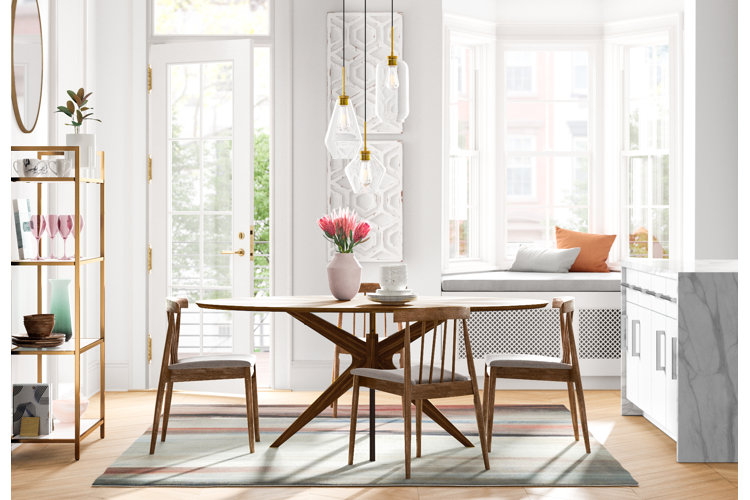
When it comes to choosing a kitchen table, the shape you pick makes a big difference in how your space looks and feels. From creating more room in your kitchen to setting the tone for family meals, the right table shape balances function and style. Unsure which shape is the best fit for your kitchen? This guide walks you through the pros and cons of each option so you can find the perfect match for your home.
Factors to Consider Before Choosing a Shape
To choose the best shape for your kitchen table, it’s important to think about these key considerations:
- Room Size & Layout: Consider the dimensions and flow of your space. The table you choose should allow enough room for chairs to move easily and for people to comfortably navigate around it.
- Household Size: Think about how many people usually sit down together for meals. Your everyday seating needs will guide how much surface area and how many edges or curves make sense for your table.
- Entertainment Needs: From dinner parties to homework sessions, ask yourself how often your table is used for entertaining guests. A shape that supports flexibility will help it meet your needs.
- Style Preference: A table is the focal point of the kitchen, so the shape should reflect your taste. Some shapes feel more streamlined and modern, while others are more traditional. Think about which vibe you’d like your space to have.
Popular Kitchen Table Shapes
When choosing a kitchen table, the shape makes a big impact on how your space feels and functions. Keep reading for an overview of the most popular shapes to find the best fit for your home.
Rectangular Kitchen Tables
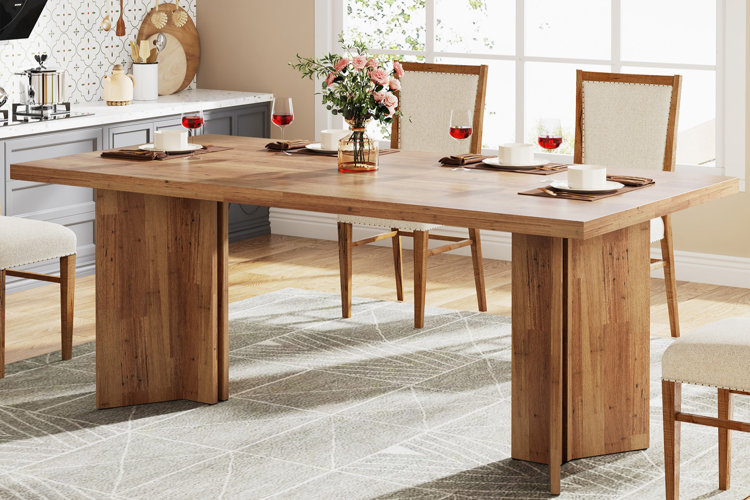
Rectangular kitchen tables are the most versatile option. They provide plenty of surface area, making them ideas for households that need extra room for meals, work, or entertaining. Their long lines complement many kitchen layouts, and they’re available in a wide range of styles and sizes.
- Pros: These tables offer ample surface area and can comfortably accommodate larger parties – ideal for families or frequent entertainers. They come in a wide variety of sizes, making it easy to find one that matches your space and style.
- Cons: Rectangular tables may take up more space and feel bulky in smaller kitchens. The corners can create less flexibility in movement and seating.
- Best For: Larger households, open layouts, or anyone who wants a multipurpose surface for dining or gathering with friends and family.
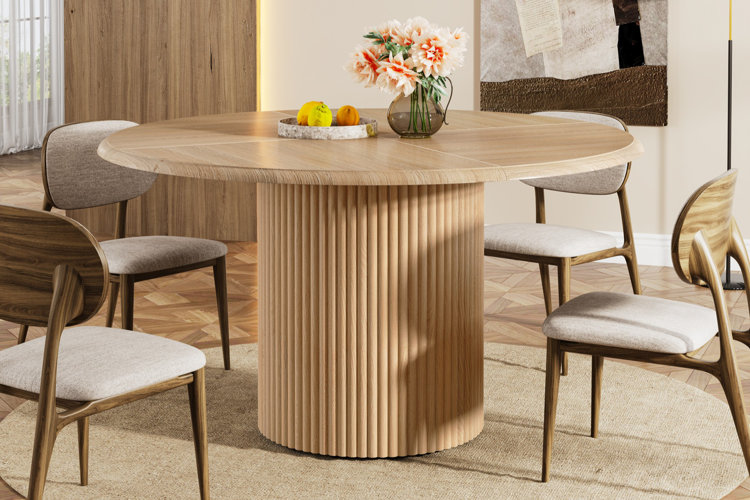
Round tables bring a warm, intimate feel to any kitchen. Their circular design makes it easy for everyone to see and interact with one another, encouraging connection and conversation. The soft edges make them a safe, stylish choice for families with children. This option makes smaller kitchens feel more open.
- Pros: Round tables naturally create a cozy dining experience by keeping everyone equally included in the conversation. Their curved edges are ideal for tight spaces.
- Cons: These tables often seat fewer people than rectangular options because they don’t have corners. They may not offer as much surface area, limiting larger gatherings or multipurpose use.
- Best For: Smaller homes, apartments, or breakfast nooks where space is limited, but comfort and conversation are priorities.
Oval tables strike a balance between rectangular and round shapes. They offer generous seating, while their curved edges soften the look of any dining area. Their elongated form works well in elongated spaces and kitchens that need extra flexibility.
- Pros: Oval tables provide the length and seating capacity of rectangular options while providing a softer look with curved edges. They’re easy to move around and blend into any room without feeling too bulky.
- Cons: These tables still require a fair amount of space, and may not be practical for smaller kitchens.
- Best For: Transitional spaces and open layouts where you want to maximize seating while maintaining a soft, approachable look.
Square tables provide a sense of symmetry and balance. They’re a great fit for square-shaped rooms, and create an intimate atmosphere where everyone feels included. While more compact, they can often be expanded with leaves or paired with benches for even more seating.
- Pros: Since everyone is seated at an equal distance, square tables feel balanced and create a casual, intimate setting. They work well in compact or corner spaces, making them a versatile option for smaller kitchens.
- Cons: Larger square tables can feel awkward in narrow or rectangular rooms. They also typically seat fewer people than rectangular options.
- Best For: Small households, couples, or anyone who wants a modern, streamlined look without taking up too much space.
Free-form kitchen tables stray away from traditional silhouettes, offering something unexpected. With asymmetrical designs and organic curves, these options are statement pieces that can be used to reflect your personality and style. They’re ideal for unconventional spaces or anyone who wants to offer a unique dining experience.
- Pros: Free-form tables are eye-drawing focal points, bringing a creative flair to the kitchen. Their unconventional shapes also help maximize tricky layouts and add visual interest to otherwise understated kitchens.
- Cons: Fitting chairs around these tables can be more challenging because of their unconventional shapes. They may also not be space-efficient selections for smaller homes.
- Best For: Design-forward homes, eclectic spaces, and anyone wanting to make their dining table a statement piece.
Tip!
Need help finding the right dining table size for your space? Read our guide How to Choose a Dining Table Size for easy-to-follow sizing tips.
