What Is Vegan Leather? Your Informational Guide.
What is vegan leather and how is it made?

When it comes to furniture fabrics, there are a wealth of options available ranging from synthetic to natural or organic. Vegan leather is a material that can fall under either category, which makes it an interesting and unique choice – particularly for those looking for a genuine leather alternative. This guide will answer the most popular questions: What is vegan leather? What is it composed of? And how is it made?
What Is Vegan Leather?
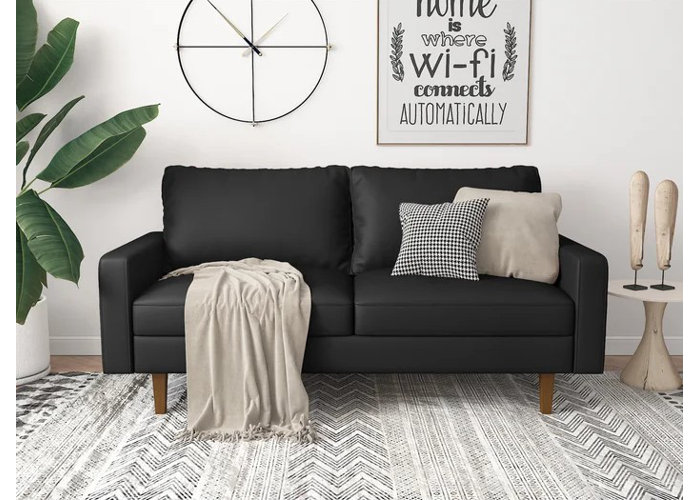
What is vegan leather? This question has no single answer. At the most basic level, vegan leather, or faux-leather, is an animal by product–free alternative to real leather. Vegan leather imitates the appearance of genuine leather and is used in both furniture and fashion. In fact, many times it is even possible to mistake vegan leather for the real thing.
Imitation leather was originally created in the 1920s through a chemical process designed to create this synthetic material. Today, there are a great many options that have been added to the vegan leather industry and are made from organic and renewable sources too.
What Is Vegan Leather Made Of?
Just as genuine leather is derived from a range of animals, vegan leather products are created by using a range of synthetic or organic materials.
Synthetic Vegan Leather
Man-made or synthetic faux-leather known as PVC and PU are most commonly made from plastics combined with chemicals. What is PU leather though and what is it made of?
PVC: A vast amount of vegan leather is made from polyvinyl chloride – a petroleum-based plastic that is combined with a range of chemicals in order to achieve a leather-like material.
PU: Here is the answer to the question 'what is PU leather made of?' Polyurethane is similar to PVC in that it is also made from a type of plastic mixed with petroleum to create an artificial leather polymer. This is then processed to have the appearance of genuine leather. PU is generally softer and more pliable than PVC, offering more flexibility and some breathability.
Plant-Based Vegan Leather
There has been a rise in the development of plant-based vegan leather as manufacturers search for sustainable alternatives made from renewable materials. These products can contain anywhere between 30-80% plant-based vegan leather, and can be produced in a variety of ways.
Cactus: The process for creating cactus vegan leather involves the harvesting of mature leaves (pads) twice a year from the prickly pear cactus. They are then cleaned, smashed, dried, and processed to create faux leather products known for their breathability.
Mushroom: The most durable plant-based vegan leather comes from mushroom roots or mycelium. These roots usually take two weeks to grow and are then harvested to create sheets of soft material, which is then finished off to give it the appearance of animal leather.
Cork: The cork oak tree (the same kind used to create wine stoppers, corkboards, and coasters) also provides the materials to make vegan leather. Sheets are cut from the tree which are then processed and laminated to be turned into organic faux leather.
Pineapple: Pineapple leather, also known as Piñatex, is made from the natural fibers found in pineapple leaves which are then combined with plastic and resin to create a hybrid synthetic and plant-based faux-leather.
Grape Leather: The waste products of Italian wine production are the main component of grape/wine leather. While the exact processing is a secret, it ends up creating a soft, smooth, and stable plant-based leather alternative.
Genuine Leather vs. Vegan Leather
Both genuine leather and vegan leather are available in a range of qualities. At the same time, these two products can share some similar traits.
Genuine Leather: As an animal by-product, genuine leather has a number of distinctive traits.
- It has a rich unmistakable scent.
- It is extremely durable.
- Due to the fact that it is animal hide, leather can absorb water and oil which results in a patina over time.
- Leather can also absorb unwanted stains and spills.
- Leather costs more.
Vegan Leather: Due to its man-made manufacturing process, vegan leather also has its own set of specific qualities.
- Depending on the production technique used, vegan leather can have a plastic scent, or no scent at all.
- It is not as durable as genuine leather, though there are consistent improvements being made.
- It is mostly water- and stain-resistant, making it easy to clean.
- It can be treated with dye to create a wide range of colors and even textures.
- It is less costly.
With your question "what is vegan leather?" answered, you can now make your purchases in a more thought and less wasteful manner.
