What Size Ceiling Fan Is Best for Your Bedroom?
Smart sizing tips for a cooler, comfier bedroom.
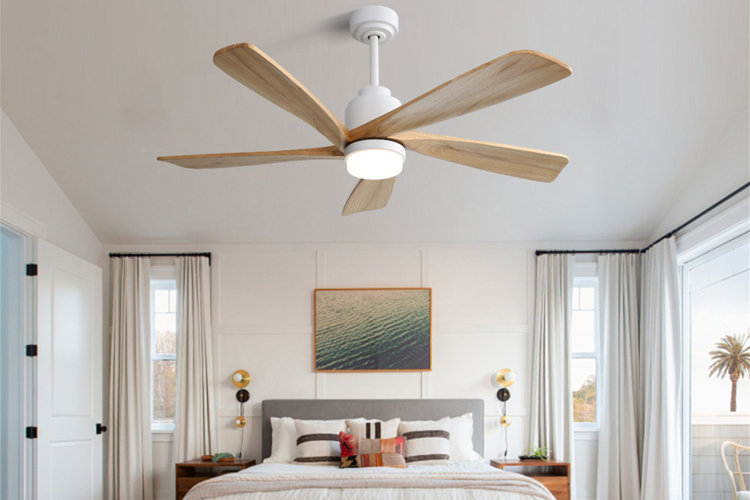
A ceiling fan can make your bedroom feel cooler, cozier, and more comfortable year-round, but choosing the right size is essential. The square footage of your bedroom and height of your ceiling are the biggest factors to consider when choosing a fan, but with so many blade spans and styles available, it can be hard to know where to start. Keep reading to learn which ceiling fan size will work best for your sleep space.
What Size Ceiling Fan Do You Need for a Bedroom?
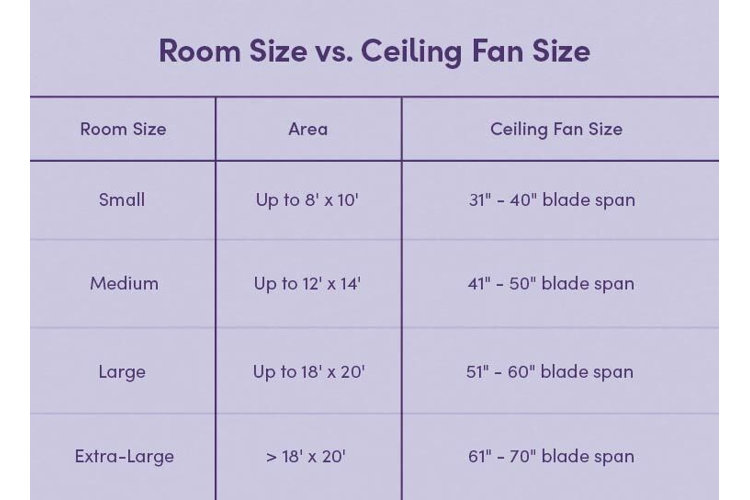
The right size ceiling fan helps circulate air efficiently, reduces hot spots, and creates a balanced look above your bed. Here are three common fan sizes to help you find the perfect fit.
Small Bedrooms (Up to 8 x 10 Feet)
Small bedrooms benefit from compact fans that offer efficient airflow without overpowering the room. A 31- to 40-inch fan helps maintain comfortable circulation and fits proportionally with a smaller footprint, ideal for a guest bedroom, office turned bedroom, or tight layout.
Medium Bedrooms (Up to 12 x 14 Feet)
Medium-size bedrooms, like standard primary bedrooms or larger guest rooms, work best with a 41- to 50–inch ceiling fan. This range provides balanced airflow across the room and feels visually proportional when centered over the bed. It’s the most common bedroom fan size because it offers ample circulation while still fitting comfortably within typical ceiling heights.
Large Bedrooms (Up to 18 x 20 Feet)
If your bedroom is on the larger side or has an open layout, choose a fan in the 51- to 60-inch range. This blade span helps move air across more square footage, preventing warm or stagnant pockets in bigger rooms. It also provides the right visual scale, especially if your furniture is oversized or your bed has a tall headboard.
Extra-Large Bedrooms (Larger Than 18 x 20 Feet)
For extra-large bedrooms, suites, or lofted sleeping spaces, choose a fan 61 inches or larger. Bigger blades are designed to push more air with fewer rotations, delivering powerful yet smooth airflow. In expansive layouts, a fan this size also acts as a visual anchor, helping define your sleeping area.
Room size is the biggest factor when selecting a ceiling fan for your bedroom, but the details of your space also matter. Keep the following tips in mind:
Check Your Ceiling Height
Proper mounting ensures your fan works efficiently and safely.
- Low Ceilings: Choose a flush-mount (hugger) fan.
- Standard Ceilings: Use a short downrod for optimized airflow.
- Tall or Vaulted Ceilings: A longer downrod positions the fan at the ideal height, typically 8 to 9 feet above the floor.
Consider Your Bed Placement
Centering the fan with your bed, rather than the exact center of the room, often provides the best airflow where you sleep. It also gives your bedroom a more balanced, intentional look.
Look for Noise & Comfort Features
Bedroom fans should be quiet and convenient. Keep an eye out for:
- Silent or low-noise motors for quieter, more efficient airflow
- Reversible motor or airflow to switch directions seasonally
- Integrated LED or dimmable lighting for customizable brightness
- Remote or smart controls for easy adjustments from bed
- Angled-ceiling compatibility for proper placement in unique rooms
