Window Treatments 101: Drapes vs. Curtains
Find the best option for your home.
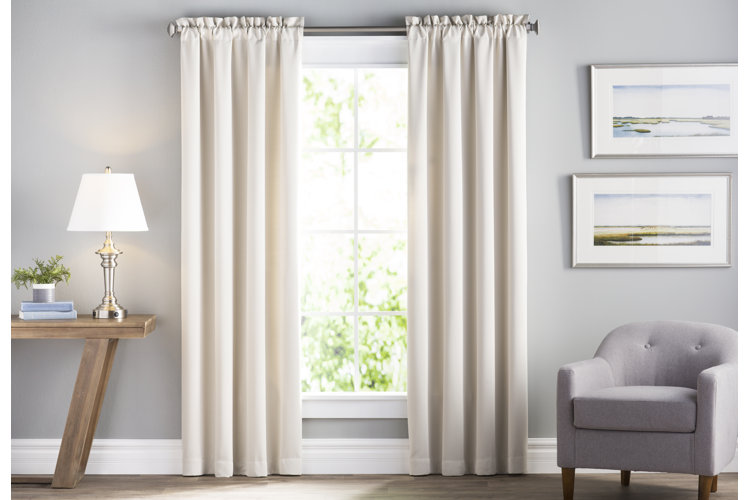
The terms "curtains" and "drapes" are often used interchangeably, but they are actually two different types of window treatments. So what exactly are the differences between them? We'll break down drapes vs. curtains, how to choose the right one for your home, and new knowledge sure to impress your friends.
In this guide:
Drapes vs. Curtains
How to Choose the Right Window Treatment
Drapes vs. Curtains
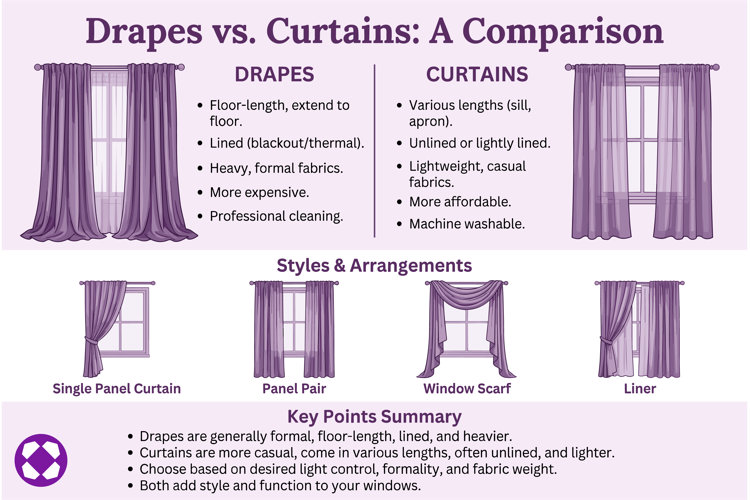
Curtains: Curtains are sold in pairs or by panel and are installed over blinds or shades. They hang from curtain rods, extend to the windowsill or floor, and are typically made from lighter fabrics, but can also have room-darkening or even blackout properties.
Drapes: Drapes are made from thicker fabrics and lined to block out more light. Typically more formal in appearance, they often extend to the floor or even puddle slightly.
How to Choose the Right Window Treatment
Now that you know the difference between curtains and drapes, you can find window treatments that suit your space.
1. Decide on the Style
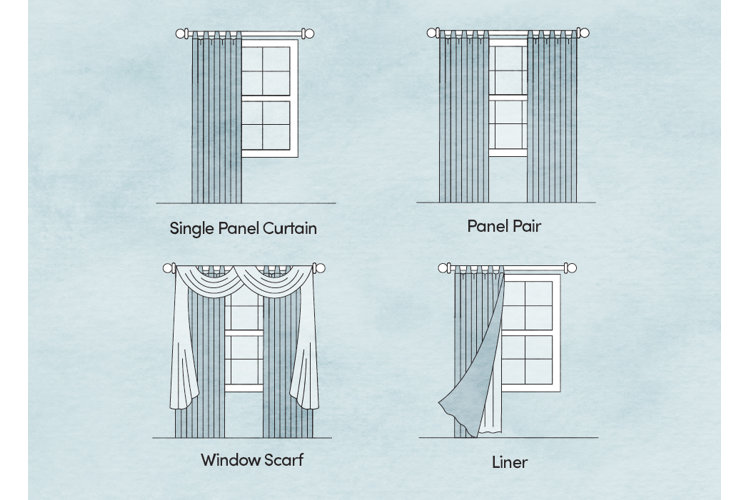
Single Panel Curtain: As the name states, single panel curtains are made of one piece of fabric. These are great for sliding glass doors.
Panel Pair: These curtains come in matching pairs, allowing you to hang the two pieces of fabric on either side of the window. This design allows you to let in as much light as you want.
Window Scarf: Designed more for decoration, window scarves don’t block out any light. Instead, they are draped over the curtain rod. They can be hung alone or paired with panel pair curtains. They can be either windowsill length or extend down to the floor.
Liner: Liners are made to block out the light and are used in addition to a curtain. They can either be hung on a second curtain rod behind your curtains, or they can be hooked to curtain rings and attached to the same curtain rod as your curtains.
Tip!
French doors give your home a bright, airy feel with their window-like panels. Whether you're looking to add privacy or adjust natural light, French door curtains are a great solution that doesn't compromise on style.
Sheer: Sheer curtains offer the least amount of privacy and the most amount of light to come through your windows. You can see through the fabric, but it reduces some glare on TVs and furniture. This style is a light and breezy addition to any room.
Semi-Sheer: Slightly less see-through than sheer curtains, these offer more privacy but are best paired with blinds or shades.
Room Darkening: Great for bedrooms, room-darkening curtains reduce almost all light, provide privacy, reduce noise pollution, and help insulate a room.
Blackout: These block out 99–100% of light and provide the maximum amount of privacy, which make them a great option for bedrooms. They also help insulate your windows from drafts and reduce noise pollution coming from outside the home. .
Tip!
Want to learn more about light filtration? Read our guides:
- What Are Blackout Curtains?
- Window Treatments 101: Curtain Sheerness & Light Filtration
- Room-Darkening vs. Light-Filtering Curtains: Which Is Best?
3. Choose a Header Type
Pinch Pleat: This header style has a permanently gathered look. Pieces of fabric are sewn together at the top to form pleats. Depending on the design, pinch-pleat curtains can be hung with a rod pocket, clip rings, or drapery hooks.
Tab Top: As the name states, tab top headers feature loops (or tabs) of fabric at the top where the rod is thread through. With this type of header, curtains typically lie flatter and have the least amount of gathering.
Grommet/Eyelet: A more modern option, grommet curtains have a circular opening at the top for the curtain rod to slide through. This header style keeps the curtain rod exposed.
Rod Pocket: More traditional and formal in style, rod pocket headers completely cover the rod. This style works best with curtains that are not opened often or left open with tiebacks.
Thermal Insulation: Thermal insulation curtains feature a layer of acrylic foam that helps insulate windows. They share similar qualities to blackout curtains, as they also reduce noise pollution and block out sunlight.
Noise Reduction: Fall asleep faster with noise reducing curtains or drapes. While the curtains will not block 100% of sound, it will reduce noise pollution from the street (especially helpful if you live in a busy city).
Outdoor: These are a little more hardy than regular indoor curtains as they are meant to be used in outdoor locations like patios, on pergolas or gazebos, and any other outdoor covering that may require drapery. They are typically water-resistant or at least machine-washable for durability and easy cleaning.
Lined: Get the benefits of a curtain liner without the need for a separate purchase. Lined curtains come with the liner already sewn into the fabric, giving you thick individual drapes.
Easy Care: Most commonly, easy care means machine-washable. Curtains can be tricky to clean, so if you want to avoid the hassle of dry-cleaning or hand-washing, or have kids/pets that might get your drapes dirty, these are for you.
Tip!
Find the right curtain materials with our guide Types of Curtain Materials: Everything You Need to Know.
