Your Guide to Bamboo Flooring
All you need to know about bamboo flooring.
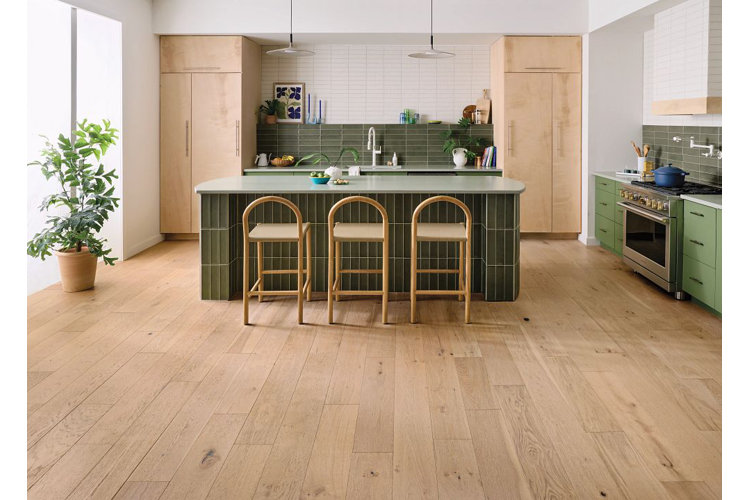
While browsing for new flooring for your home renovation, you might notice that bamboo flooring is a top-trending material. It's made from bamboo plants and is a popular pick among those looking for a more eco-friendly alternative to hardwood flooring. Our guide covers all you need to know about bamboo flooring, including bamboo flooring cost, upkeep, and how it differs from hardwood.
What Is Bamboo Flooring?
Bamboo Flooring Cost
Bamboo Flooring Pros & Cons
Bamboo Flooring vs. Hardwood Flooring
What Is Bamboo Flooring?
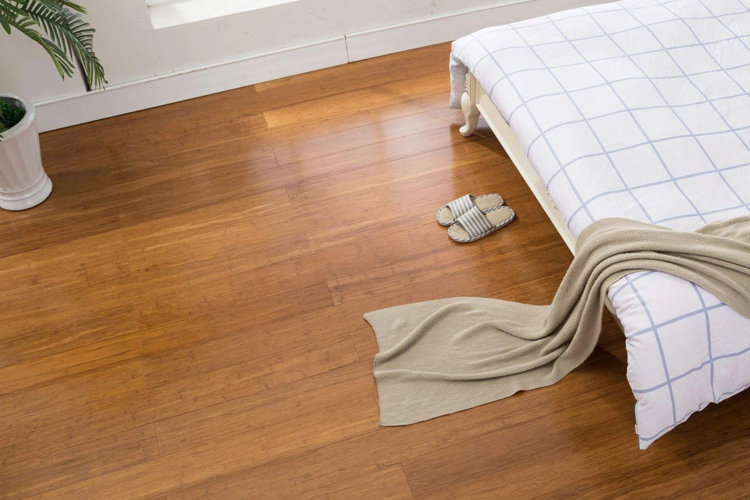
Although bamboo flooring might look and feel like wood, bamboo is actually a type of grass. Bamboo grows much faster than hardwood and doesn't require replanting to continue growing, making it a much more renewable and sustainable resource. Its durability and unique grain make it a popular alternative for traditional hardwood flooring.
Bamboo Flooring Cost
The cost of bamboo flooring is similarly priced to traditional hardwood options. Many factors like quality, brand, and square footage can impact the total cost.
The price of bamboo flooring from a supplier can range from $2 to $11 per square foot, and the added cost of labor takes the bamboo flooring cost to $5 to $15 per square foot. Additional costs like removing the existing flooring, repairing or replacing the subfloor, and staining can increase the total amount you'll spend.
Bamboo Flooring Pros & Cons
To help you decide if bamboo flooring is right for you, it's best to consider the benefits and drawbacks and how those factors fit into your lifestyle. Keep reading below to find the pros and cons of bamboo flooring.
Pros
More Eco-Friendly
Bamboo grows in five- to seven-year cycles and can be harvested without needing to replant the plants, whereas traditional hardwoods like oak or maple can take up to 20 years before the trees can be harvested. This makes bamboo a more renewable and environmentally-friendly option in comparison to hardwoods.
Easy to Maintain
Bamboo floors are fairly easy to care for. Regular maintenance like sweeping and the occasional bamboo floor cleaner will keep the flooring looking fresh.
Durable & Long-Lasting
Bamboo is naturally resistant to abrasion, which allows it to withstand everyday wear in high-traffic areas like kitchens, entryways, and living rooms. Bamboo flooring can also be refinished by sanding and resealing the surface to make the flooring look new again.
Cons
Prone to Scratching
Though bamboo flooring is harder than several traditional hardwoods, its surface is still susceptible to scratching. Make sure to add felt pads to the legs of heavy furniture to reduce the potential opportunities for scratches.
Fading & Discoloration
Bamboo flooring can be prone to fading or discoloration when exposed to excess amounts of direct sunlight. To avoid this, it's best to use curtains or blinds to reduce direct sunlight, or try to install bamboo flooring in spaces that don't receive a lot of direct sunlight.
Sensitive to Moisture
Humidity and moisture can affect bamboo flooring. Environments with excessive humidity can cause the floor planks to swell and warp while dry environments often cause the planks to shrink and crack. Because of this, bamboo flooring isn't best suited for homes where the climate goes from one extreme to the other.
Bamboo Flooring vs. Hardwood Flooring
When comparing the two, there are a few key differences to keep in mind.
Bamboo is a highly durable material for flooring with a hardness rating that ranges between 1,300 and 1,4000. Popular hardwoods have similar hardness ratings, such as red oak with a score of 1,220, hard maple with 1,450, and red walnut with 2,500.
Hardwood has a larger variety of wood species, which allows for a wider range of appearances. These varying types of wood feature distinct grain patterns, colors, and feels. Bamboo is more limited to three main types: vertical-grain bamboo with narrow strips of bamboo glued together for a striped design, flat-grain bamboo with thin, flat layers bonded together to form a plank, and stranded bamboo that binds bamboo fibers in resin for a shredded appearance.
While bamboo is more prone to scratching, both types of flooring can be susceptible to scratching and moisture damage. Proper maintenance and sealing can help prevent damage.
Tip!
Learn more about the other types of hardwood flooring options with our guide Everything You Should Know About Wood Flooring Types.
