Your Guide to Dog Door Sizes
The right one will keep you and your pup happy.
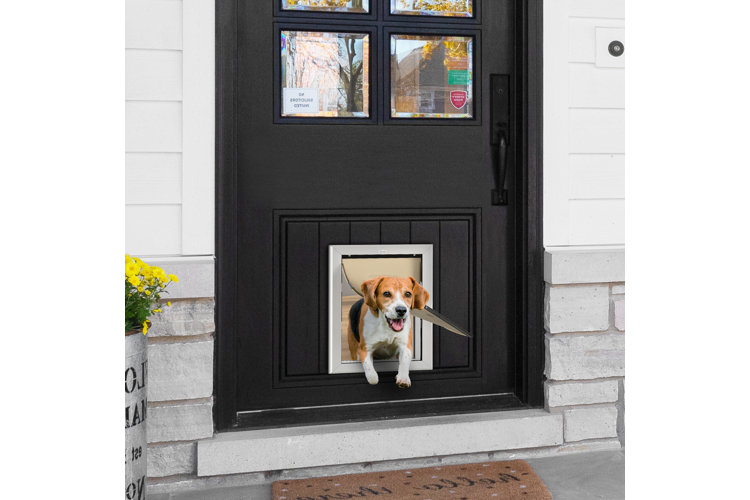
Doggie doors give your pup the freedom to come and go as they please, which also keeps you from having to let them in and out of the house throughout the day. But first, you need to choose the right size door to ensure your pup can go in and out with ease and comfort. Read further to learn more about dog door sizes and how to choose the right one for your dog breed.
How to Determine the Right Size Dog Door
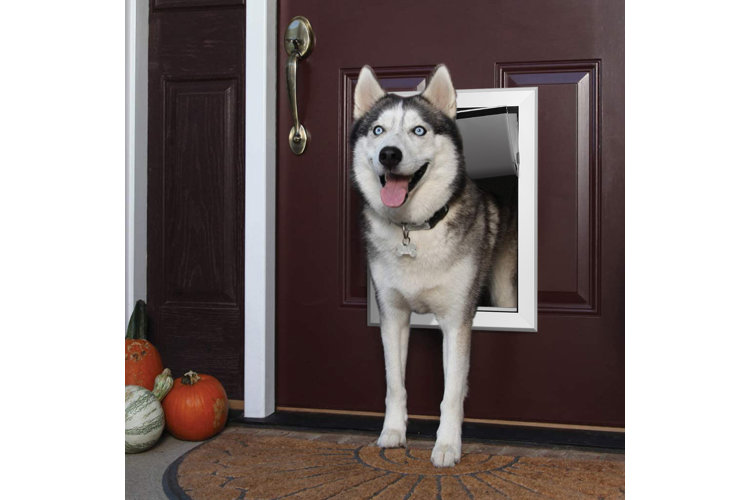
To find the right dog door dimensions for your dog, you need to measure their height and width. The right size dog door should allow your dog to enter and exit your home without having to hunch or brush against the edges. Review this section to ensure you get the right measurements.
1. Measure from the floor to the top of your dog's back.
Position your dog in a standing position with all four paws on the floor (you may need to bring in some treats to keep them still!). Using a tape measure, measure (starting from the ground) to the highest point on your dog's back. This is important as some dog breeds have longer front or back legs, which affects the overall height of their back. Use the tallest part of their back to determine the right dog door height.
Add 2" – 3" to the measured height so your pup can pass through the dog door with room to spare – this total measurement is the correct height for your dog door. Adding a couple extra inches of room also keeps your dog from coming in contact with the top of the door flap, which ultimately prolongs the lifespan of the dog door’s flap-door mechanism.
2. Measure your dog's width.
When deciding on a dog door size, you also need to consider how wide your dog is – to determine how wide the dog door needs to be. Measure from one shoulder to the other across your dog's chest to determine their width, and subsequently, the minimum width of a compatible dog door. Add approximately 4" to your dog's total width (2" for each side), and that’s the total dog door width you should shoot for. This expanded figure ensures your pup can fit comfortably through the dog door without getting stuck.
3. Consider the best step-over height.
The “step-over” height refers to the distance from the bottom of the dog door to the bottom of the door or wall it's installed in. There is no set step-over height. Instead, you determine the right step-over height based on your dog's height and mobility. The right step-over height allows your dog to lift their paws comfortably as they pass through the door and ensures that your pup can use it for years to come. As a general rule, we recommend that the bottom of the dog door is at least 3" – 4" above the bottom of the door or wall to avoid harming the door/wall's structural integrity during installation. A 3" – 4" step-over height is also low enough to accommodate the needs of small or older dogs with limited height or mobility.
To determine the proper step-over height for your dog, start by measuring from the ground to the halfway point of their leg. Consider taking away 1" – 2" from the total measurement to help minimize the amount of paw-lifting your dog needs to do when passing through the door. If the step-over height is higher than the middle point of your dog's legs it could cause strain and injury to their body over time. Use your tape measurer to mark the step-over measurement on the installation door/wall so you're ready when it's time to install.
4. Account for differences in size if you have multiple dogs.
When deciding on doggie door sizes for a household with multiple dog breeds, always choose a size based on your largest dog's measurements. This ensures your smaller dogs will fit through the dog door with no problem. Just make sure to remember your smaller dogs when determining the right step-over height for a dog door. You may need to go with an extra-tall dog door that’s installed low enough that the step-over height is small-dog friendly, with the tall height designed to also accommodate your larger dog.
Tip!
Make sure to review a product's measurements to determine if the total width and height refers to the opening itself, or the opening plus the frame. Check out Dog Door Installation: A How-To Guide for step-by-step instructions for installing a doggie door.
Dog Door Sizes for Dog Breeds
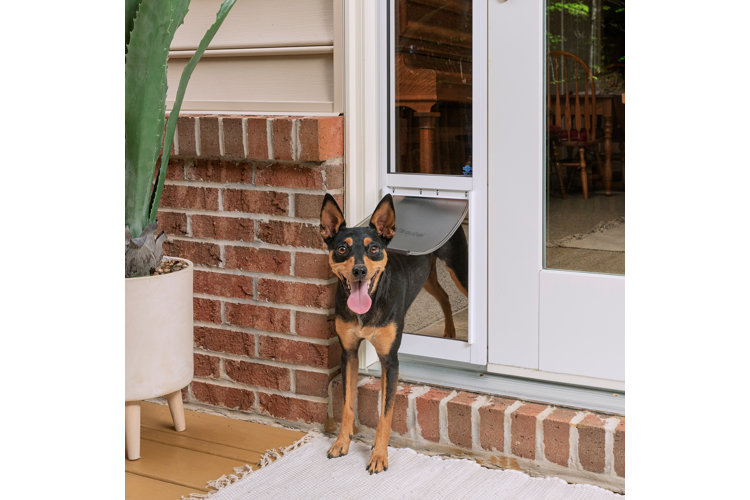
Dog doors come in small, medium, large, or extra-large sizes. Size options typically correlate with dog breed size recommendations, but they can also vary depending on the manufacturer. Review the section that best resembles your dog's size below for additional guidance on selecting a dog door size.
Quick Note:
The measurements included below are estimations and may not match your dog's specific needs. Be sure to measure your dog for exact measurements (as described above) to compare and contrast.
For Small Dog Breeds
Chihuahuas, Shih Tzus, Malteses, Terriers, Yorkies, Pomeranians
Small dog doors typically accommodate dogs under 25 lbs. or dogs that are around 5" – 12" tall (at shoulder height). If you have a small dog breed like the ones described above, consider a dog door measuring 6" wide and 12" tall.
For Medium Dog Breeds
Spaniels, Bulldogs, Collies, Beagles, Hounds, Whippets
Medium-sized dog doors are usually meant for dog breeds of 45 lbs. or less and dogs with a height between 12" - 20" tall (at shoulder height). To accommodate medium-sized dogs, most compatible dog doors have a width of 8" and a height of around 16" or more.
For Large Dog Breeds
Golden Retrievers, Goldendoodles, German Shepherds, Labradors, Poodles
Large dog breeds usually weigh between 50 –100 lbs. and vary in (shoulder) height from around 15" – 30". Dog doors for big dogs like the breeds mentioned above measure around 10" wide and 20" tall or larger.
For Extra-Large Dog Breeds
Great Danes, Great Pyrenees, Irish Wolfhounds, Saint Bernards
Extra-large dog doors accommodate breeds weighing approximately 100–180 lbs. and measuring between 20" – 30" tall, or even taller. Extra-large dog doors vary in size from 12" – 15" wide and 24" – 30" tall (or even larger!).
Tip!
Use the 'Overall Dimensions' filter to the left-hand side of product pages to browse for dog door sizes that match your needs. You can also reference the specifications tab on a product's page to learn about compatible dog breeds and exact dog door measurements for a particular brand.
Get started on your dog door project, now!
